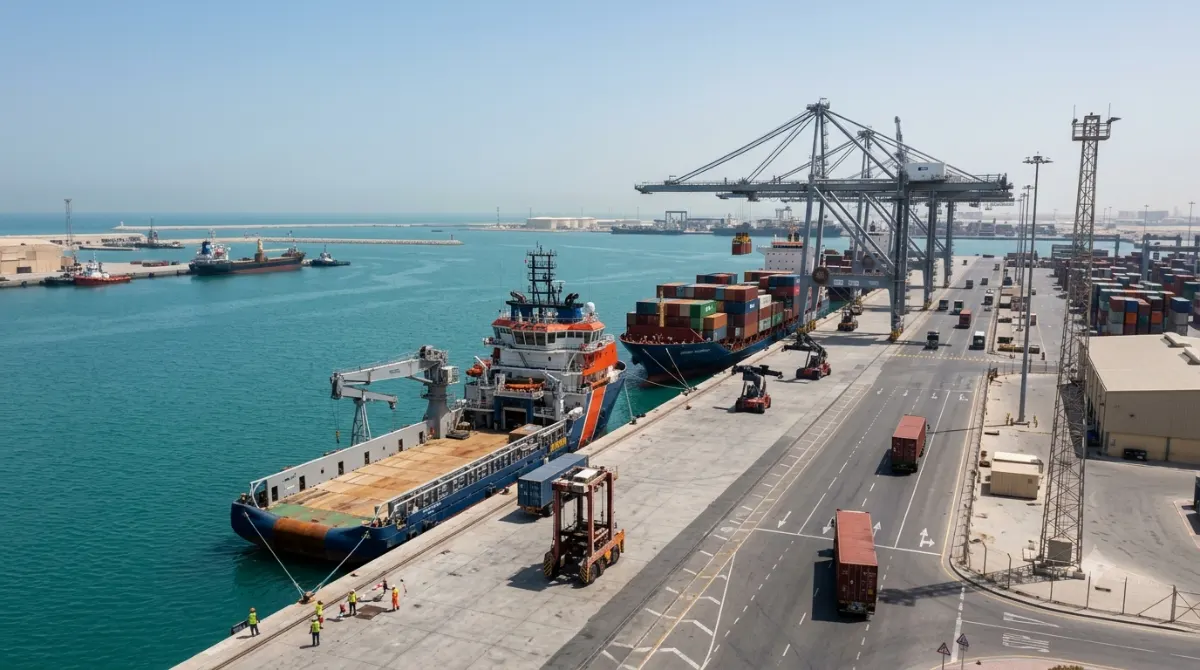
<p dir="ltr" data-path-to-node="5"><span class="">Qatar Navigation Q.</span><span class="">P.</span><span class="">S.</span><span class="">C.</span><span class=""> (Milaha),</span><span class=""> one of the Middle East's leading providers of maritime and logistics solutions,</span> is pressing ahead with fleet investments and operational enhancements spanning its offshore support vessels and regional container shipping network. Operating a diversified fleet of over 80 owned and managed vessels—including LNG and product tankers, offshore support ships, and container feeders—the Doha-headquartered group is positioning its assets to capture long-term offshore energy production growth and intra-regional trade flows.</p><p dir="ltr" data-path-to-node="6"><span class="">In its energy platform,</span><span class=""> Milaha has maintained a focused capital investment program targeting modern offshore support vessels equipped with dynamic positioning (DP2) capabilities and anchor-handling towing systems.</span><span class=""> These specialized vessels support offshore drilling rigs,</span><span class=""> subsea engineering,</span><span class=""> diving operations,</span><span class=""> and marine logistics across Qatar's major energy fields.</span></p><p dir="ltr" data-path-to-node="7"><span class="">Recent operational disclosures underscore the scale of Milaha's maritime activity across Qatar's key commercial and energy gateways,</span><span class=""> including Hamad Port,</span><span class=""> Mesaieed Port,</span><span class=""> and Ras Laffan Port.</span><span class=""> In a single recent monthly reporting period,</span><span class=""> the company's shipping agency and marine operations handled 114 vessels,</span> executed 14 offshore rig moves, and logged over 1.45 million offshore and vessel-operation man-hours alongside extensive fuel, water, and subsea support deliveries.</p><p dir="ltr" data-path-to-node="8"><span class="">Alongside its offshore expansion,</span><span class=""> Milaha has strategically realigned its Maritime & Logistics and Trading business segments to sharpen operational focus and improve end-to-end supply chain integration.</span><span class=""> By linking its container shipping arm directly with onshore warehousing,</span><span class=""> customs clearance,</span><span class=""> and project logistics services,</span> the company offers cargo owners flexible multimodal solutions across the Gulf Cooperation Council (GCC) and Indian Ocean corridors.</p><p dir="ltr" data-path-to-node="9"><span class="">Amid shifting maritime dynamics and periodic regional route disruptions in 2026,</span><span class=""> Milaha's container feeder network has played an essential role in maintaining supply continuity for Qatar and neighboring Gulf markets.</span><span class=""> Agile vessel deployment and rapid route adjustments have enabled shippers to keep essential food,</span><span class=""> industrial,</span><span class=""> and retail supply lines moving reliably.</span></p><p dir="ltr" data-path-to-node="10"><span class="">For regional exporters and international mainline carriers,</span><span class=""> modernizing feeder tonnage improves schedule reliability,</span><span class=""> fuel efficiency,</span><span class=""> and cargo turnaround times across short-sea Gulf routes.</span> Enhanced vessel capability also supports seamless transshipment connections with major Asian and Indian west coast ports.</p><p dir="ltr" data-path-to-node="11">Industry analysts note that sustained upstream offshore gas and energy development in Qatar continues to generate steady multi-year demand for high-specification offshore support vessels, diving support units, and marine logistics services. Milaha's combination of technical offshore capability and integrated port agency coverage provides a strong competitive advantage.</p><p dir="ltr" data-path-to-node="12">With ongoing fleet upgrades and a streamlined organizational structure in place, Milaha remains well-positioned to support both Qatar's long-term energy expansion and growing regional maritime trade.</p>
Qatar Navigation (Milaha) Upgrades Offshore Support and Regional Container Fleet Across Arabian Gulf
Qatar Navigation Q.P.S.C. (Milaha) is advancing fleet modernization and operational realignment across its offshore support and regional container shipping segments to meet sustained energy and trade demand in the Arabian Gulf. Following a strategic reorganization of its Maritime & Logistics divisions and strong monthly vessel-handling volumes across Qatari ports, the Doha-based maritime group continues to strengthen regional supply chain resilience.