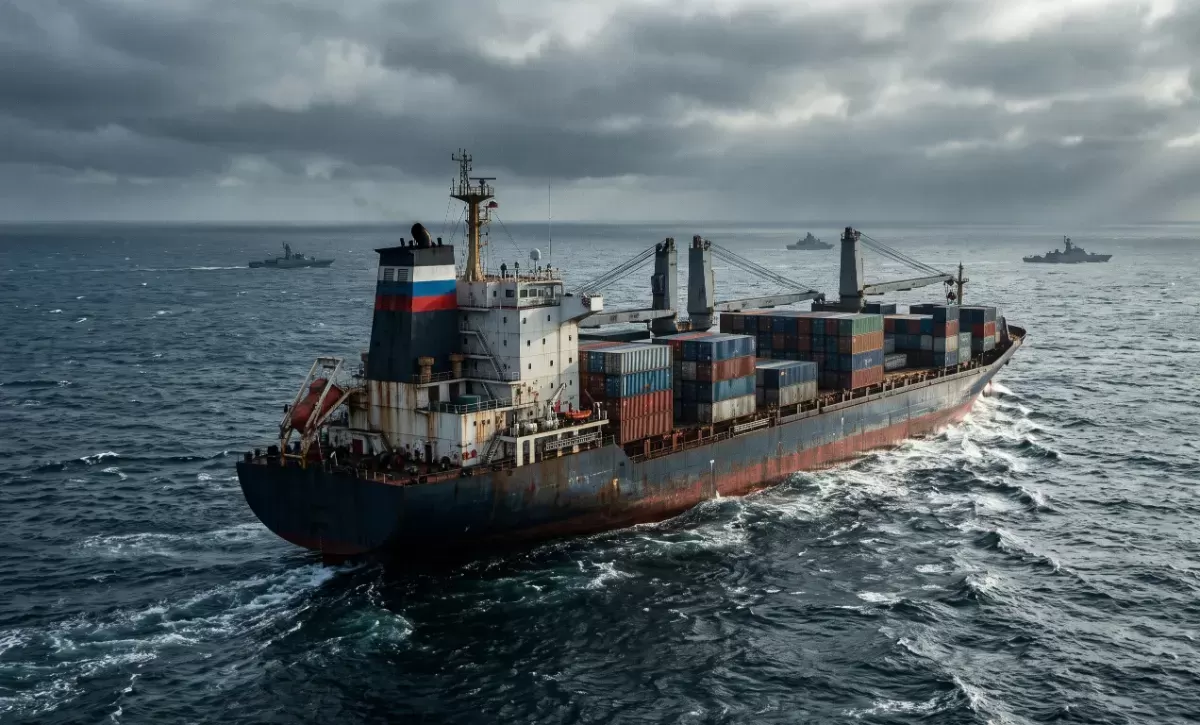
<p dir="ltr" data-path-to-node="4">The Russian Federation has suspended the transmission of Long-Range Identification and Tracking (LRIT) location data for selected Russian-flagged commercial vessels while formally pressing the International Maritime Organization (IMO) to tighten global access controls over maritime tracking networks. Disclosed through diplomatic filings in London on November 23–24, 2026, the move represents Moscow’s latest effort to shield its merchant fleet from precision maritime drone strikes and naval interdictions.</p><p dir="ltr" data-path-to-node="5">In its formal submission to the United Nations shipping agency, Russia requested that regulators establish new security safeguards governing LRIT satellite feeds, Automatic Identification System (AIS) transponders, and mandatory ship-reporting databases. Russian maritime officials argued that open-access visibility into commercial ship coordinates, routes, and identities creates acute operational vulnerabilities that hostile actors exploit to plan armed attacks, vessel seizures, piracy, and maritime terrorism.</p><p dir="ltr" data-path-to-node="6">Under the International Convention for the Safety of Life at Sea (SOLAS), passenger ships and cargo vessels of 300 gross tonnage and upwards engaged on international voyages are required to transmit LRIT position reports at least four times daily to flag-state data centers. While LRIT data is restricted to authorized contracting governments for maritime security and search-and-rescue purposes—unlike VHF-based AIS broadcasts that are widely captured by commercial satellite aggregators—Moscow has curtailed LRIT data sharing for targeted segments of its fleet with no timeline for restoration.</p><p dir="ltr" data-path-to-node="7">Russian authorities have previously floated technical alternatives at the IMO, including introducing deliberate time delays in position broadcasts or encrypting vessel identification telemetry along high-risk transit corridors. Moscow contends that without multilateral reforms to restrict third-party visibility, merchant vessels operating in contested waters remain exposed to real-time targeting.</p><p dir="ltr" data-path-to-node="8">The data blackout follows a sustained wave of kinetic attacks against Russian-linked commercial shipping throughout 2026. In addition to large-scale Ukrainian uncrewed surface and aerial drone campaigns against cargo vessels and tankers in the Black Sea and Sea of Azov, several Russian-affiliated merchant vessels and liquefied natural gas carriers have also been struck or interdicted across the Mediterranean Sea and European approaches.</p><p dir="ltr" data-path-to-node="9">At the same time, maritime security analysts and Western port-state authorities note that Moscow’s push for tracking opacity coincides with broader Russian restrictions on commercial maritime records. Recent Kremlin decrees limiting access to energy export and shipping registry data have complicated regulatory oversight of Russia’s so-called "shadow fleet" operating across the Baltic Sea, the Northern Sea Route, and northern European waters.</p><p dir="ltr" data-path-to-node="10">International shipping organizations and coastal state regulators remain sharply divided over proposals to limit AIS or LRIT transparency. Maritime safety experts emphasize that continuous, unencrypted AIS broadcasts are foundational to collision avoidance under SOLAS Chapter V, particularly in congested international straits and adverse weather conditions where dark transits dramatically elevate the risk of catastrophic groundings or oil spills.</p><p dir="ltr" data-path-to-node="11">As IMO member states prepare for upcoming Maritime Safety Committee deliberations in London, delegates face a complex balancing act between flag-state security demands in conflict zones and the preservation of transparent, rules-based maritime domain awareness across global sea lanes.</p>
Russia Restricts Fleet Access to Ship-Location System Following Attacks
The Russian Federation has suspended the sharing of Long-Range Identification and Tracking (LRIT) location data for selected Russian-flagged merchant vessels and formally submitted a proposal to the International Maritime Organization (IMO) calling for stricter global controls over vessel-tracking systems. Warning that unrestricted public access to real-time LRIT, Automatic Identification System (AIS), and mandatory ship-reporting feeds is being exploited to plan armed drone strikes, vessel seizures, and acts of piracy or terrorism, Moscow has urged the IMO to introduce encryption, transmission delays, or access restrictions on sensitive trade routes. The policy shift follows repeated maritime drone attacks against Russian-linked commercial ships across the Black Sea, Sea of Azov, and Mediterranean.