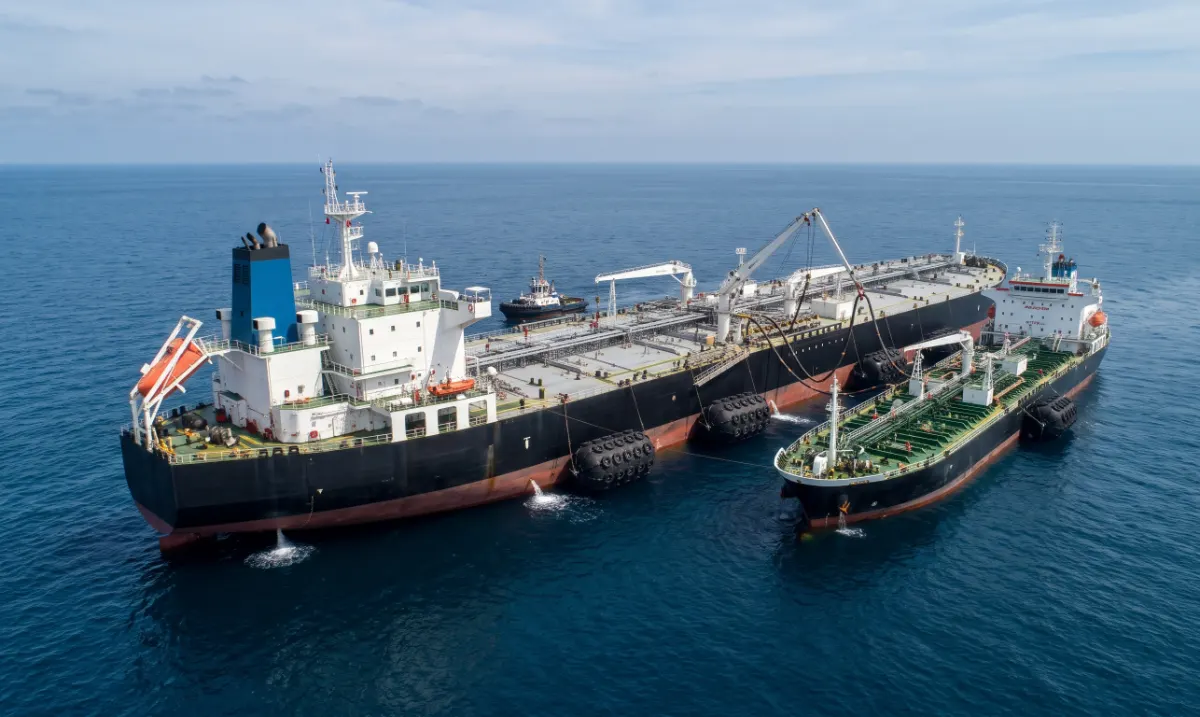
<p dir="ltr" data-path-to-node="4">International shipping association BIMCO has formally released a new standalone contractual provision designed to standardize risk allocation and operational governance during complex liquid-bulk cargo transfers at sea. Published on November 25, 2026, the <i data-path-to-node="4" data-index-in-node="269">BIMCO Tanker Ship-to-Ship Transfer and Special Operations Clause 2026</i> provides shipowners, charterers, and marine insurers with a modern contractual framework for incorporation into conventional oil tanker, chemical tanker, and liquefied gas carrier charter parties.</p><p dir="ltr" data-path-to-node="5">The clause is specifically tailored for fixtures where ship-to-ship (STS) transfers or specialized cargo operations involving inshore terminals and offshore installations—such as floating storage units (FSUs) or offshore loading buoys—form part of the vessel’s commercial employment. Maritime legal practitioners noted that as global crude, refined product, and LNG trade patterns increasingly rely on open-water lightering and offshore transshipment hubs, bespoke rider clauses have frequently generated disputes over operational command, fendering responsibilities, and liability exposure.</p><p dir="ltr" data-path-to-node="6">A central pillar of the 2026 clause is the clear demarcation of operational command prior to commencing cargo operations. Under its core terms, the contractual parties involved in an STS transfer must agree in advance on which party—or appointed mooring master and STS service provider—will assume overall operational charge of the transfer maneuver.</p><p dir="ltr" data-path-to-node="7">At the same time, the provision explicitly safeguards the shipmaster’s overriding statutory and contractual discretion regarding the safety of the vessel, crew, cargo, and marine environment. Should weather conditions deteriorate, mooring equipment fail, or safety protocols be breached, the master retains unconditional authority to suspend, abort, or refuse the transfer without placing the vessel off-hire or exposing the owner to breach-of-contract claims.</p><p dir="ltr" data-path-to-node="8">Beyond command structure, the clause establishes comprehensive rules governing technical compliance, fendering and hose equipment, and regulatory adherence. All STS operations executed under the clause must comply strictly with applicable international safety standards, including MARPOL Annex I Chapter 8 requirements, flag-state notifications, and industry best-practice guidelines jointly issued by the Oil Companies International Marine Forum (OCIMF), the International Chamber of Shipping (ICS), and the Society of International Gas Tanker and Terminal Operators (SIGTTO).</p><p dir="ltr" data-path-to-node="9">Because STS transfers and offshore installation operations introduce heightened physical hazards compared to standard alongside jetty berthing, the clause also clarifies commercial risk, cost, and time allocation. Charterers are generally required to provide and pay for specialized STS equipment—such as pneumatic Yokohama fenders, certified transfer hoses, and support tugs—while time spent waiting for suitable weather windows, maneuvering, mooring, and disconnecting is clearly accounted for under laytime, demurrage, or hire provisions.</p><p dir="ltr" data-path-to-node="10">The release of the new STS clause arrives alongside heightened global regulatory scrutiny over offshore cargo transfers, particularly as flag administrations and port states tighten reporting mandates to curb unsafe practices and sanctions evasion across the global tanker fleet. By embedding transparent operational and safety obligations directly into standard charter party language, BIMCO aims to help legitimate tanker operators demonstrate rigorous due diligence to underwriters and maritime authorities.</p><p dir="ltr" data-path-to-node="11">Available immediately as a standalone provision through BIMCO’s SmartCon contract management platform, the 2026 clause updates and consolidates earlier industry wording to reflect modern gas carrier and offshore energy logistics. Shipping lawyers and chartering desks expect the clause to see rapid adoption across spot voyage and time charter fixtures in the crude, clean product, and LNG sectors.</p>
New Clause Introduced for Tanker Ship-to-Ship Transfers and Special Operations
International shipping association BIMCO has published a new standalone contractual provision—the BIMCO Tanker Ship-to-Ship Transfer and Special Operations Clause 2026—for incorporation into crude, product, and gas tanker charter parties. The clause establishes a standardized framework allocating operational control, equipment provision, time-counting, and risk liabilities for ship-to-ship (STS) cargo transfers as well as transfers involving inshore or offshore installations. Crucially, it requires charterers and owners to agree in advance on who holds overall operational charge of the transfer while preserving the shipmaster’s overriding authority over vessel and crew safety.