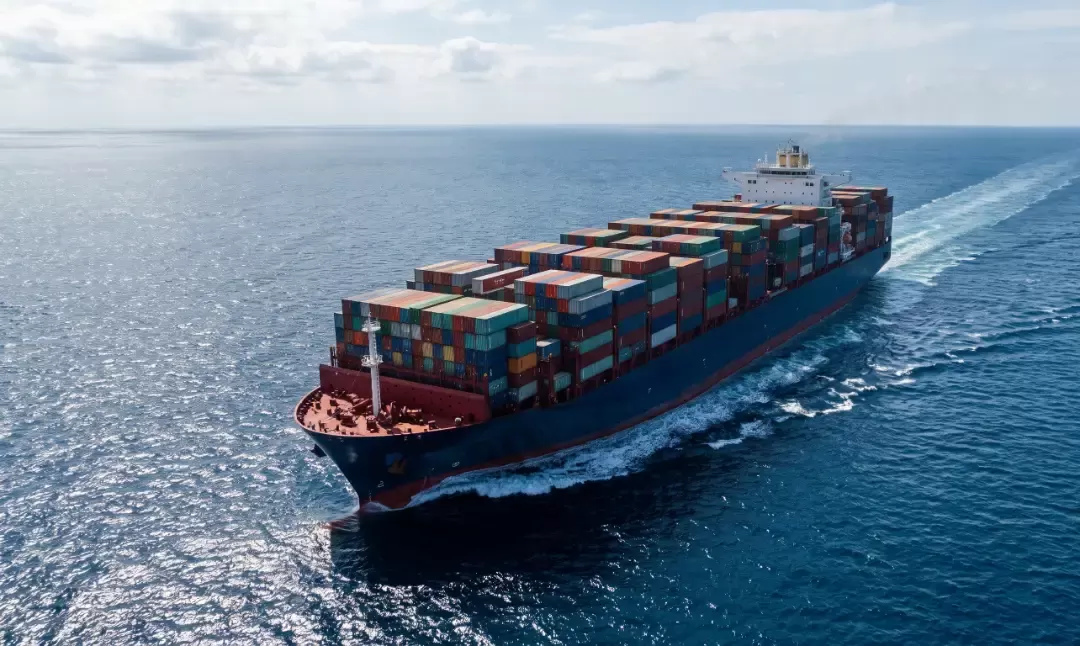
<p dir="ltr" data-path-to-node="4" style="font-family: "Google Sans Text", sans-serif !important; line-height: 1.15 !important;"><span class="" style="line-height: 1.15 !important;">With International Maritime Organization (IMO) member states reconvening in London for critical climate negotiations,</span><span class="" style="line-height: 1.15 !important;"> the World Shipping Council (WSC) has issued an urgent appeal for governments to adopt a binding global greenhouse gas (GHG) agreement without further delay.</span><span style="line-height: 1.15 !important;"> In a formal policy statement released on November 23,</span><span style="line-height: 1.15 !important;"> 2026,</span><span style="line-height: 1.15 !important;"> the council emphasized that the commercial liner shipping industry has already committed more than $200 billion toward over 1,</span><span style="line-height: 1.15 !important;">350 dual-fuel container ships and vehicle carriers—including more than 500 vessels currently operating on the water—demonstrating massive private-sector readiness to decarbonize.</span></p><p dir="ltr" data-path-to-node="5" style="font-family: "Google Sans Text", sans-serif !important; line-height: 1.15 !important;"><span style="line-height: 1.15 !important;">Representing international liner carriers responsible for transporting approximately 60% of global seaborne trade by value,</span><span style="line-height: 1.15 !important;"> the WSC stressed that hardware investments by shipowners alone cannot achieve net-zero shipping unless backed by durable multilateral rules.</span><span style="line-height: 1.15 !important;"> While dual-fuel vessels are entering service at an accelerating pace,</span><span class="" style="line-height: 1.15 !important;"> unlocking their full emissions-reduction potential depends on whether cleaner marine fuels become commercially available and price-competitive against conventional heavy fuel oil.</span></p><p dir="ltr" data-path-to-node="6" style="font-family: "Google Sans Text", sans-serif !important; line-height: 1.15 !important;"><span style="line-height: 1.15 !important;">To turn existing fleet capital into measurable atmospheric reductions,</span><span style="line-height: 1.15 !important;"> the WSC outlined three essential elements that must work together inside an effective IMO framework.</span><span style="line-height: 1.15 !important;"> First,</span><span style="line-height: 1.15 !important;"> regulators must establish clear,</span><span style="line-height: 1.15 !important;"> predictable emissions reduction targets anchored to a credible net-zero pathway consistent with the IMO’s 2023 GHG Strategy.</span><span style="line-height: 1.15 !important;"> Second,</span><span style="line-height: 1.15 !important;"> the rules require strong,</span><span style="line-height: 1.15 !important;"> consistent global enforcement so that identical compliance standards apply uniformly to every ship from the first year of implementation.</span></p><p dir="ltr" data-path-to-node="7" style="font-family: "Google Sans Text", sans-serif !important; line-height: 1.15 !important;"><span style="line-height: 1.15 !important;">Third,</span><span style="line-height: 1.15 !important;"> the council called for meaningful economic incentives for cleaner fuels to bridge the wide cost differential between conventional fossil bunkers and zero- or near-zero-GHG alternatives.</span><span style="line-height: 1.15 !important;"> Without targeted financial mechanisms to narrow that green fuel premium,</span><span style="line-height: 1.15 !important;"> carriers operating dual-fuel ships face severe commercial disadvantages when attempting to bunker renewable fuels on competitive international trade routes.</span></p><p dir="ltr" data-path-to-node="8" id="p-rc_5a3191ab383c714e-23" style="font-family: "Google Sans Text", sans-serif !important; line-height: 1.15 !important;"><span style="line-height: 1.15 !important;">"</span><span class="citation-133" style="line-height: 1.15 !important;"></span><span class="citation-132 citation-133 citation-end-133" style="line-height: 1.15 !important;">Shipping companies are investing billions in ships capable of running on cleaner fuels. We need global rules that give fuel producers and shipowners the confidence to invest in the next stage of the tra<source-footnote ng-version="0.0.0-PLACEHOLDER" _nghost-ng-c3367560106="" style="line-height: 1.15 !important;"><sup _ngcontent-ng-c3367560106="" class="superscript" data-turn-source-index="1" style="line-height: 1.15 !important; font-size: 16px !important; background-color: transparent !important;"><!----></sup></source-footnote></span><span class="citation-132 citation-end-132" style="line-height: 1.15 !important;"><source-footnote ng-version="0.0.0-PLACEHOLDER" _nghost-ng-c3367560106="" style="line-height: 1.15 !important;"><sup _ngcontent-ng-c3367560106="" class="superscript" data-turn-source-index="2" style="line-height: 1.15 !important; font-size: 16px !important; background-color: transparent !important;"><!----></sup></source-footnote></span><span style="line-height: 1.15 !important;">nsition,</span><span style="line-height: 1.15 !important;">" said WSC President and CEO Joe Kramek.</span><span style="line-height: 1.15 !important;"> Kramek warned that adopting an interim,</span><span style="line-height: 1.15 !important;"> experience-building framework that merely waits for fuel-market readiness would prolong commercial uncertainty rather than accelerate real decarbonization.</span><sources-carousel-inline ng-version="0.0.0-PLACEHOLDER" _nghost-ng-c2532586931="" style="line-height: 1.15 !important;"> <!----><source-inline-chip _ngcontent-ng-c2532586931="" _nghost-ng-c1066505827="" class="ng-star-inserted" style="line-height: 1.15 !important;"><!----><!----><!----><!----><!----></source-inline-chip><!----><!----><!----></sources-carousel-inline></p><p dir="ltr" data-path-to-node="9" style="font-family: "Google Sans Text", sans-serif !important; line-height: 1.15 !important;"><span style="line-height: 1.15 !important;">The WSC’s intervention comes at a delicate diplomatic juncture in London,</span><span style="line-height: 1.15 !important;"> as technical negotiations on the IMO’s Net-Zero Framework (NZF) run from November 23 to 27 ahead of the Marine Environment Protection Committee (MEPC 85) session from November 30 to December 3 and a scheduled formal adoption vote on December 4.</span><span style="line-height: 1.15 !important;"> Governments had previously postponed a final vote on passing the NZF following diplomatic opposition,</span><span style="line-height: 1.15 !important;"> including criticism from the U.</span><span style="line-height: 1.15 !important;">S.</span><span style="line-height: 1.15 !important;"> administration labeling the proposed carbon-pricing levy a global tax on shipping.</span></p><p dir="ltr" data-path-to-node="10" style="font-family: "Google Sans Text", sans-serif !important; line-height: 1.15 !important;"><span style="line-height: 1.15 !important;">In its statement,</span><span style="line-height: 1.15 !important;"> the council cautioned that failing to reach a unified global accord at the IMO would inevitably accelerate a fragmented patchwork of national and regional carbon-charging regimes.</span><span style="line-height: 1.15 !important;"> Maritime economists note that overlapping regional levies and divergent fuel mandates inflate administrative compliance burdens across global supply chains while failing to provide the scale needed for global energy majors to finance clean fuel plants.</span></p><p dir="ltr" data-path-to-node="11" style="font-family: "Google Sans Text", sans-serif !important; line-height: 1.15 !important;"><span style="line-height: 1.15 !important;">The WSC’s appeal builds upon a broader joint declaration issued on November 18 by nine leading international shipping associations—including BIMCO,</span><span style="line-height: 1.15 !important;"> the International Chamber of Shipping (ICS),</span><span style="line-height: 1.15 !important;"> INTERTANKO,</span><span style="line-height: 1.15 !important;"> and INTERCARGO.</span><span style="line-height: 1.15 !important;"> Together,</span><span style="line-height: 1.15 !important;"> global shipowning bodies are pressing governments to deliver regulatory certainty at MEPC 85,</span><span style="line-height: 1.15 !important;"> warning that delaying global rules threatens to strand over $200 billion in dual-fuel vessel investments on conventional fossil fuels.</span></p>
World Shipping Council Urges Global Emissions Agreement as Industry Investment Tops $200 Billion
Ahead of resumed International Maritime Organization (IMO) climate negotiations in London, the World Shipping Council (WSC) has urged governments to finalize a binding global greenhouse gas (GHG) agreement, highlighting that liner shipping and vehicle carriers have now committed over $200 billion toward more than 1,350 dual-fuel vessels. Representing carriers that move roughly 60% of global seaborne trade by value, the WSC outlined three non-negotiable pillars for an effective IMO Net-Zero Framework: a credible emissions reduction pathway, uniform global enforcement from day one, and financial incentives to close the price gap between fossil and clean marine fuels. The council warned that further diplomatic delays—following the IMO’s earlier postponement of its Net-Zero Framework vote—risk triggering a fragmented patchwork of regional carbon taxes while stalling upstream clean fuel production.