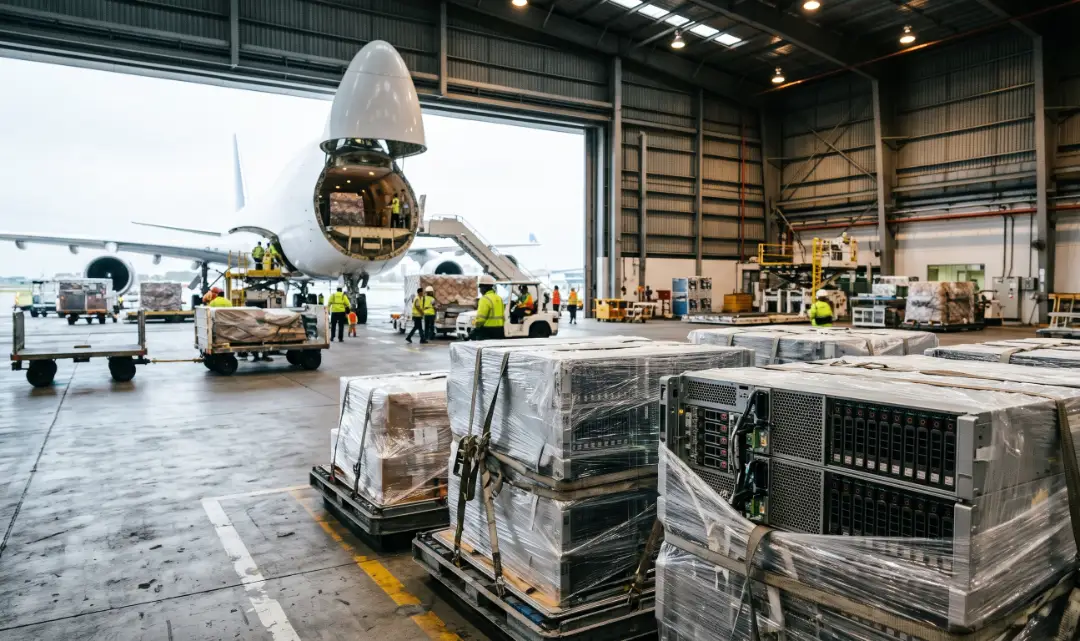
<p dir="ltr" data-path-to-node="4">US semiconductor giant Nvidia has instructed its server manufacturing partners to halt shipments of artificial intelligence servers bound for Malaysia, Singapore, Thailand, and Indonesia, according to a <i data-path-to-node="4" data-index-in-node="249">Financial Times</i> report published on November 26, 2026. Major original equipment manufacturers (OEMs) such as Dell Technologies and Supermicro—which integrate Nvidia’s high-performance processors into enterprise server racks—have notified buyers across the four Southeast Asian nations that their orders cannot be dispatched under Nvidia’s current directives.</p><p dir="ltr" data-path-to-node="5">The sudden shipment freeze comes in direct response to tightened US export controls enacted earlier this month. On November 16, the US Department of Commerce’s Bureau of Industry and Security (BIS) issued an interim final rule requiring formal export licenses for shipments of advanced AI chips and integrated server systems destined for key Southeast Asian markets. Washington’s regulatory crackdown is aimed squarely at shutting down indirect supply channels and regional cloud-rental loopholes that US officials suspect Chinese firms have used to obtain restricted computing power.</p><p dir="ltr" data-path-to-node="6">For high-tech supply chains and international air cargo operators, the directive represents an immediate bottleneck on one of Asia’s fastest-growing technology logistics corridors. Over the past two years, Southeast Asian hubs—particularly Singapore and Johor in Malaysia—have become major destinations for heavy airlifted payloads of GPU-equipped servers, liquid-cooling manifolds, and hyperscale data center hardware shipped from assembly plants in Taiwan, South Korea, and North America.</p><p dir="ltr" data-path-to-node="7">Industry sources familiar with the matter indicated that it remains unclear whether the suspension is a temporary operational pause while Nvidia and its OEM partners establish compliance protocols, or a prolonged freeze pending federal license approvals. Neither Nvidia, Dell, nor Supermicro immediately issued formal public statements following the report, leaving regional data center developers and freight forwarders scrambling to assess scheduled Q4 equipment deliveries.</p><p dir="ltr" data-path-to-node="8">Across Southeast Asia’s rapidly expanding digital infrastructure sector, the regulatory rollout has sparked widespread operational uncertainty. Regional cloud operators noted that Washington’s new licensing framework lacks clear procedural guidance, leaving buyers and suppliers unsure how to submit applications while a 90-day regulatory transition window ticks down. "No one knows how to apply for this licence while the 90-day clock is ticking. It’s causing sheer chaos in the region," a cloud provider executive told the <i data-path-to-node="8" data-index-in-node="525">Financial Times</i>.</p><p dir="ltr" data-path-to-node="9">The restrictions strike at a commercially vital region for Nvidia’s global balance sheet. According to corporate disclosures, Nvidia recorded $104 billion in revenue billed through its Singapore subsidiary in 2025—a 72% year-on-year surge—reflecting Singapore’s role as a central regional procurement and billing hub for enterprise technology buyers across Asia.</p><p dir="ltr" data-path-to-node="10">Scrutiny over Southeast Asian AI infrastructure has intensified throughout 2026 amid heightened US enforcement actions against potential export-control circumvention. Regional data center operators—including Singapore-based cloud providers that lease high-density GPU capacity—have faced mounting regulatory examination over whether remote compute access or physical hardware transshipments were being utilized to bypass US restrictions on mainland China.</p><p dir="ltr" data-path-to-node="11">Logistics analysts and trade compliance specialists warn that until the Bureau of Industry and Security clarifies license adjudication timelines and compliance verification standards, high-value AI server shipments into Malaysia, Singapore, Thailand, and Indonesia will remain largely stalled. Freight forwarders managing dedicated transpacific and intra-Asian tech charters are now bracing for booking cancellations, warehouse staging backlogs, and potential diversions of server allocations toward unrestricted markets.</p>
Nvidia Halts AI Server Shipments to Four Southeast Asian Countries
US chipmaker Nvidia has instructed its manufacturing partners—including Dell and Supermicro—to suspend shipments of servers containing its advanced artificial intelligence chips to buyers in Malaysia, Singapore, Thailand, and Indonesia, according to the Financial Times. The freeze follows an interim final rule issued by the US Commerce Department’s Bureau of Industry and Security (BIS) on November 16, 2026, requiring export licenses for advanced AI chip shipments to Southeast Asia in an effort to close off transshipment and data center diversion routes used by Chinese firms. The abrupt halt has disrupted high-tech hardware air freight pipelines and triggered confusion among regional cloud providers navigating an ambiguous licensing process.