
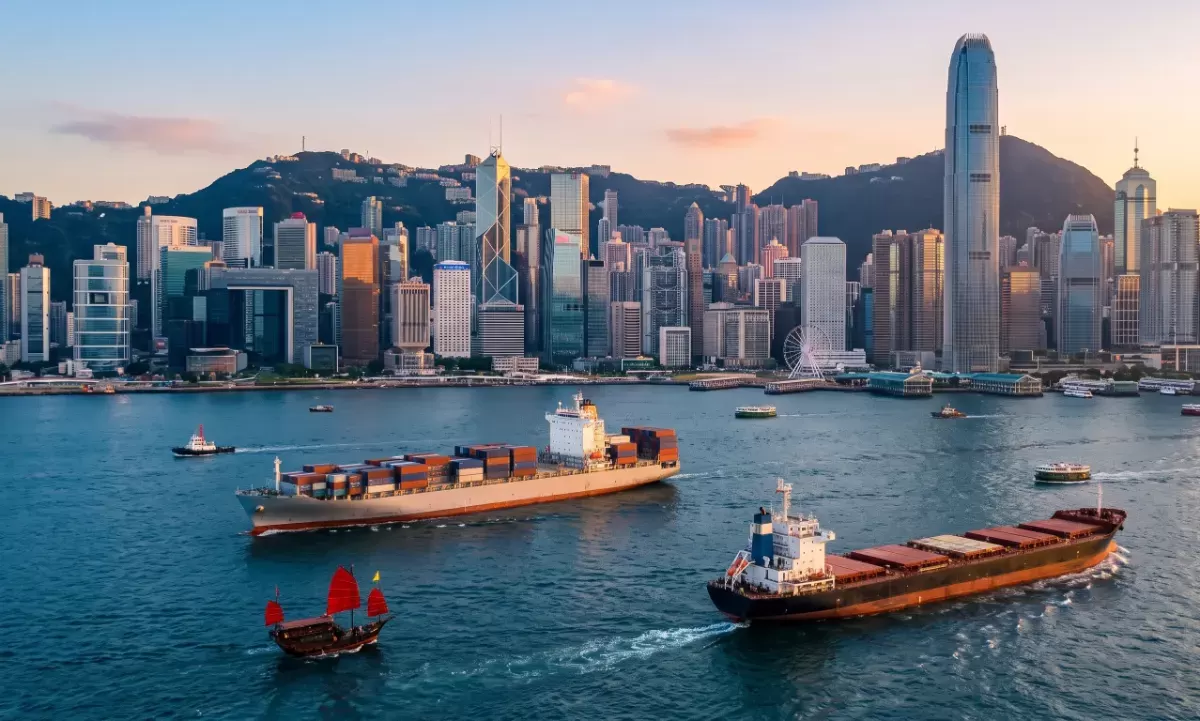
Maritime industry leaders and shipowners in Hong Kong have strongly welcomed the passage of sweeping new tax legislation designed to cement the city’s status as a premier international maritime and trading hub. Passed by the Legislative Council on November 25, 2026, the Inland Revenue (Amendment) (Tax Concessions for Shipping-related Activities and Physical Commodity Trading) Bill 2026 introduces a landmark half-rate profits tax concession for physical commodity traders while upgrading existing fiscal incentives across the maritime services sector. Following its scheduled gazettal on December 4, the measures will apply retroactively to years of assessment beginning on or after April 1, 2025.
Under the core provisions of the new ordinance, qualifying physical commodity traders will see their profits tax rate halved from the standard corporate rate of 16.5% down to 8.25%. Recognizing that commodity trading houses serve as primary commercial clients for maritime transport, legal, and insurance services, policymakers crafted the incentive to draw major global trading desks to establish or expand physical operations in Hong Kong. Government economic assessments project that the new commodity trading tax regime alone will generate roughly HK$4.6 billion in annual economic benefits for the territory.
Alongside the commodity trading measures, the legislation introduces four major structural enhancements to Hong Kong’s existing shipping tax regimes. First, it broadens the statutory definition of qualifying ship leasing by removing the requirement that operating or finance leases exceed one year, while expanding the eligible pool of lessees beyond ship operators and lessors to include any commercial party. This flexibility aligns tax policy with modern, short-term, and specialized maritime chartering structures.
Second, the bill replaces the previous 20% tax base concession for qualifying ship lessors engaged in operating leases with a direct one-off tax deduction for ship acquisition expenditure. Third, it widens the scope of allowable interest deductions to cover financing obtained from unassociated financiers outside Hong Kong—including non-financial institutions—as well as qualifying overseas associated financiers. Together, these capital allowances substantially lower the effective cost of vessel financing and fleet renewal executed through Hong Kong entities.
To ensure Hong Kong’s preferential tax framework remains competitive amid evolving international tax rules, the legislation also introduces an optional 15% concessionary tax rate across both the shipping-related and physical commodity trading regimes. Multinational enterprise groups falling within the scope of the OECD’s Base Erosion and Profit Shifting (BEPS) 2.0 global minimum tax rules can elect this 15% rate on an annual basis. While existing 0% or 8.25% rates remain available, the 15% option reduces administrative burdens and complex top-up tax calculations under Global Anti-Base Erosion (GloBE) rules.
The Hong Kong Shipowners Association (HKSOA) praised the government’s proactive legislative action, noting that the domestic maritime industry has faced mounting headwinds in recent years from geopolitical tensions, shifting trade protectionism, and capital-intensive decarbonization mandates. HKSOA Chairman Richard Hext emphasized that attracting physical commodity traders directly strengthens the synergy between Hong Kong’s three core pillars of international finance, shipping, and trade.
To prevent shell operations and ensure genuine local economic substance, qualifying enterprises utilizing the concessions must satisfy strict statutory activity thresholds. Qualifying physical commodity traders, for example, must achieve minimum annual trading revenues of HK$700 million, conduct sale and purchase contracts involving physical delivery in Hong Kong, and route a specified proportion of their maritime service expenditures—such as freight forwarding, marine insurance, and ship broking—through Hong Kong-based service providers.
With the enactment of the Amendment Ordinance, Hong Kong builds upon earlier tax reforms rolled out between 2020 and 2022 that targeted ship leasing, marine insurance, shipmanagement, and ship agency businesses. Maritime analysts and tax advisors note that by linking commodity trade flows directly with local shipping services and modernizing fleet financing rules, Hong Kong has positioned itself to capture greater market share across Asia’s maritime value chain.