
The global shipping industry is accelerating its shift toward battery-electric propulsion, but a fundamental question is emerging: can the world's shipyards build these vessels fast enough to meet demand? Robert Clifford, founder and chairman of Australia's Incat Tasmania, has raised this concern after witnessing firsthand the intense international interest in the company's electric ferry projects.
Incat recently delivered Hull 096, named "China Zorrilla," which entered commercial service between Argentina and Uruguay. The vessel is the world's largest battery-electric ship and has attracted significant attention from ferry operators worldwide. Clifford described the reaction as "extraordinary," with many operators eager to see the vessel in operation and understand what it means for their own fleets.
The conversation within the industry has shifted dramatically. At the recent Interferry conference in Thailand, electric propulsion was "front and centre," with growing recognition that battery-electric technology is the way forward for short-sea shipping. This marks a departure from years of debate over hydrogen, ammonia, and other alternative fuels, which have dominated industry discussions but faced infrastructure and cost barriers.
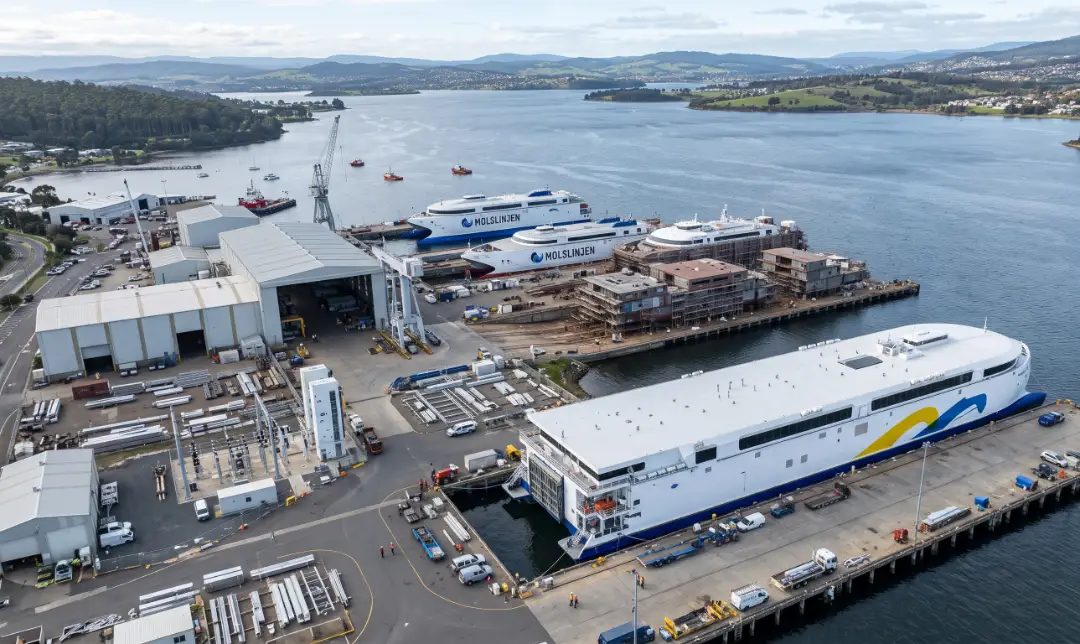
Incat is currently building three large electric ferries for Danish operator Molslinjen. These vessels are designed to demonstrate that electric ferries can operate at speeds exceeding 40 knots and recharge in approximately 30 minutes, allowing operators to maintain existing schedules without burning fossil fuels. The battery systems for these ferries, totaling 165 MWh across the three vessels, are being supplied by AYK Energy, with each ship carrying 55 MWh of storage capacity.
To respond to growing demand, Incat is working toward a significant expansion of its shipbuilding capacity. Once fully realized, the plans could see the Tasmanian yard producing up to 12 large electric and hybrid-electric ships every year. Clifford noted that a few years ago, this target might have sounded overly ambitious, but today his greatest concern is that it might not be enough to satisfy global demand.
The scale of the opportunity is enormous. There are thousands of fossil fuel-powered ships operating around the world that will eventually need to be replaced. Increasing pressure to reduce emissions, combined with continuing advances in battery technology, is expected to accelerate this transition. Clifford emphasized that the question is no longer whether the technology will be available, but how quickly shipbuilders can respond to the market.
For Tasmania, the opportunity extends beyond Incat itself. Clifford pointed to the state's experience, technology, and skilled workforce as foundations for establishing Tasmania as a global center for electric shipbuilding. However, he acknowledged that expanding production capacity, developing necessary infrastructure, and training the next generation of shipbuilders will all be critical challenges that must be addressed.
The broader industry context supports this optimism. Battery-powered commercial vessels have surpassed 2,000 ships globally, and a coalition of more than 30 maritime organizations has launched an initiative targeting 20% electrification of international shipping by 2035. As battery technology continues to improve and costs decline, the pressure on shipyards to scale up production is only expected to intensify, making Incat's capacity expansion plans a bellwether for the industry's ability to deliver on its electric ambitions.