
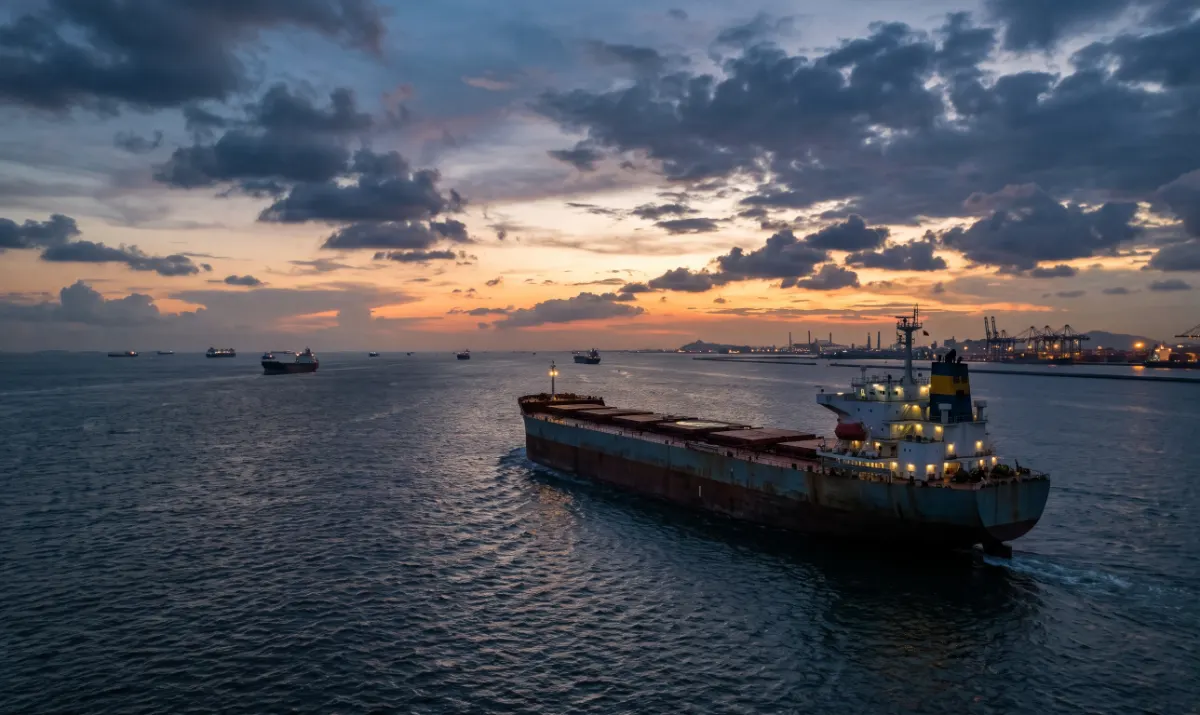
Jinhui Shipping and Transportation Limited, the Oslo-listed dry bulk subsidiary of Hong Kong's Jinhui Holdings, released its unaudited third-quarter and nine-month results for 2026 on November 26, reporting a mixed financial picture defined by a smaller fleet but sharply higher profitability.
Revenue for the third quarter fell 9% year-on-year to US$36.95 million, down from US$40.43 million in the third quarter of 2025. The company attributed the decline principally to a reduction in the number of operating vessels deployed during the period, following the disposal of eight Supramax vessels in the previous year and two more in the current year as part of its fleet renewal program. This reduction was partially offset by significantly higher charter rates.
The average daily TCE rate of the Group's fleet surged 40% year-on-year, rising from US$14,629 in Q3 2025 to US$20,414 in the current quarter. By vessel class, the Capesize fleet achieved an average daily TCE of US$33,860, the Panamax fleet US$20,546, and the Ultramax/Supramax fleet US$17,957, all representing substantial improvements over the prior year. The fleet maintained a 99% utilization rate during the quarter.
The strong rate environment translated directly to the bottom line. Jinhui reported a consolidated net profit of US$24.46 million for the third quarter, compared to just US$82,000 in the same period of 2025. Basic earnings per share rose to US$0.224 from US$0.001. The result included a net gain of US$8.4 million from the disposal of two vessels, as well as operating profit before depreciation and amortization of US$35.84 million, up from US$16.60 million a year earlier.
The company's performance was set against a backdrop of significant disruption in the Arabian Gulf. Jinhui noted that dry bulk demand during the third quarter continued to be shaped by geopolitical conflict in the region and transit restrictions through the Strait of Hormuz. These disruptions shifted trading patterns, extended voyage lengths, and tightened overall market conditions, collectively providing strong support for global freight rates.
The Baltic Dry Index reflected this tightening. The BDI opened July at 2,501 points, climbed to a peak of 3,628 points in early September, before easing to close the quarter at 3,113 points. The average BDI for Q3 2026 reached 3,041 points, a notable increase from 1,978 points in the same quarter of 2025. This elevated rate environment allowed Jinhui to offset the revenue impact of its reduced fleet capacity.
As of September 30, 2026, Jinhui operated a leaner fleet of nineteen vessels, comprising sixteen owned vessels and three chartered-in vessels, compared to twenty-nine vessels a year earlier. The company has continued its fleet renewal strategy, contracting for a total of eight Ultramax newbuildings during the first nine months of 2026. Following a delivery in mid-November, its orderbook stands at thirteen Ultramax newbuildings with expected deliveries between 2027 and 2030.
For the nine-month period, Jinhui reported revenue of US$106.20 million, down 11% from US$119.97 million, while net profit surged 124% to US$34.06 million from US$15.23 million. The Board resolved not to recommend an interim dividend for the quarter. Looking ahead, the company stated it remains focused on expanding and renewing its fleet through well-priced opportunities, including selective second-hand acquisitions, newbuilding orders, and vessel charters, to strengthen its market competitiveness and long-term sustainability.