
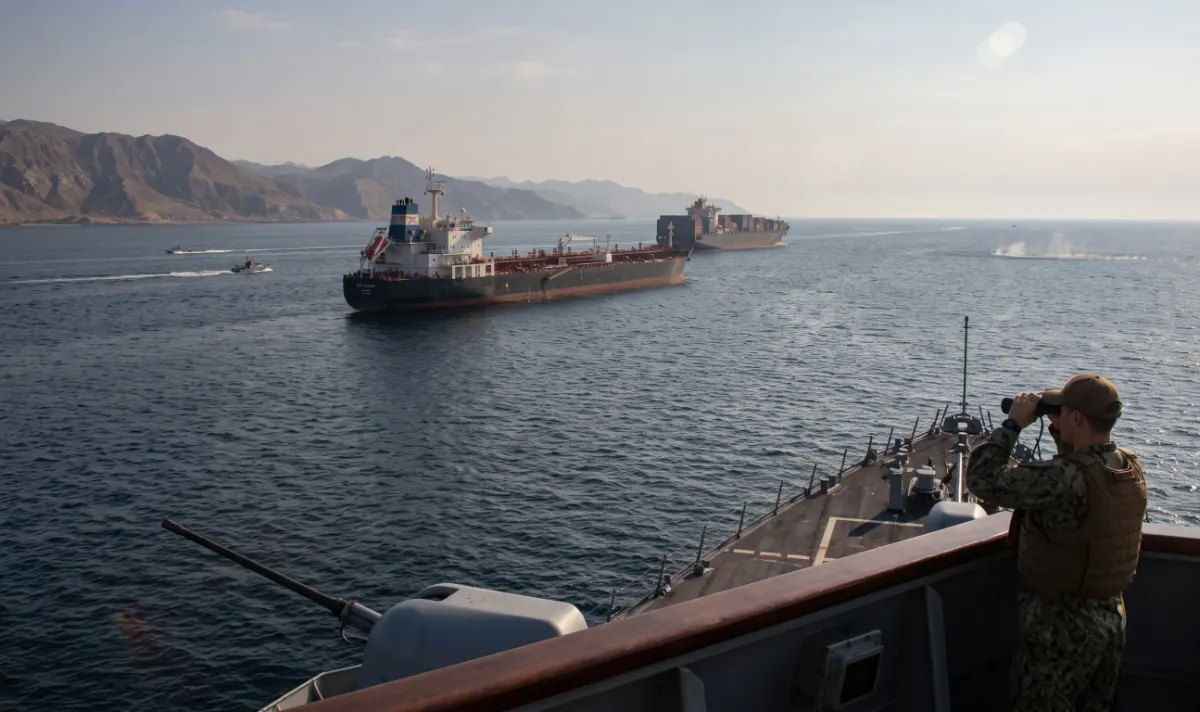
The reopening of the Strait of Hormuz is unlikely to trigger an immediate return to normal shipping operations, according to a new report from the Observer Research Foundation (ORF) Middle East. The analysis suggests that the commercial shipping industry’s assessment of risk has fundamentally shifted following recent regional crises, meaning that physical access to the waterway is only one of several factors determining whether tankers and cargo ships will transit the route .
Zeynab Malakouti, a Research Affiliate at the Middle East Institute at the National University of Singapore, wrote in the report that even after the strait is reopened, significant operational hurdles will remain. These include the physical clearance of naval mines, the complex management of congested shipping traffic, and the establishment of a sustainable security framework capable of preventing future disruptions. Until these issues are resolved, the mere declaration of an open waterway will not be sufficient to normalize trade flows .
The report highlights that the perception of risk is now as powerful a deterrent as actual physical restrictions. Cauvery Ganapathy, a Fellow at ORF Middle East, noted that the critical question for shipowners and charterers is no longer just whether a vessel can physically pass through the strait. Instead, commercial decisions will hinge on institutionalized risk appetites and whether the financial cost of navigating a vulnerable route is justified by the expected benefit .
This shift has direct implications for global supply chains, particularly regarding insurance premiums and freight rates. The authors note that disruptions in the Strait of Hormuz are increasingly interconnected with the Bab el-Mandeb Strait, creating a corridor of vulnerability that amplifies local conflicts into global economic shocks. Shipping companies may be forced to undertake costly rerouting or accept significantly higher war-risk insurance premiums, costs that ultimately filter through to consumers and energy markets .
The report also draws specific attention to India’s strategic interests in the northwestern Indian Ocean. Given the region’s critical importance to global energy routes and maritime connectivity, Sayantan Haldar of ORF’s Strategic Studies Programme identified opportunities for India to deepen maritime cooperation with regional and international partners. This includes leveraging existing frameworks such as the India-Middle East-Europe Economic Corridor (IMEC) to enhance stability and secure supply lines .
A central conclusion of the ORF analysis is that naval operations and military escorts, while necessary for managing immediate threats, are insufficient on their own to restore durable commercial confidence. The authors argue that lasting security requires addressing the underlying drivers of insecurity in the region, moving beyond a purely militarized response to a more comprehensive diplomatic and economic strategy .
To mitigate future shocks, the report calls for greater international cooperation and improved information sharing among stakeholders. Coordinated risk assessments between navies, insurers, and shipping companies could help create a more predictable operating environment, allowing commercial operators to make informed decisions rather than reacting to incomplete or conflicting security reports .
Ultimately, the ORF report serves as a warning that the shipping industry’s recovery from regional instability will be gradual and complex. The crisis has permanently altered the calculus of maritime commerce in the Gulf, and stakeholders must adapt to a new reality where security perceptions, insurance costs, and geopolitical risk are as decisive as the physical availability of the waterway itself .