
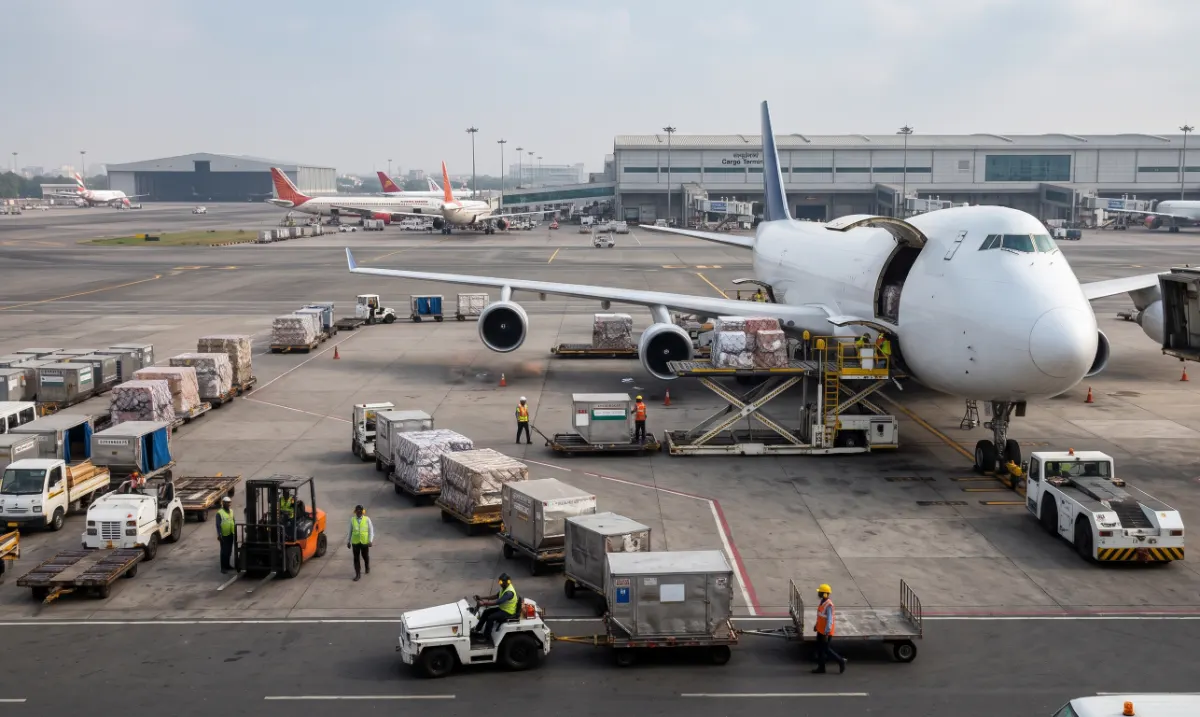
Accelerating global air cargo demand is exposing structural bottlenecks across India’s regional aviation network, where smaller airports struggle to capture lucrative freight opportunities despite surging production in surrounding hinterlands.
Data presented to Parliament indicates that out of 71 air cargo facilities across the country, only 49 airports operate dedicated cargo terminals, while the remaining 22 rely on passenger terminals to process freight.
The infrastructure deficit hits perishable agricultural exports—such as litchis, mangoes, and strawberries—particularly hard, as time-sensitive produce requires rapid cold-chain transit to prevent spoilage.
Even where regional terminals exist, operational gaps often prevent exporters from utilizing them effectively.
Airlines also face a commercial chicken-and-egg dilemma when evaluating freighter or belly-cargo deployment at non-metro airports. Carriers require predictable load factors and return cargo volumes before committing capacity, which remains difficult to guarantee without organized local aggregation centers that consolidate small batches from multiple producers.
Beyond terminal hardware, last-mile readiness poses another hurdle for regional exporters.
Trade experts emphasize that bridging these gaps requires coordinated public-private investment in on-site cold storage, automated screening equipment, and standardized air-worthy packaging units. Alongside physical upgrades, targeted outreach and training programs are needed to educate farmers and small businesses on export documentation and direct air-shipping procedures.
Until regional airports evolve from standalone runways into integrated logistics ecosystems connecting producers, aggregators, and carriers, India’s smaller aviation hubs will continue missing out on the broader upswing in global air cargo trade.