
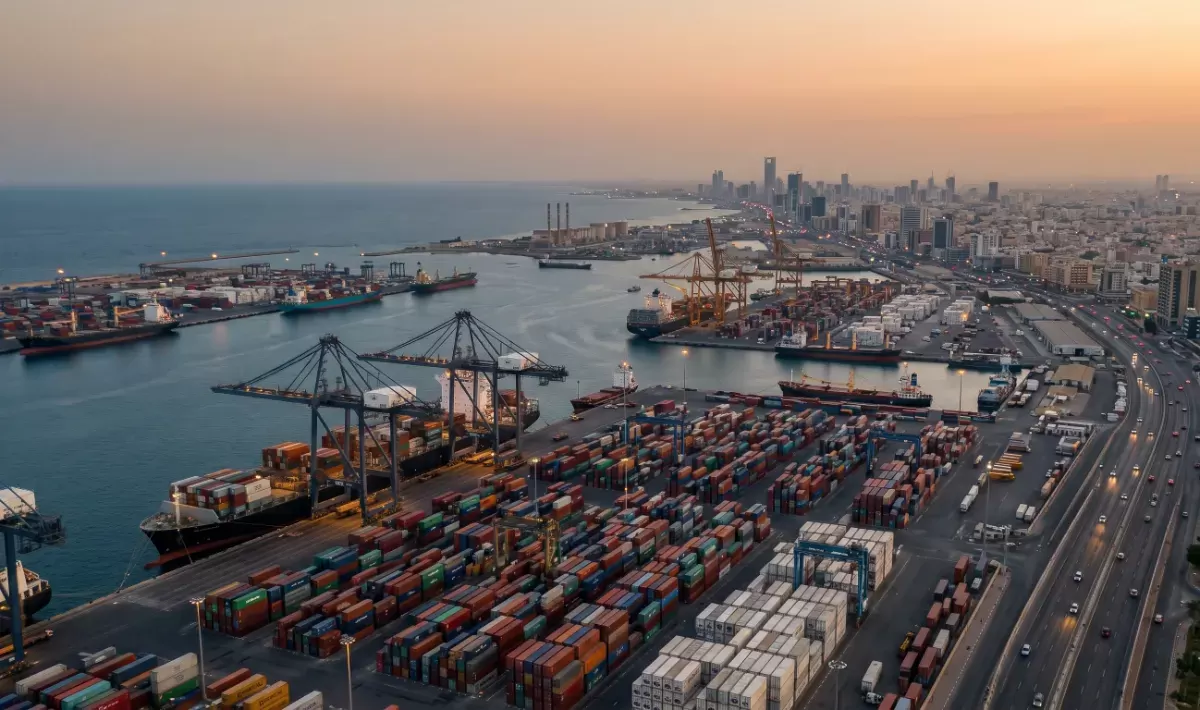
The Houthi armed group in Yemen issued a direct military threat on 25 November 2026, warning that Jeddah and all Saudi Arabian ports along the Red Sea coast would become targets if Saudi forces carried out their threatened bombing of Hodeidah port. Houthi military spokesman Yahya Saree made the announcement via the group's Al-Masirah television channel and social media, stating that "Jeddah port, along with all other Saudi ports along the Red Sea coast, will be targets". The statement marked a significant escalation in the exchange of threats between the Houthis and the Saudi-led coalition, raising immediate concerns for commercial shipping operating in the Red Sea corridor.
Saree's warning included specific instructions for those in the vicinity of the threatened ports. He urged employees, workers, and anyone near these ports to evacuate immediately and stay away, and called on all shipping companies to move their ships out of those ports without delay. The direct appeal to shipping companies underscored the Houthis' intent to disrupt maritime operations at Saudi Red Sea gateways, which include some of the region's most significant container and energy export terminals.
The Houthi threat came in direct response to an earlier warning from the Saudi-led coalition. The coalition's spokesperson, Turki al-Maliki, had posted on X that the joint forces command requested civilians to evacuate Hodeidah port on Yemen's western Red Sea coast for their safety. The coalition also published a schematic of Hodeidah port to guide civilian evacuations. The sequence of warnings indicated that both sides were preparing for an escalation around the contested port, which serves as a critical entry point for humanitarian and commercial supplies into Houthi-controlled territory.
The threats were quickly followed by military action. Hours after issuing the evacuation warning, the Saudi-led coalition announced it had targeted operational capabilities at Hodeidah port and destroyed a number of targets in the Saada and Amran governorates, both areas under Houthi control in northern Yemen. The Houthi-affiliated Al-Masirah television reported an "attack on Hodeidah port" without providing further details, and no casualties were immediately reported. The exchange represented a sharp intensification of hostilities that had been building since September 2026, when fighting between the Houthis and Saudi forces escalated as the Houthis advanced toward the Bab al-Mandeb Strait.
The timing of this escalation is particularly significant for global shipping. The Bab al-Mandeb Strait, located at the southern entrance to the Red Sea, is a strategic maritime chokepoint through which a substantial portion of Asia-Europe trade and Middle East energy exports passes. Recent data showed that containership traffic through the Suez Canal had increased 73% year-on-year in the week ending 15 November, with 60% of Asia-Europe capacity routed through Suez again. However, security analysts had already cautioned that this improving traffic picture should be viewed with caution, noting that government forces had pulled back from positions overlooking the strait and the Houthis were re-establishing their position around the chokepoint.
For cargo operators and freight forwarders, the immediate operational implications are significant. The Houthi call for shipping companies to withdraw vessels from Saudi Red Sea ports introduces fresh uncertainty for carriers already navigating a complex risk environment. The threat extends beyond Jeddah to "all Saudi ports along the Red Sea coast," a category that includes major facilities such as King Abdullah Port and Yanbu, which handle substantial container, bulk, and energy cargo volumes. Any disruption to these gateways would force rerouting decisions, potentially adding transit time and cost to supply chains connecting Asia, Europe, and the Middle East.
The broader context of the Red Sea security situation has been deteriorating for months. The UN Security Council was warned in mid-November that maritime incidents had continued to increase, with commercial vessels facing various forms of attack and numerous ships and crews stranded in the Gulf for months. The International Maritime Organization had recorded 134 confirmed incidents in the Strait of Hormuz and wider Middle East maritime area as of 11 November, with 25 seafarers killed. A UN official cautioned that the current maritime arrangements in the Middle East remained "costly, unpredictable and unsafe," with disruptions raising energy, transportation, and insurance costs and threatening food security.
The 25 November exchange of threats and strikes represents a further deterioration in an already fragile maritime security environment. Unlike previous Houthi threats that focused primarily on Israel-linked vessels or shipping in the Bab al-Mandeb approaches, this warning explicitly targets Saudi port infrastructure, expanding the potential scope of disruption. For the logistics sector, the key question in the coming days will be whether the Houthis follow through on their threat to attack Saudi Red Sea ports, and whether shipping companies begin diverting vessels away from Jeddah and other Saudi gateways. The Saudi-led coalition's decision to proceed with strikes on Hodeidah despite the Houthi warning suggests that both sides are prepared for further escalation, leaving the Red Sea shipping corridor facing heightened risk into the winter season.