
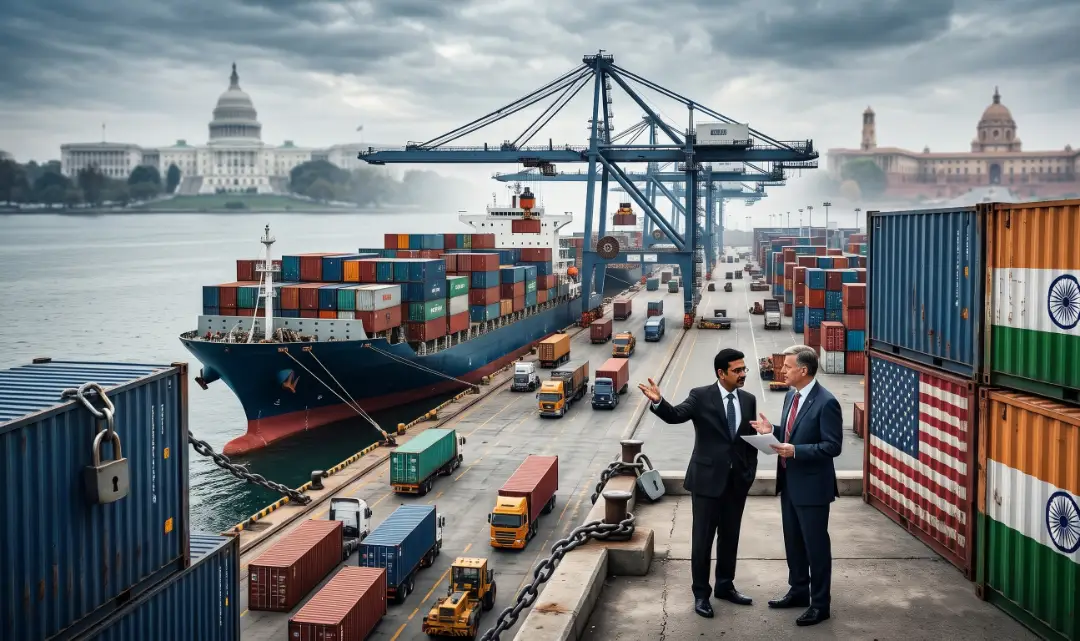
The United States is preparing to unveil the findings of a months-long Section 301 investigation into alleged excess industrial capacity in 16 major trading partners, a move that could result in additional tariffs on a broad range of Indian exports to the American market. The investigation, initiated on 11 March 2026 under Section 301 of the Trade Act of 1974, covers China, India, the European Union, Japan, South Korea, Mexico, Vietnam, Taiwan, Thailand, Malaysia, Indonesia, Switzerland, Norway, Singapore, Bangladesh, and Cambodia . US Trade Representative Jamieson Greer is expected to announce the findings as early as this week, though the timing remains subject to change .
The proposed duties would stack on top of existing tariffs imposed during President Trump's second term, including the 10% additional duty on many Indian products announced in July 2026 following a separate investigation into forced labour enforcement . According to reports, the EU, Japan, and South Korea—which have negotiated trade arrangements with Washington—are likely to face overall tariff rates of 15% or lower. India and Vietnam, however, could face higher duties based on their respective agreements with the Trump administration . China is expected to be among the most heavily affected economies, though a trade truce due to expire on 10 January 2027 currently caps second-term tariffs on Chinese goods at 20% .
The investigation was launched to rebuild Trump's global tariff architecture after the US Supreme Court struck down the "Liberation Day" reciprocal tariffs in February 2026. The administration has argued that government subsidies and state support in these economies have created excess industrial capacity, enabling manufacturers to export goods at lower prices and disadvantaging American producers . The initiation notice identified possible excess capacity in India's solar modules, petrochemicals, steel, textiles, health-related goods, construction materials, and automotive products .
India's Commerce Ministry responded to the investigation in April 2026, arguing that the probe was premised on aggregate macroeconomic indicators without identifying any specific act, policy, or practice of India that could be considered "unreasonable or discriminatory" under Section 301(b) of the Act . Indian officials maintain that there is no structural excess capacity in India and that any surplus production is in anticipation of higher demand in the world's fastest-growing major economy .
The timing of the announcement is particularly sensitive for India-US trade relations. The two countries have been negotiating an interim bilateral trade agreement for 21 months, with India insisting that any deal must provide tariff advantages over its key competitors in the American market . Commerce Secretary Rajesh Agrawal has stated that the legal agreement has been negotiated and will be concluded soon, but noted that countries are seeking certainty in trade arrangements and may not be able to sign agreements until the US establishes its new tariff architecture .
From a logistics and EXIM perspective, the potential tariff increases introduce fresh uncertainty for Indian exporters who have demonstrated resilience despite the volatile trade environment. India's merchandise exports grew 22% year-on-year to $309.1 billion, with exports surging 45% in October 2026 alone . Approximately 45% of Indian exports to the United States were exempt from the July 2026 additional tariff, including generic medicines, smartphones, and certain other products already subject to separate US tariffs . The new measures could affect a broader range of goods, though the final product coverage and effective dates remain undisclosed.
The final tariff rates, the range of products covered, and the date on which the new duties will take effect have not yet been determined . The USTR's report will be followed by hearings before final tariffs are announced, a process expected to take approximately 45 days . Based on the final tariff levels, governments will engage in negotiations for trade deals. India is confident of negotiating an arrangement where its exports enjoy a comparative advantage over rivals from the region . For cargo operators and freight forwarders handling US-bound Indian exports, the coming weeks will require close monitoring of the USTR's announcement and subsequent negotiations, as the outcome will determine the tariff burden on key product categories and the competitiveness of Indian goods in the American market.