
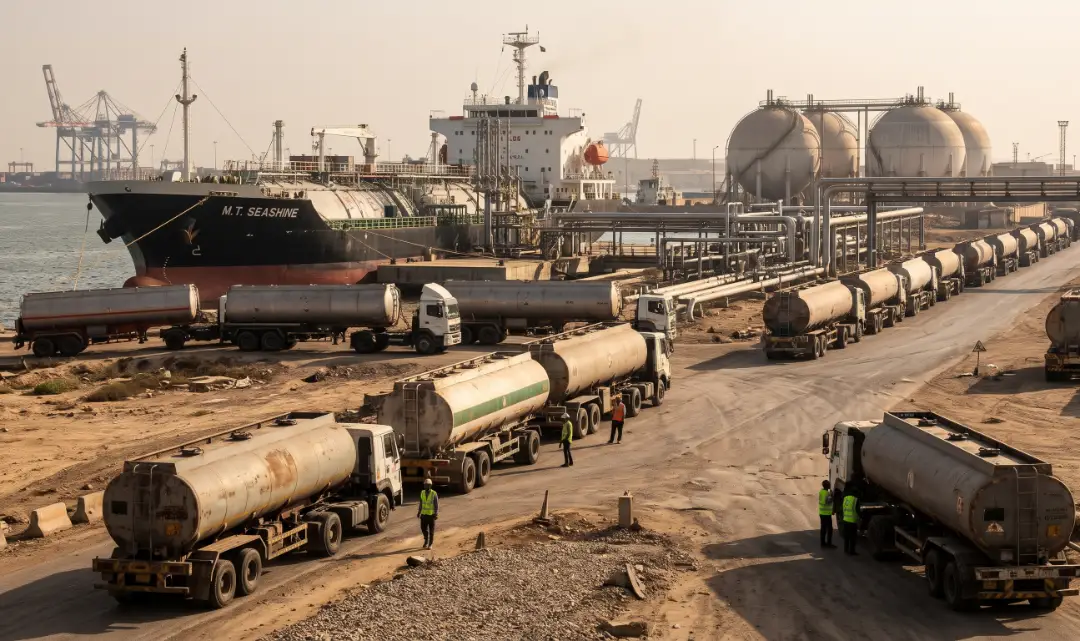
Pakistan’s attempt to moderate domestic liquefied petroleum gas prices through expanded seaborne imports has run into a structural bottleneck that exposes deep weaknesses in the country’s LPG logistics chain. As of 24 November 2026, approximately 32,000 tonnes of imported LPG remain stuck at sea terminals, unable to move into the domestic market because there are not enough tankers available to lift the cargo. The stranded volume comprises a 20,000-metric-tonne consignment at the Engro terminal—15,000 tonnes arranged by Sui Southern LPG Limited and 5,000 tonnes by a private importer—and a 12,000-tonne cargo arranged by Pakistan State Oil .
The root cause of the tanker shortage is a rational economic response by transport operators to distorted incentives. A substantial number of LPG tankers have shifted toward the Iranian border, where transporting cheaper LPG from across the frontier generates higher earnings than hauling imported cargo from Port Qasim. Latest data shows LPG inflows via the Iranian border have surged to around 7,500 tonnes per day, compared with normal volumes of approximately 3,000 to 3,500 tonnes. This diversion has left the formal import supply chain starved of the road transport capacity needed to clear cargo from port terminals .
The consequences for transport costs have been immediate and severe. Tanker rental charges have risen from Rs22,000 to Rs50,000, more than doubling the cost of moving LPG from port to inland distribution points. This increase adds directly to the landed cost of imported LPG and further erodes any price advantage that large-scale seaborne imports might have offered. The surge in transport charges also highlights the leverage that tanker operators exercise over the supply chain, a vulnerability that becomes acute when alternative, more profitable routes exist .
The stranded cargoes themselves are financially problematic. The PSO shipment, carried aboard the vessel M.T. SEASHINE, was purchased through Oman’s OQ Trading at $540 per tonne, translating to a landed cost of approximately Rs483,000 per tonne. At that price, the cargo has proved difficult to market domestically, where buyers can access cheaper supplies. PSO faces a potential loss of up to Rs1 billion on this single shipment, while the SSGC cargo, imported at $480 per tonne, is also encountering difficulties finding buyers. Together, the two state-owned entities could face combined losses of up to Rs2 billion .
The vessel M.T. SEASHINE arrived at Port Qasim’s outer anchorage on 18 November 2026, carrying 21,860 metric tonnes of LPG from Congo. Although expected to berth within three days, it remained offshore as of 24 November. The ship was offered a berth at Engro Vopak Terminal on 21 November but declined at the last minute after failing to reach agreement on demurrage charges. The vessel’s continued wait has also delayed the unloading of SSGC’s shipment by more than a day, creating a cascade of delays at the terminal .
The contrast between public-sector and private-sector import pricing underscores the scale of the problem. Private buyers have imported substantially smaller LPG cargoes at around Rs90,000 per tonne less than the record-sized vessels brought in by state-owned enterprises, even before demurrage charges are included. This gap reflects both differences in procurement timing and the risks of large-volume purchases in a volatile market. The government’s revised LPG import and pricing policy, introduced on 3 November 2026, has not resolved the underlying mismatch between import costs and domestic market clearing prices .
For Pakistan’s LPG consumers, the port bottleneck means that the anticipated relief from seaborne imports has not materialized. Official OGRA-notified prices for November 2026 stand at Rs294.07 per kilogram, yet open-market prices have been reported as high as Rs520 to Rs630 per kilogram in various cities, reflecting supply scarcity and distribution inefficiencies. The winter season, when LPG demand typically peaks for heating and cooking, is approaching, and the stranded cargoes at Port Qasim represent fuel that cannot reach households until the tanker shortage is resolved. The government has directed state-owned companies to arrange bulk imports and has opened the market to greater competition, but until the logistics bottleneck at the port is cleared, the gap between import arrivals and domestic availability will persist .