
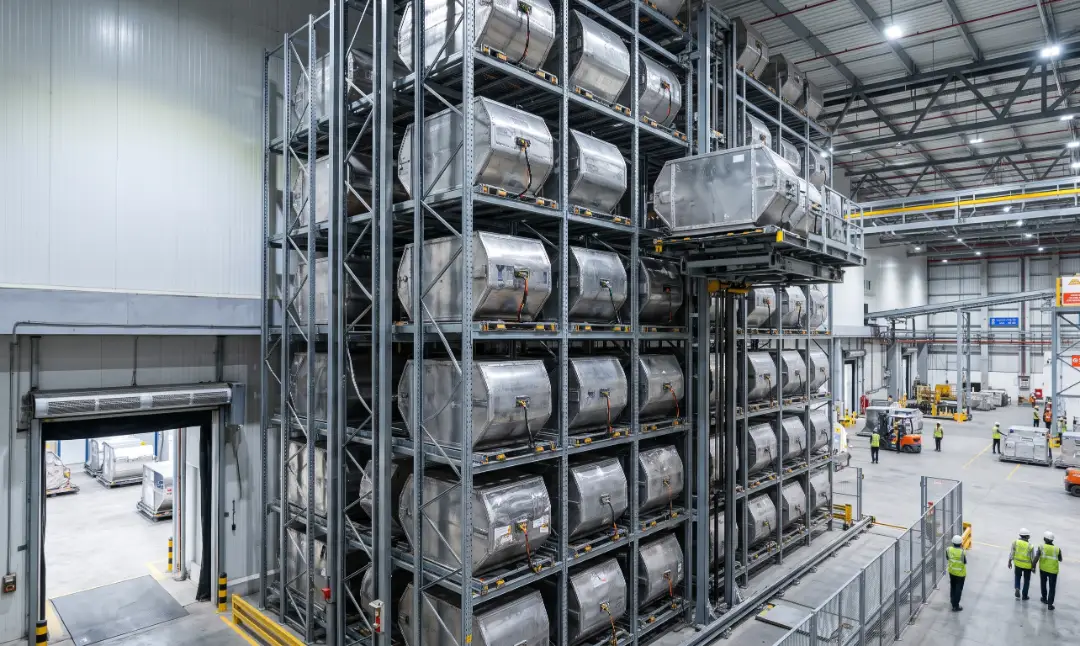
GMR Hyderabad International Airport Ltd. (GHIAL), a GMR Aero-led consortium, has commissioned an upgraded Elevated Transfer Vehicle (ETV)-based storage system at its Cargo Terminal, marking a significant enhancement of the airport's air cargo infrastructure. The upgraded system has increased the terminal's Unit Load Device (ULD) storage capacity from 33 to 80 ULDs, representing an increase of over 140 percent . By creating additional storage vertically, the cargo terminal can now accommodate higher cargo volumes without expanding its physical footprint, providing greater flexibility to manage multiple freighter operations simultaneously and supporting future cargo growth.
The ETV system represents a shift toward automation and smart infrastructure at the Hyderabad cargo terminal. The upgrade includes high-precision load-cell weighing and automated storage allocation, which support the handling of heavier, high-density pharmaceutical shipments . Thermal isolation seals and air curtains further help limit ambient air ingress into temperature-controlled storage areas during transfers, maintaining cold-chain integrity throughout the handling process . These features are particularly relevant for Hyderabad's role as a major pharmaceutical manufacturing and export hub, where temperature-sensitive cargo demands stringent handling protocols.
A key feature of the upgraded facility is its integration with the Cargo Terminal's Cool Corridor, enabling ULDs to move from the automated multi-level storage system into pre-chilled, temperature-monitored holding areas . This integration minimises exposure of temperature-sensitive shipments to ambient conditions during transfer and supports cold-chain continuity from the moment cargo enters the facility until it is loaded onto aircraft. The system also includes in-rack charging infrastructure for active temperature-controlled ULDs, allowing battery-operated refrigeration units to remain powered while in storage—a critical capability for pharmaceutical shipments that require uninterrupted temperature regulation .
The operational implications of this upgrade extend beyond mere capacity expansion. By enabling the terminal to handle multiple freighter operations simultaneously, the airport can reduce bottlenecks during peak periods and improve turnaround times for cargo airlines . The additional storage capacity also provides a buffer that allows freight forwarders and logistics partners to manage fluctuations in cargo volumes more effectively, potentially reducing dwell times and improving overall supply chain efficiency. For an airport positioning itself as a regional cargo hub, this operational flexibility is essential for attracting and retaining airline customers.
Kadhir Kadhiravan, CEO of GMR Hyderabad International Airport Ltd., framed the upgrade within a broader strategic vision. "Our vision is to establish Hyderabad Airport as one of the most advanced and preferred air cargo gateways in the region, powered by infrastructure that is scalable, efficient and future-ready," he said . "This enhancement enables airlines, freight forwarders and logistics partners to move cargo with greater speed, reliability and flexibility, while supporting the growing demands of global trade" . The investment in automation and capacity-led infrastructure is intended not only to prepare for future growth but also to reinforce Hyderabad's position as a trusted hub for high-value, time-critical, and pharma cargo.
Sanjiv Edward, CEO of GMR Aero Cargo & Logistics, emphasised the customer experience dimension of the upgrade. "The upgraded ETV system adds greater flexibility to our cargo operations and strengthens our ability to manage a wider range of shipments at Hyderabad Airport," he stated . "The combination of increased storage, temperature-controlled handling and specialized infrastructure is particularly relevant for pharmaceutical and other high-value cargo. It also gives our teams greater operational flexibility as cargo volumes and requirements evolve" . This focus on operational adaptability reflects the dynamic nature of air cargo demand, particularly in the pharmaceutical segment where shipment profiles and regulatory requirements can vary significantly.
The timing of this upgrade aligns with Hyderabad's growing prominence in India's air cargo landscape. The airport handled 1,68,052 metric tonnes of cargo in FY25, up 17% year-on-year, with international volumes alone growing 28% . The commissioning of Cargo Terminal 2 in May 2026 added 50,000 metric tonnes of annual handling capacity, with expansion provisions to reach 100,000 metric tonnes . The ETV upgrade complements these earlier investments by optimising the utilisation of existing terminal space, ensuring that the airport can extract maximum value from its infrastructure while awaiting further expansion.
For the broader logistics ecosystem, the Hyderabad upgrade signals a maturation of India's air cargo infrastructure beyond the traditional gateways of Mumbai and Delhi. As pharmaceutical exports continue to grow and e-commerce-driven air freight demand expands, regional airports with specialised capabilities are positioning themselves to capture a larger share of this traffic. The Hyderabad ETV system, with its focus on cold-chain integrity and automated handling, represents a template that other Indian airports may seek to replicate as they compete for high-value cargo. The investment also underscores the role of private operators like GMR in driving infrastructure modernisation, demonstrating how public-private partnerships can deliver specialised logistics capabilities that support India's export competitiveness.