
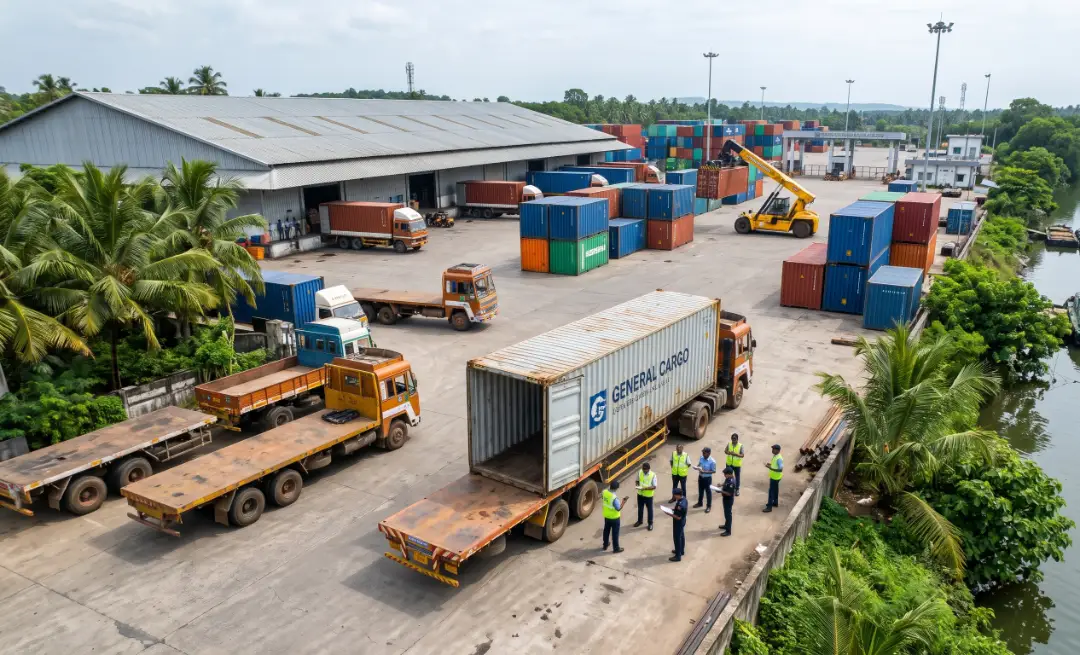
Vizhinjam International Seaport, which began commercial operations in 2024 and initiated direct export-import operations in August 2026, has secured its first major inland cargo linkage with the movement of 1,500 tonnes of natural rubber to Kottayam Port and Container Terminal. The shipment, imported from Africa for MRF, India's leading tyre manufacturer, represents a strategic departure from the conventional logistics routing that has historically served the region. Under the previous arrangement, consignments destined for Kottayam were transshipped through Mumbai, a circuitous path that could extend delivery timelines to approximately one month.
The operational mechanics of this new arrangement involve 60 containers covered by three separate Bills of Lading, each accounting for 20 containers. The cargo has already been discharged at Vizhinjam and is being transported by road to the Kottayam ICD for customs verification, examination, and other mandatory clearance procedures. Once Customs grants Out of Charge clearance, the containers will continue on the same trucks to MRF's centralized warehouse in Kochi, completing the final leg of the journey without additional handling or transshipment delays.
Kottayam Port and Container Terminal Services, which began full operations as a customs station in 2012, holds the distinction of being Kerala's only Inland Container Depot. According to Kerala's Economic Review 2025, the facility handled 60,575 tonnes of cargo during the 2024-25 period. Situated on the Kodoor River along National Waterway 9, the terminal maintains inland-waterway access toward Cochin through National Waterways 3 and 9, positioning it as a critical node for importers and exporters across the central Travancore region. Its infrastructure includes a 40,000-square-foot warehouse, container yards, reach stackers, and electronic data interchange connectivity for cargo-related processes.
A significant secondary benefit of this arrangement lies in the potential for empty container reuse. Under current practices, exporters in the Kottayam region typically arrange for empty containers to be transported from Kochi before loading their goods for shipment, adding a costly repositioning step to the export supply chain. The containers arriving with the MRF rubber shipment, once unloaded at the Kochi warehouse, can be returned to the Kottayam ICD yard and made available for export cargo. This circular logistics model could reduce equipment repositioning requirements and support faster container turnover for regional exporters, though the actual savings will depend on matching available containers with exporters' specific requirements.
The strategic implications for Vizhinjam extend beyond this single shipment. The port's ability to attract and retain cargo bound for inland destinations demonstrates its growing role as more than a transshipment hub. By connecting with Kottayam ICD, Vizhinjam is effectively extending its hinterland reach into Kerala's interior, creating a gateway that serves both international transshipment and domestic import-export needs. This development aligns with the objectives of Mission Samudra, Kerala's initiative to strengthen maritime trade and cargo transportation across the state.
For MRF, the routing decision reflects a pragmatic assessment of supply chain efficiency. The tyre manufacturer's designation of Vizhinjam as Port of Destination eliminates the Mumbai transshipment bottleneck that has historically added weeks to delivery schedules. While the announcement does not quantify the anticipated cost savings or specify a revised end-to-end delivery time, the elimination of a major intermediate handling point represents a meaningful improvement in supply chain predictability for a manufacturer dependent on consistent raw material flows.
The broader significance of this development lies in its demonstration effect for other importers and exporters in the region. If the Vizhinjam-Kottayam corridor proves operationally reliable and cost-effective, it could catalyze a shift in how cargo moves through Kerala's logistics network. The combination of a deep-water port capable of handling large vessels, an inland customs facility providing localized clearance, and the potential for container reuse creates a template that other ports and ICDs across India may seek to replicate. For now, the successful clearance and delivery of this inaugural consignment will serve as the critical test of whether this new routing arrangement delivers on its promise.