
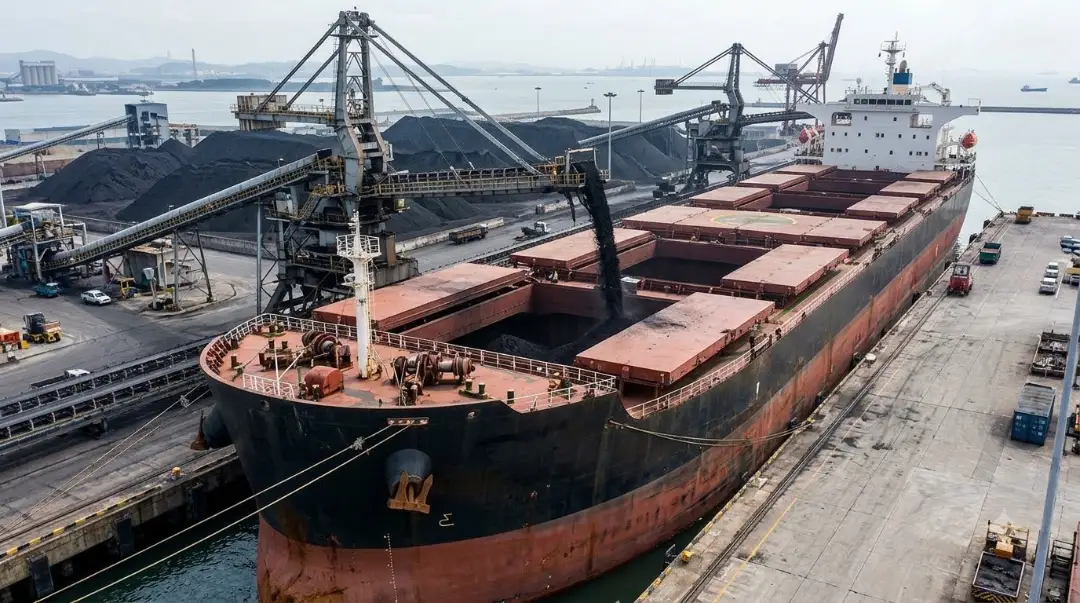
Eurasia Energies Private Limited has moved closer to establishing a new coking coal supply route into India, securing port support at both ends of a Mongolia-India corridor that would move coal by rail to Russian Far East gateways and then by sea to Paradip Port . The company signed a Memorandum of Understanding with Orissa Stevedores Limited for port-side and vessel support at the Indian end, and it has received a letter of support from a Russian Far East port for the trial shipment, which is planned for 2027.
The corridor's structure reflects the complexity of moving cargo across multiple jurisdictions and transport modes. On the Russian side, Eurasia works with a consortium of Russian partners covering rail forwarding, port operations, and ship agency, all operating under Eurasia's coordination as the corridor manager . This integrated approach is intended to provide a single point of accountability for a route that spans Mongolian mines, Russian rail and port infrastructure, and Indian discharge facilities.
The strategic rationale for the corridor is rooted in India's dependence on a narrow set of coking coal suppliers. India imports most of its coking coal from a small number of sources, with Australia taking the largest share . The Mongolia corridor would give Indian steel makers a new supply source, reducing dependence on a single origin and providing supply security through a planned, managed route with advance booking and stockpiling, rather than relying on spot availability.
The commercial logic is reinforced by the delivery point. Discharge at Paradip places the coal close to the steel plants of Odisha, Jharkhand, Chhattisgarh, and West Bengal, reducing inland transport costs for the ultimate buyers . The corridor is designed to offer a competitive landed cost through an efficient rail-and-sea route with a single coordinator, though the actual cost competitiveness will only be proven once the trial shipment is completed and the route's economics are tested in practice.
For India's steel logistics sector, the corridor represents an attempt to diversify supply chains that have been vulnerable to disruptions in traditional sourcing regions. Australia remains the dominant supplier, but the Mongolian route offers an alternative that bypasses the maritime chokepoints that have affected other trade flows in 2026. The use of Russian Far East ports as the maritime leg also leverages infrastructure that is geographically closer to Mongolia than India's traditional suppliers, potentially reducing transit times.
The timing of the MoU aligns with the broader pattern of supply chain diversification that Indian industry has undertaken in response to the disruptions of 2026. From crude oil procurement to fertiliser imports, Indian buyers have been actively seeking new sources and routes to reduce exposure to any single corridor or supplier. The coking coal corridor is part of that broader effort, and its progress will be watched as an indicator of whether new supply routes can be established at the scale and cost that Indian steel makers require.
Looking ahead, the key milestone is the trial shipment in 2027, which will test the route's operational viability and commercial competitiveness. Eurasia has not disclosed the volume of the trial shipment or the specific Russian port involved, and the corridor's scalability will depend on whether the trial proves that the route can deliver coal at a landed cost that is competitive with Australian supply. For now, the MoU establishes the framework for a new supply chain that, if successful, would add a significant alternative source to India's coking coal import mix.