
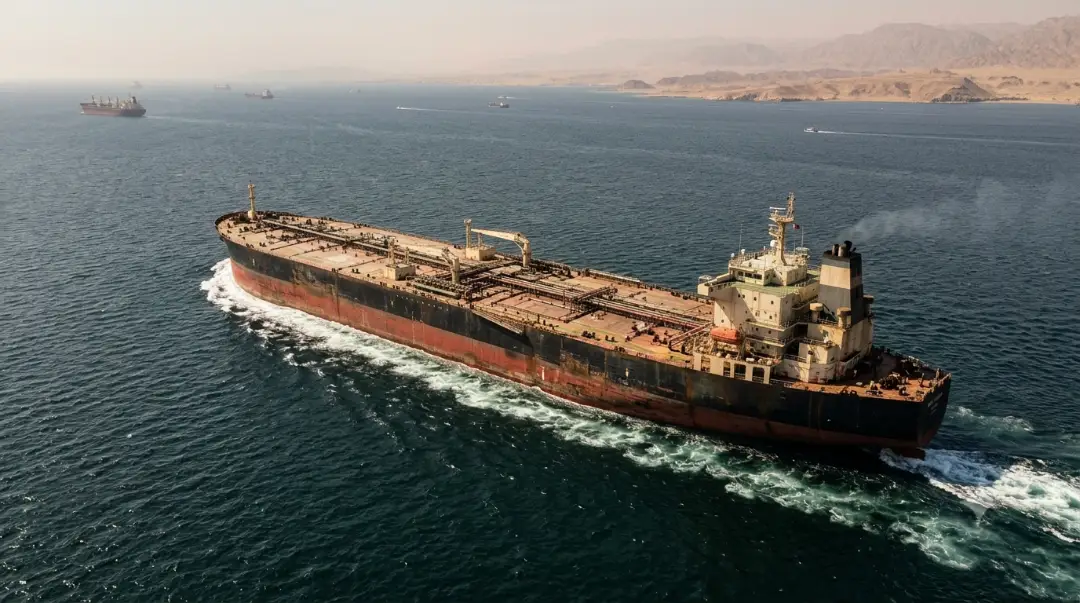
Indian refiners are moving decisively to lock in long-term tanker capacity, with Reliance Industries and Indian Oil Corporation leading a push to secure vessels on extended contracts as the Persian Gulf disruption makes spot-market shipping increasingly unreliable . The strategy, reported by The Economic Times on 21 November 2026, represents a structural shift in how India's largest crude buyers are managing their supply chains.
Reliance Industries has expanded its supertanker contracts from seven to approximately a dozen, a significant increase that gives the company greater control over the vessels that carry its crude imports . Indian Oil Corporation is also seeking to enhance its long-term tanker leases, according to the report, as state-owned refiners follow the private sector's lead in prioritizing supply security over spot-market flexibility . The move comes as freight costs rise and vessel availability tightens, driven by the ongoing disruptions in the Persian Gulf that have made Hormuz transits riskier and more expensive.
The logic behind the shift is rooted in the vulnerability that Indian refiners have experienced throughout 2026. When the Strait of Hormuz was effectively closed in the early phase of the conflict, refiners that relied on spot-market charters found themselves competing for a shrinking pool of willing vessels, often at rates that multiplied several times over. As we have covered extensively, HPCL struggled with last-minute shipowner withdrawals even when cargoes were available, and the broader market saw time-chartered crude carriers cost around $2–2.50 per barrel versus spot rates of $8–10 . Long-term contracts provide a hedge against that volatility by securing capacity in advance at predetermined terms.
The timing of this push aligns with the broader pattern of procurement adaptation that Indian refiners have undertaken. From delivered-basis crude purchases to diversified sourcing across Russia, the Middle East, Africa, and the Americas, the refiners have been restructuring their supply chains to reduce exposure to any single point of failure. The tanker contract expansion is the shipping-side complement to those procurement changes, addressing the vessel availability risk that can disrupt supply even when cargo is available.
For India's energy logistics sector, the refiners' move signals that the industry expects the Gulf disruption to persist well into 2027. If the Hormuz situation were expected to normalise quickly, there would be less rationale for locking in long-term tonnage at what may be elevated rates. The decision to commit to extended contracts suggests that the refiners are planning for a prolonged period of constrained vessel supply, and that they are willing to pay for certainty rather than gamble on spot-market availability.
The broader market context supports this assessment. The IMO has stated it cannot confirm the safety of Hormuz transits, and attacks on commercial vessels have continued through November . The diplomatic track, including Iran's two-day reopening proposal, has not produced a durable agreement. Against that backdrop, the refiners' decision to secure tanker capacity is a rational response to an environment where the physical security of the corridor remains unresolved.
Looking ahead, the key question is whether the long-term contracts will provide sufficient capacity to cover India's import requirements if the Hormuz situation deteriorates further. Reliance's expansion from seven to twelve supertankers is a meaningful increase, but India's total crude import volume of over 5.5 million barrels per day requires a substantial fleet. The refiners' ability to secure additional tonnage on favorable terms will depend on the global tanker market's balance of supply and demand, and on whether other Asian buyers are pursuing similar strategies. For now, the push for long-term contracts represents a defensive move that prioritizes supply security over cost optimization, and it reflects the refiners' assessment that the current disruption is not a short-term phenomenon.