
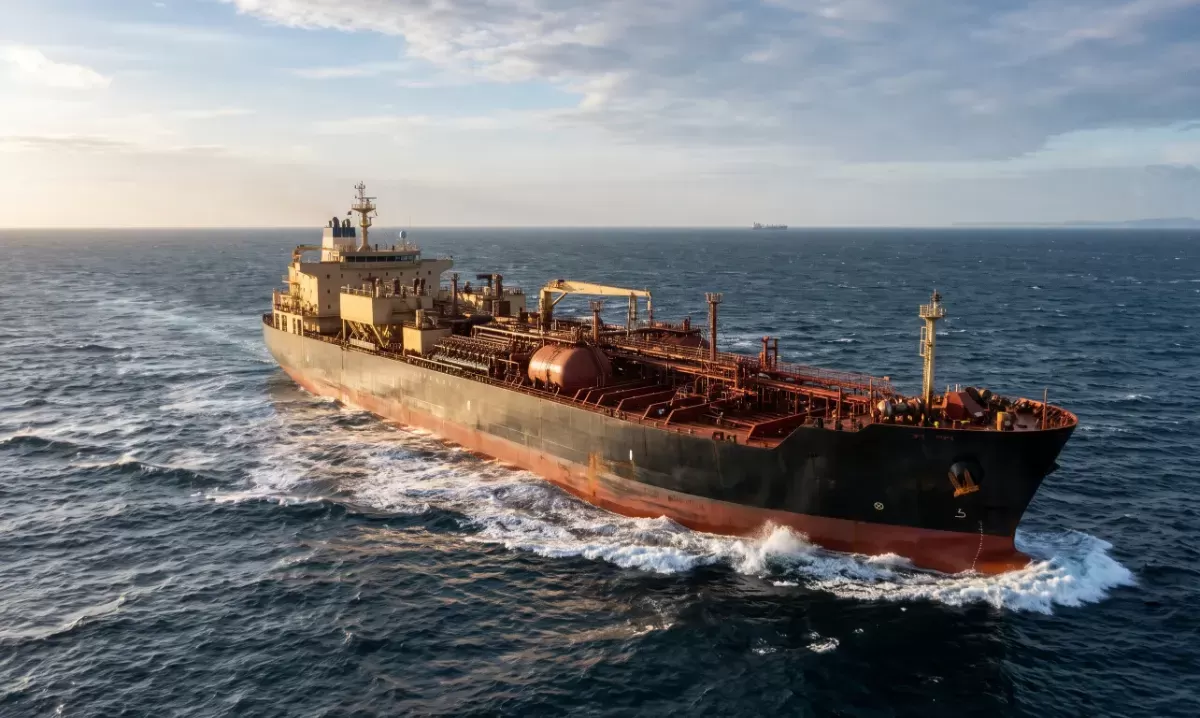
VLGC earnings have climbed to exceptional levels in November 2026, with shipbroker Intermodal reporting that rates on major US export routes have surpassed the record highs of September 2023 and the summer of 2026. The Houston–Chiba route is currently generating time-charter equivalent earnings of approximately $184,600 per day, while Houston–Flushing has reached around $233,600 per day, supported by sustained fixture activity in the West . These figures represent the upper bound of a market that has been progressively tightening since the onset of the Hormuz disruption.
The fundamental driver remains the continued loss of Middle Eastern LPG supply. The Strait of Hormuz has remained effectively under geopolitical uncertainty throughout November, with talks on a reopening yet to produce an agreement. Volumes remain below 50% of pre-war levels, and Red Sea loadings remain exposed to further attacks . Long-haul US cargoes have therefore become the primary replacement for lost Middle Eastern supply for Asian buyers, keeping the Baltic LPG index in the 21,000-point territory, above the third-quarter average .
The rerouting of trade flows has dramatically extended voyage distances. With the Panama Canal experiencing delays and costly transit slots, an estimated 50% of US LPG exports to Asia are now routed via the Cape of Good Hope, a voyage of approximately 15,900 miles compared with 9,370 miles via Panama . This tonne-mile expansion has absorbed vessel capacity at a time when the effective supply of ships remains constrained by owners' continued reluctance to enter the Persian Gulf and by war-risk insurance costs that remain elevated.
Demand-side fundamentals have reinforced the rate rally. Chinese LPG imports rose by approximately 1 million tonnes quarter-on-quarter in the third quarter of 2026, supported by positive margins at propane-to-propylene plants. India consumed 2.6 million tonnes in October, approaching monthly volumes seen before the Middle East conflict, with holiday-season inventory building expected to extend import strength into November and December . However, Intermodal cautions that persistently elevated propane and butane prices could slow further buying by Indian importers, particularly without state support .
A supply-side constraint has emerged in the US export chain. Phillips 66, which operates the Freeport LPG export terminal in Texas, declared force majeure on butane loadings following a power outage and compressor failure in early November. The disruption lifted US butane prices and raised concerns over prompt availability, although overall US LPG loadings have so far shown no clear slowdown. A prolonged outage would primarily tighten butane supply to Asian buyers rather than reduce the total number of cargoes available for fixing .
The market strength is also drawing capacity from adjacent segments. The ACS SP Nereus, a 100,000 cubic metre Very Large Ethane Carrier, loaded the first LPG cargo for its ship type at Houston, demonstrating that marginal tonnage can cross into the LPG trade when ethane employment is weak. Intermodal expects such crossovers to remain occasional, but their emergence underscores the intensity of current demand for gas carrier capacity .
The orderbook presents the most significant threat to the durability of current earnings. Eight VLGCs were delivered in the third quarter of 2026, with three more expected in the fourth quarter. Approximately 170 VLGC and VLAC newbuildings, totalling 15.5 million cubic metres, are due through 2030—equivalent to roughly 40% of the existing fleet. Contracting has continued at a strong pace, with 8.5 million cubic metres ordered in the first nine months of 2026 and a further 14 large gas carriers signed in October. With the fleet averaging about 11.7 years of age, demolition is unlikely to offset much of this growth .
The near-term outlook remains supported by long-haul US exports and Asian restocking, with seaborne volumes expected to fall by around 12% this year but tonne-miles projected to rise by approximately 2.5% . The decisive variable, however, is the timing of any settlement between Iran and the United States. A reopening of Hormuz would support a rebound in trade volumes projected for 2027, but it would also shorten average voyages just as newbuilding deliveries accelerate in 2027 and 2028. The key question, as Intermodal frames it, is whether US export growth can absorb the incoming tonnage once trade routes normalize .