
The COP31 summit in Antalya ended in disarray on November 22, 2026, after nearly 200 nations failed to agree on a cover decision for the first time since the Copenhagen summit in 2009 . The talks, co-chaired by Turkey and Australia, ran more than 49 hours past their scheduled close before COP31 President Murat Kurum gavelled the proceedings to a halt, conceding that "unbridgeable red lines" had prevented consensus . The failure was driven by a familiar but deepening divide: the European Union, Pacific island states and Latin American nations refused to endorse a text that omitted any reference to fossil fuels, while oil-producing states led by Saudi Arabia blocked language on phasing out coal, oil and gas .
For the shipping industry, the COP31 collapse is not merely a distant diplomatic failure. International shipping accounts for roughly three percent of global greenhouse gas emissions, and the sector's regulatory trajectory now depends almost entirely on the IMO, the UN body responsible for maritime decarbonisation . The COP process, with its consensus-based decision-making, has proven vulnerable to a handful of petrostates exercising effective veto power over climate ambition . The IMO, by contrast, operates under a different treaty framework: amendments to the MARPOL Convention can be adopted by a two-thirds majority of parties present and voting, offering a procedural escape route from the paralysis that gripped Antalya .
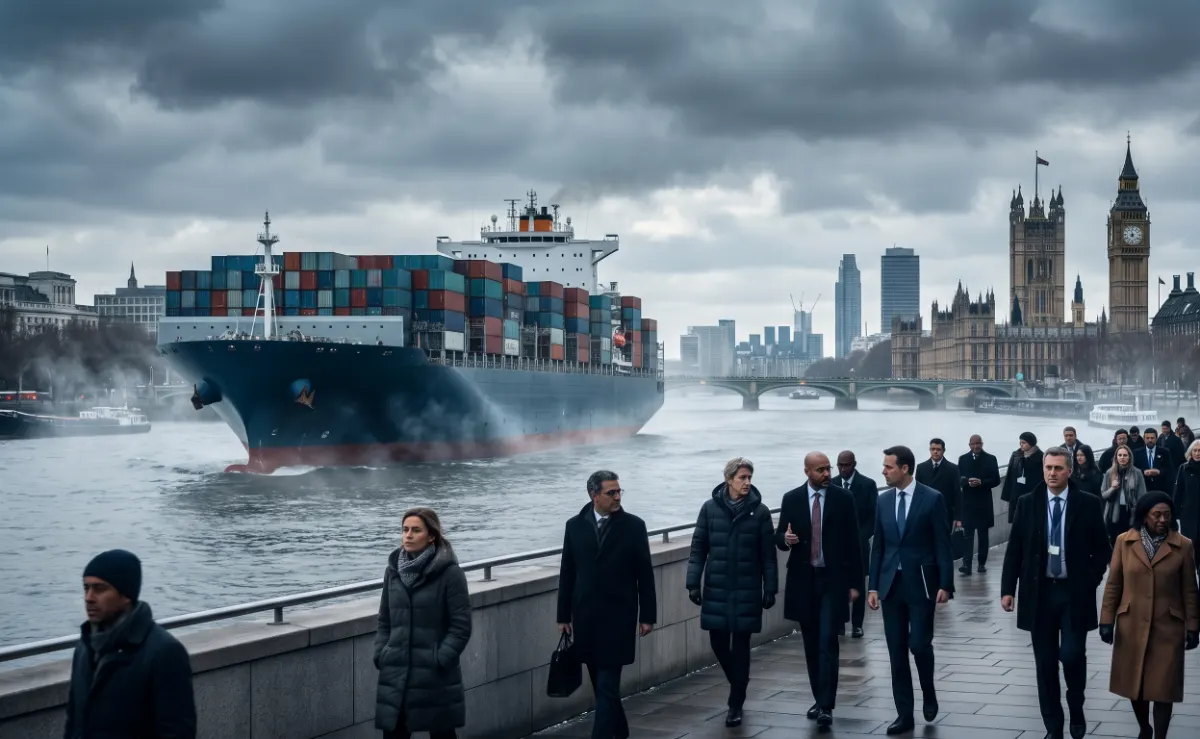
That procedural distinction is about to be tested. The IMO's Net-Zero Framework—the world's first attempt to combine mandatory emissions limits and greenhouse gas pricing across an entire industry sector—was approved by the Marine Environment Protection Committee in April 2025, with formal adoption scheduled for October 2025 . Instead, the extraordinary MEPC session adjourned for twelve months after the United States threatened sanctions against countries supporting the measure, including port access restrictions and visa limits . The framework, which would apply to ships over 5,000 gross tonnage and establish both a global fuel standard and a pricing mechanism, now faces a critical window at MEPC 85 in London, running from November 30 to December 3, 2026, with a resumed extraordinary session provisionally scheduled for December 4 .
The parallels between COP31 and the IMO negotiations are unmistakable. Both processes must grapple with the same fundamental questions: who pays for the transition, how quickly should emissions fall, and what support is available for developing economies . The IMO framework's proposed Net-Zero Fund would collect revenue from emissions pricing and disburse it to reward low-emission ships, support innovation in developing countries, and fund training and technology transfer . But the distributional questions that derailed COP31—particularly the demand from developing nations for predictable climate finance—reverberate through the IMO talks as well.
A critical difference, however, lies in the industry's own posture. Unlike the fractious state-level negotiations at COP, major shipping companies have largely supported a binding global framework precisely because it offers regulatory certainty . A patchwork of regional measures—the EU Emissions Trading System and FuelEU Maritime already impose compliance costs on shipowners—creates investment risk that a uniform global standard would resolve. Danish shipping giant Maersk publicly expressed disappointment when the IMO framework was delayed in October 2025, warning that the industry's decarbonisation momentum had been sapped . This industry alignment gives high-ambition states a potential coalition partner that was absent in Antalya.
The COP31 outcome did produce some incremental progress relevant to shipping. A Just Transition Work Programme was adopted, with implications for workforce transformation in ports, shipping and energy production . Separately, the Maritime Electrification Breakthrough Goal was launched on the sidelines, backed by more than 30 organisations including the Port of Long Beach and ZEMBA, seeking to raise electricity's share of international shipping's final energy demand to at least 20 percent by 2035 . But these initiatives remain voluntary, and the electrification target carries no binding obligation.
The stakes for the IMO's December session are therefore high. If the Net-Zero Framework is adopted, even after a year's delay, it would demonstrate that sectoral diplomacy can succeed where comprehensive UN climate negotiations have stalled. If it fails again, the shipping industry faces an increasingly fragmented regulatory landscape, with regional measures proliferating and global consensus receding further from reach. The high-ambition countries that refused to accept a fossil-fuel-free silence in Antalya now have a second chance in London—not to save the COP process, but to prove that climate diplomacy still has a functioning venue. Whether they can muster the same resolve in a technical maritime committee that they showed in a packed plenary hall will determine whether shipping becomes the lifeline or the epitaph for multilateral climate governance.