
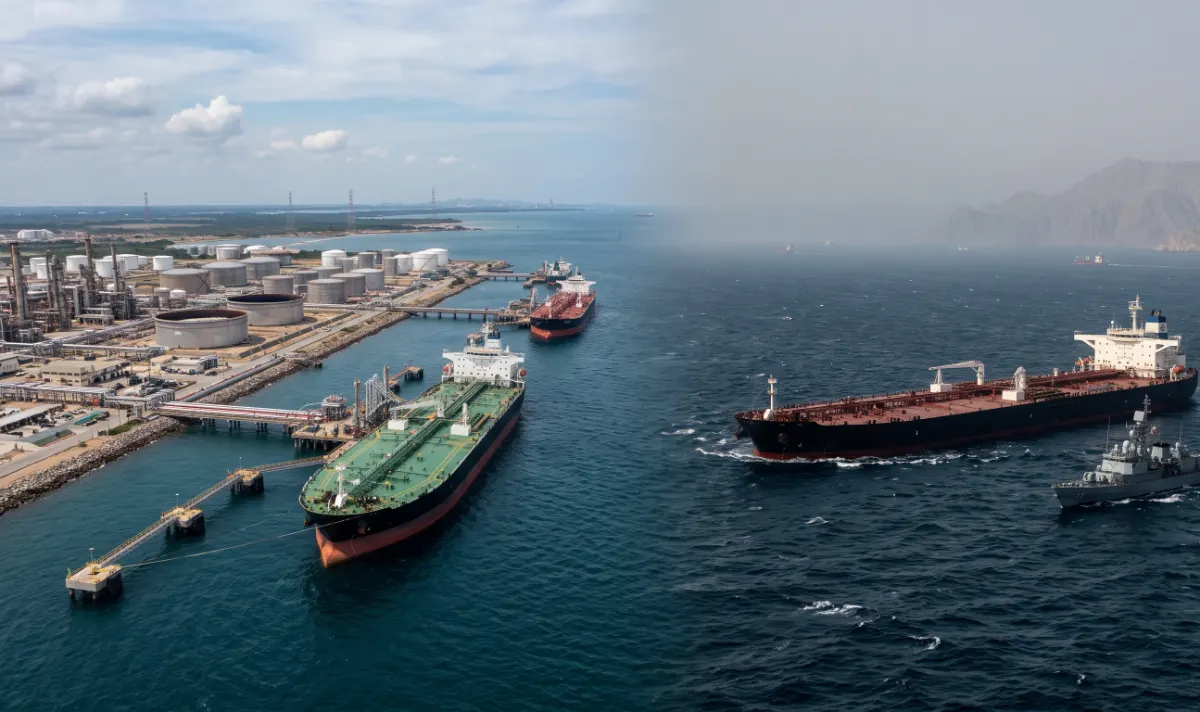
Oil markets entered the final week of November caught between two competing narratives: an emerging supply surplus and a maritime security crisis that refuses to fade. Brent crude traded near $92 per barrel while WTI hovered around $83, with the spread between the two benchmarks widening as logistical constraints in the Persian Gulf kept a floor under the global marker . The divergence reflects a market that is simultaneously bearish on fundamentals and bullish on risk.
The supply-side picture has shifted dramatically. The International Energy Agency raised its fourth-quarter supply estimate by 3.3 million barrels per day from the prior month, now projecting a surplus of 1.7 million bpd as Gulf exports recover faster than demand . U.S. crude production has climbed to a record 14.03 million barrels per day, while commercial inventories have built for two consecutive weeks . The EIA now expects global stockpiles to rise by an average of 3.5 million bpd in the first half of 2027 .
Yet the physical reality of moving oil out of the Gulf remains fraught. Attacks on commercial shipping in the Strait of Hormuz have continued unabated, with Houthi forces claiming strikes on a Saudi refinery and UK Maritime Trade Operations reporting multiple vessel attacks over a single weekend . The IEA noted that Gulf oil exports excluding Oman stood at 18.4 million bpd in October, still roughly 26 percent below pre-war levels . The recovery in flows has been sufficient to ease headline balances but insufficient to normalize logistics.
The cost of moving a barrel has become a market force in its own right. War-risk premiums on Hormuz transits have risen to 3 to 10 percent of hull value, up from 0.15 to 0.25 percent before the conflict . Supertanker day-rates have surged past $900,000, with the Gulf-to-China route reaching $1.4 million per day at times . Ship-to-ship transfers in the Gulf of Oman, now a necessary workaround, are tying up a significant portion of the global supertanker fleet and creating ripple effects across smaller vessel classes.
This logistics squeeze explains why Brent has not fallen as sharply as WTI. The U.S. benchmark benefits from domestic production strength and inventory builds, while Brent carries the embodied cost of maritime risk . Standard Chartered cautioned that higher Gulf output does not yet mean more oil reaching buyers, noting that tanker shortages, damaged infrastructure and record freight rates continue to hold back shipments . The bank also warned that the IEA's surplus call is larger than any other agency's, and that forecast surpluses have often failed to materialize on schedule.
The demand picture adds another layer of uncertainty. OPEC's November report puts 2027 global oil demand at 108.3 million bpd, nearly 4 million bpd above the IEA's figure, though the two agencies measure liquids differently . The IEA expects petrochemical feedstocks to drive most of next year's growth, with little increase in gasoline and diesel use. This divergence in demand forecasts means the market's ability to absorb returning Gulf supply remains an open question.
Traders are also watching the geopolitical calendar. OPEC+ ministers meet on November 29 to decide 2027 output policy . The group faces a delicate balance: enough production to satisfy demand without exacerbating the surplus that the IEA forecasts. Meanwhile, the unresolved U.S.-Iran standoff continues to generate headline risk, with analysts at Vanda Insights describing a "tense stalemate" as the base case through year-end .
For shipping and energy markets alike, the message is that the oil trade has not returned to normal. The system appears to be transitioning from acute shortage to persistent vulnerability, as ANZ analysts put it, rather than back to pre-conflict conditions . Brent may face further downside if the surplus narrative takes hold, but the shipping risk premium is unlikely to evaporate while tankers are still being attacked in one of the world's most critical chokepoints.