
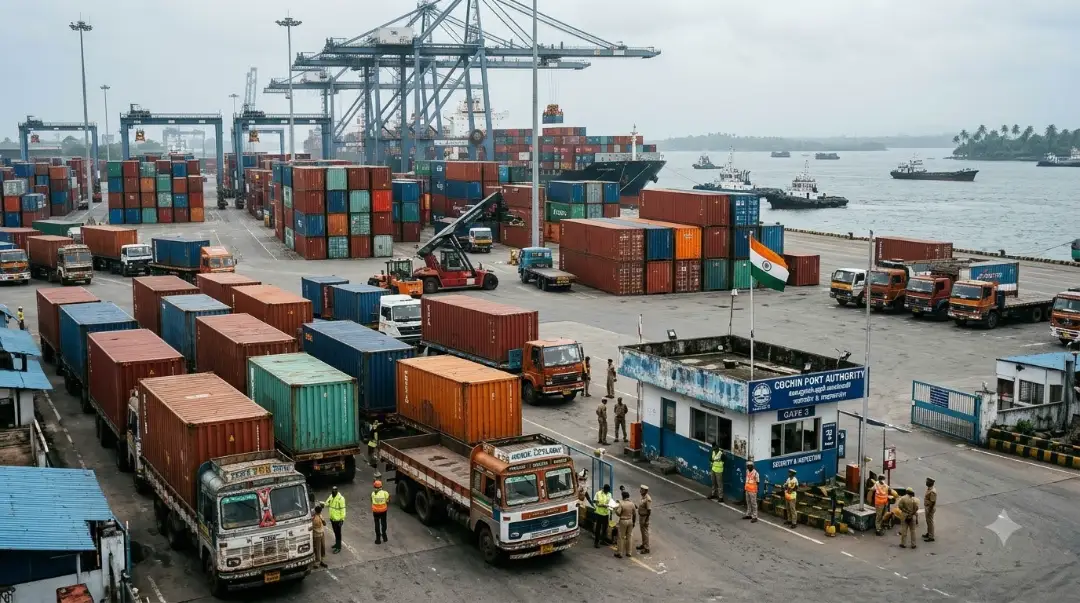
Container movement at Cochin Port is set to resume on 23 November 2026 after trailer crews ended a 13-day boycott against mandatory 100% non-intrusive scanning of import containers, bringing relief to importers who had faced mounting storage and cargo spoilage risks . The disruption, reported by Chinese logistics outlet Headscm on 23 November, had effectively halted container ingress and egress at one of Kerala's most important trade gateways since 9 November.
The backlog that accumulated during the boycott is substantial. As of 21 November, approximately 1,810 containers were stranded at the terminal, including a significant number of refrigerated containers . Reefers are particularly vulnerable to prolonged port dwell because they require continuous power and monitoring, and any interruption or delay can compromise the integrity of perishable cargo. Importers whose containers were caught in the backlog faced a combination of storage charges, container detention fees, and the risk that temperature-sensitive goods would spoil before clearance.
The origin of the dispute was the health concerns raised by the drivers who operate the trailer fleet serving the port. The crews objected to the requirement that they pass through the scanning equipment repeatedly—reportedly six to seven times a day—and cited symptoms including vomiting, headaches, and elevated heart rates. They also alleged that promised protective gear had not been provided . The Customs Department maintained that the scanning mandate was part of the government's target to achieve 100% scanning of import containers at Indian ports by 2028, and the standoff persisted despite interventions by the Ernakulam District Administration and Police, who had directed stakeholders to arrange trucks and drivers for immediate evacuation on 20 November.
The resolution came through the drivers' decision to end their protest on 22 November, allowing the terminal to begin clearing the accumulated containers from 23 November . The report does not disclose the specific terms of the resolution, including whether the health and safety concerns raised by the crews have been addressed through protective equipment, adjusted scanning protocols, or other measures. The absence of these details leaves open the possibility that the underlying issues could resurface if the drivers' concerns are not durably resolved.
For Cochin Port and Kerala's EXIM trade, the immediate priority is the clearance of the 1,810-container backlog and the restoration of normal cargo flow. The port has been investing in its container handling capabilities, and the disruption represents a setback at a time when Vizhinjam's emergence and the broader expansion of Kerala's maritime infrastructure are reshaping the state's logistics landscape. Importers who diverted cargo to other ports during the boycott may need reassurance that Cochin can handle their volumes reliably before they return.
The broader context is the tension between customs enforcement objectives and the operational realities of port logistics. The 100% scanning target is a legitimate security and compliance measure, but its implementation at Cochin created a bottleneck that affected the workforce responsible for moving containers and the businesses that depend on timely cargo clearance. The resolution of the boycott without a clear public accounting of how the drivers' health concerns were addressed suggests that the underlying friction may not be fully resolved.
Looking ahead, the key milestones are the actual resumption of container movement on 23 November and the pace at which the 1,810-container backlog is cleared. The port's ability to process the accumulated containers, particularly the reefers that require priority handling, will determine how quickly normal operations resume. For now, the end of the boycott provides a measure of relief to importers and logistics operators who had been caught in the disruption, but the episode highlights the operational vulnerabilities that can emerge when enforcement measures are implemented without adequate attention to the workforce that must carry them out.