
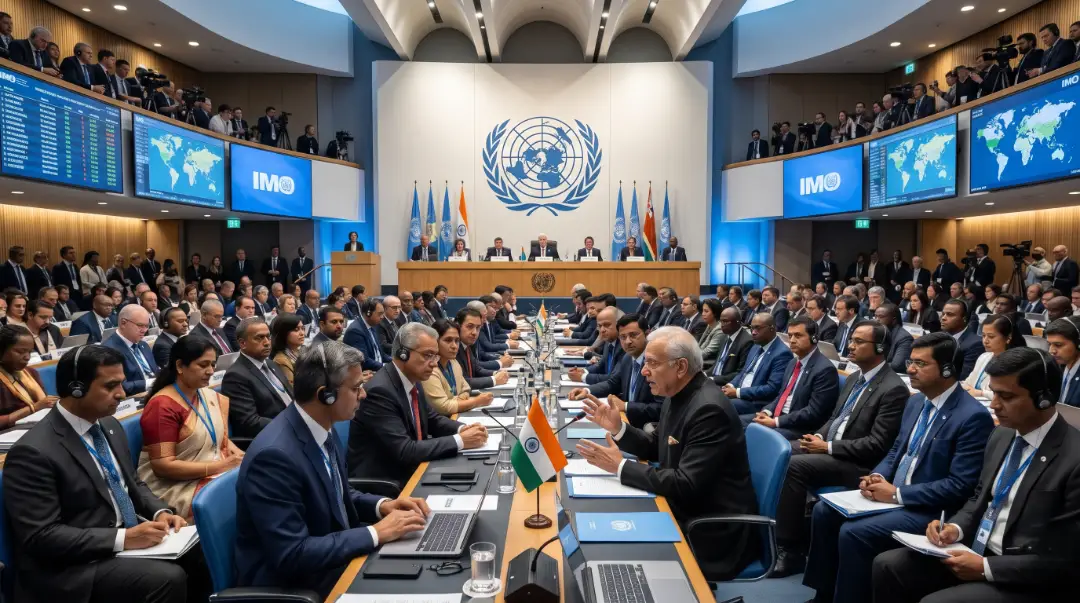
The International Maritime Organization convenes in London from November 23, 2026, for a critical session that will determine the fate of the global shipping decarbonization framework, with a vote expected on December 4. India's position is being closely watched by stakeholders on all sides, as the country is widely regarded as a swing state whose support could tip the balance in a closely divided membership .
India's stance at these negotiations is rooted in the principle of Common But Differentiated Responsibilities and Respective Capabilities (CBDR-RC), a cornerstone of international climate diplomacy. Commodore Debesh Lahiri, advisor at the National Centre of Excellence in Green Ports and Shipping (NCoEGPS), a co-action centre between the Ministry of Ports, Shipping and Waterways and The Energy and Resources Institute, stated that India's position has always been based on CBDR-RC, advocating climate justice and just transition. "Who pays for the transition and who gets supported in the transition are key questions for India," Lahiri said .
The background to the upcoming vote is a protracted negotiation process. In April 2025, an IMO committee proposed cutting each ship's greenhouse gas intensity by 43% per ship by 2035, alongside a carbon levy on non-compliant ships, rewards for performers, and an IMO-administered fund. The United States forced a one-year postponement of the vote in October 2025, and the second extraordinary session of the Marine Environment Protection Committee, adjourned at that time, is scheduled to resume immediately following MEPC 85 and is expected to take place on December 4, 2026 .
The fault lines in the negotiations are stark. The United States now opposes any IMO fund, carbon price, or regional mechanisms such as the EU Emissions Trading System and FuelEU Maritime, and has characterized green ammonia and methanol as unproven, instead backing LNG and biofuels. The European Union has softened fuel-intensity targets but holds firm on the net-zero objective. India's position between these blocs is critical because its support could provide the margin needed to advance the framework .
India's engagement in the IMO process has been consistent and technically grounded. At the 22nd Session of the IMO Intersessional Working Group on Greenhouse Gas Emissions held in September 2026, the Indian delegation emphasized the need for a preparatory phase to assess the readiness and practical feasibility of alternative fuels and emerging technologies before the implementation of major measures. India also advocated for an experience-building phase before the introduction of significant measures, enabling Member States and the industry to gain practical experience and develop informed solutions based on real-world operations .
On economic measures, India has emphasized that such mechanisms should be evidence-based, practical, and equitable, while recognizing the varying national circumstances, developmental priorities, and capacities of Member States. India underlined the importance of ensuring that the global transition toward low- and zero-emission shipping remains inclusive and does not disproportionately impact developing countries. These interventions received encouraging support from several Member States, according to official statements .
India's national interest in the outcome is multifaceted. As a major importer of fossil fuels, India would benefit from a turn away from them if alternatives were available and affordable. At the same time, India is positioning itself as a potential hub for alternative marine fuels, with stakeholder dialogues examining how to build demand and lower costs for commercially viable bunkering. The country is also training its maritime workforce in alternative green fuels and advanced technologies, with the aim of ensuring that one in five seafarers globally is Indian .
The December 4 vote will determine whether the IMO adopts a binding global framework or whether the process is further delayed. India's decision, expected to be finalized after preparatory meetings that flesh out technical and financial details, will be a decisive factor. For the shipping industry, the outcome will shape investment decisions, fuel choices, and fleet planning for decades. For India, the vote represents an opportunity to influence the architecture of a global regulatory regime in a sector where it has significant and growing interests.