
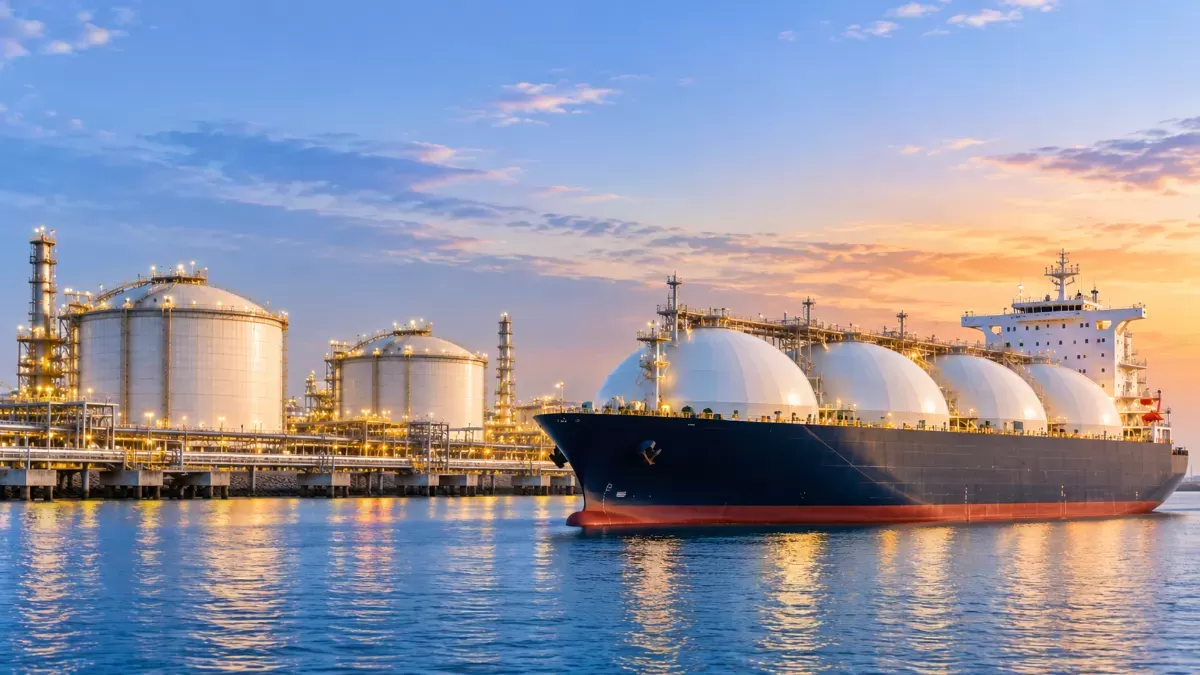
South Korea's Trade, Industry and Energy Minister Kim Jung-kwan met with Qatari Minister of State for Energy Affairs Saad Sherida al-Kaabi in Seoul on November 23, 2026, and requested that Qatar prioritize South Korea in LNG supplies once Qatari production and navigation through the Strait of Hormuz return to normal. Kim emphasized that Qatar is a key partner for South Korea in the LNG sector and that bilateral cooperation is crucial to ensuring a stable energy supply .
Qatar was the world's second-largest LNG exporter after the United States before the outbreak of the U.S.-Iran war in late February 2026. In March, Qatar declared force majeure and suspended LNG supplies after its Ras Laffan facility, the world's largest LNG export terminal, was damaged by missile attacks. The disruption has significantly affected South Korea's energy imports .
Consequently, South Korea's imports of Qatari LNG totaled 1.7 million metric tons from January through September this year, ranking sixth among importing countries. Asia's fourth-largest economy imported nearly 7 million tons of Qatari LNG last year, underscoring the scale of the supply gap created by the suspension .
The Strait of Hormuz remains a critical chokepoint for Qatari LNG exports, and navigation through the waterway has not yet normalized. The force majeure declaration has been extended amid continued uncertainty, with industry sources indicating that QatarEnergy has extended the suspension for Asian buyers including South Korea, India, and Bangladesh, while also continuing to lease out some LNG carriers through mid-October .
Beyond energy supply, the two ministers discussed expanding cooperation in the energy plant and shipbuilding sectors. Kim asked the Qatari side to support Korean companies seeking new projects, citing the contributions of Korean plant builders and shipbuilders to Qatar's industry and economy. Over the five years through 2025, South Korean engineering companies secured a combined US$11 billion worth of plant-building projects in Qatar .
Korean shipbuilders also won orders to build 98 vessels for Qatar between 2022 and 2024, reflecting deep commercial ties between the two countries' maritime and energy industries. The ministry said it plans to continue operating high-level consultation channels between South Korea and Qatar to ensure that bilateral cooperation produces tangible results .
The request for priority LNG access highlights South Korea's vulnerability as a major energy importer dependent on Middle Eastern supply routes. With Qatari volumes significantly reduced, South Korea has had to seek alternative sources, but the preference for restoring Qatari supply reflects the logistical and pricing advantages of long-term contracts with a established supplier .
For the shipping industry, the normalization of Hormuz transits and Qatari LNG production would restore a significant trade flow that has been disrupted for most of 2026. The priority access request signals that South Korea is preparing for a post-disruption scenario in which the race to secure cargoes will be competitive, and early diplomatic positioning could determine which buyers receive the first available shipments.