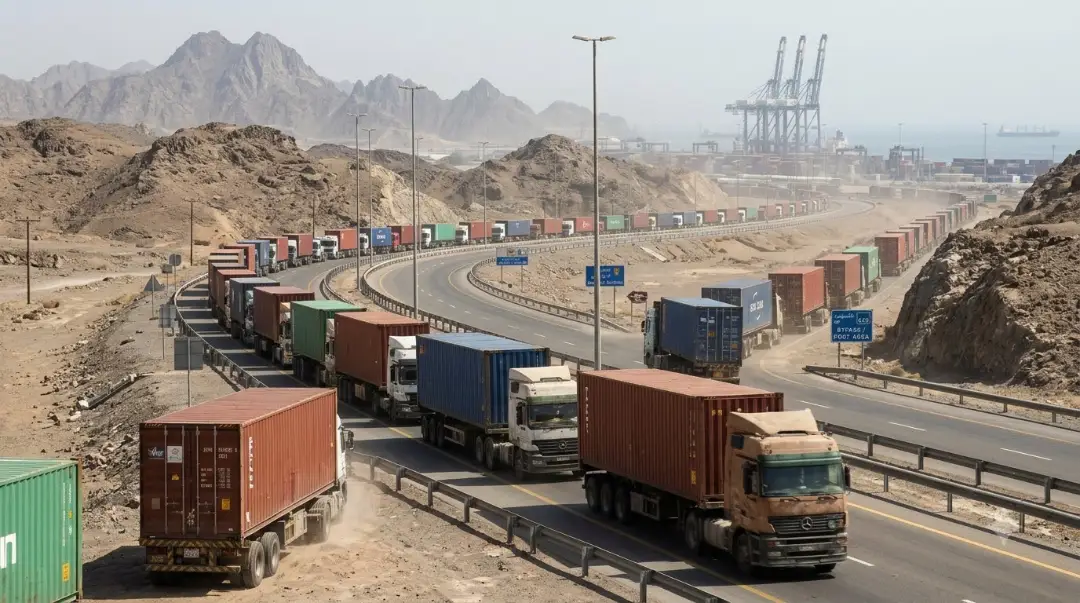
<p class="ds-markdown-paragraph" style="margin: 16px 0px; color: rgb(15, 17, 21); font-family: quote-cjk-patch, Inter, system-ui, -apple-system, BlinkMacSystemFont, "Segoe UI", Roboto, Oxygen, Ubuntu, Cantarell, "Open Sans", "Helvetica Neue", sans-serif; font-size: 16px;"><span class="">DP World has revealed the scale of its emergency logistics response to the Strait of Hormuz disruption, confirming that its land-based corridor between the UAE’s east coast ports and Jebel Ali has moved more than one million twenty-foot equivalent units since the first week of March </span><span class="">. The corridor was established as a customs-bonded link allowing containers to continue moving overland while direct maritime access through the strait remained disrupted </span><span class="">. Ahmad Yousef Al-Hassan, CEO of DP World’s Gulf operations, described the effort as building an emergency system from zero, stating that the company now owns and operates a fleet of 3,000 trucks that did not exist before the crisis </span><span class="">.</span><span class="_5f9bba8" data-citation-group="1" style="margin-left: 2px; margin-right: 2px;"><a href="https://www.163.com/dy/article/LBH7RPKV05568W0A.html?spss=dy_author" target="_blank" rel="noreferrer" aria-label="2" style="color: rgb(57, 100, 254); transition: box-shadow 0.2s cubic-bezier(0.4, 0, 0.2, 1); border-color: rgba(255, 255, 255, 0); border-width: 2px 3px; margin-left: -3px; margin-right: -3px; text-decoration: none; position: relative;"></a><a href="https://www.maritimegateway.com/dhl-sees-up-to-six-months-for-supply-chains-to-recover-after-hormuz-disruption/" target="_blank" rel="noreferrer" aria-label="9" style="color: rgb(57, 100, 254); transition: box-shadow 0.2s cubic-bezier(0.4, 0, 0.2, 1); border-color: rgba(255, 255, 255, 0); border-width: 2px 3px; margin-left: -3px; margin-right: -3px; text-decoration: none; position: relative;"></a></span></p><p class="ds-markdown-paragraph" style="margin: 16px 0px; color: rgb(15, 17, 21); font-family: quote-cjk-patch, Inter, system-ui, -apple-system, BlinkMacSystemFont, "Segoe UI", Roboto, Oxygen, Ubuntu, Cantarell, "Open Sans", "Helvetica Neue", sans-serif; font-size: 16px;"><span class="">The financial cost of this “land-for-sea” substitution has been severe. Container freight rates from China to Dubai have surged from approximately $2,000 to between $10,000 and $12,000, an increase of four to five times </span><span class="">. These elevated costs have directly impacted port throughput, with Jebel Ali’s second-quarter container volumes collapsing by 90.1% year-on-year </span><span class="">. The figures illustrate that while the land corridor has maintained a semblance of cargo flow, it cannot replicate the volume or cost efficiency of maritime transit through the strait.</span><span class="_5f9bba8" data-citation-group="4" style="margin-left: 2px; margin-right: 2px;"><a href="https://www.163.com/dy/article/LBH7RPKV05568W0A.html?spss=dy_author" target="_blank" rel="noreferrer" aria-label="2" style="color: rgb(57, 100, 254); transition: box-shadow 0.2s cubic-bezier(0.4, 0, 0.2, 1); border-color: rgba(255, 255, 255, 0); border-width: 2px 3px; margin-left: -3px; margin-right: -3px; text-decoration: none; position: relative;"></a></span></p><p class="ds-markdown-paragraph" style="margin: 16px 0px; color: rgb(15, 17, 21); font-family: quote-cjk-patch, Inter, system-ui, -apple-system, BlinkMacSystemFont, "Segoe UI", Roboto, Oxygen, Ubuntu, Cantarell, "Open Sans", "Helvetica Neue", sans-serif; font-size: 16px;"><span class="">DP World remains cautiously optimistic about a return to normalcy. The company expects that once the Strait of Hormuz reopens, shipping traffic will gradually normalize within one to three months </span><span class="">. However, the operational realities of the current situation suggest that the transition back will not be instantaneous, given the scale of the disruption and the complex logistics involved in re-establishing regular maritime schedules.</span><span class="_5f9bba8" data-citation-group="6" style="margin-left: 2px; margin-right: 2px;"><a href="https://www.163.com/dy/article/LBH7RPKV05568W0A.html?spss=dy_author" target="_blank" rel="noreferrer" aria-label="2" style="color: rgb(57, 100, 254); transition: box-shadow 0.2s cubic-bezier(0.4, 0, 0.2, 1); border-color: rgba(255, 255, 255, 0); border-width: 2px 3px; margin-left: -3px; margin-right: -3px; text-decoration: none; position: relative;"></a></span></p><p class="ds-markdown-paragraph" style="margin: 16px 0px; color: rgb(15, 17, 21); font-family: quote-cjk-patch, Inter, system-ui, -apple-system, BlinkMacSystemFont, "Segoe UI", Roboto, Oxygen, Ubuntu, Cantarell, "Open Sans", "Helvetica Neue", sans-serif; font-size: 16px;"><span class="">The corridor’s operation has required coordination across multiple modes of transport and government authorities. The customs-bonded status of the link has been essential to its function, allowing containers to move between ports without triggering repeated customs formalities that would have further slowed transit </span><span class="">. This model of integrated land-sea logistics under a single bonded framework represents a significant adaptation by a major port operator to an unprecedented disruption in one of the world’s most critical maritime chokepoints.</span><span class="_5f9bba8" data-citation-group="7" style="margin-left: 2px; margin-right: 2px;"><a href="https://www.maritimegateway.com/dhl-sees-up-to-six-months-for-supply-chains-to-recover-after-hormuz-disruption/" target="_blank" rel="noreferrer" aria-label="9" style="color: rgb(57, 100, 254); transition: box-shadow 0.2s cubic-bezier(0.4, 0, 0.2, 1); border-color: rgba(255, 255, 255, 0); border-width: 2px 3px; margin-left: -3px; margin-right: -3px; text-decoration: none; position: relative;"></a></span></p><p class="ds-markdown-paragraph" style="margin: 16px 0px; color: rgb(15, 17, 21); font-family: quote-cjk-patch, Inter, system-ui, -apple-system, BlinkMacSystemFont, "Segoe UI", Roboto, Oxygen, Ubuntu, Cantarell, "Open Sans", "Helvetica Neue", sans-serif; font-size: 16px;"><span class="">For shippers and freight forwarders serving the Indian subcontinent and Southeast Asia, the DP World disclosure provides a benchmark for understanding the true cost of Hormuz disruption. Cargo destined for or transiting through the Gulf must now account for either the elevated costs of the land corridor or the delays and risks associated with maritime transit. These costs ultimately flow through to importers and consumers across the wider region, affecting competitiveness and inflation dynamics.</span></p><p class="ds-markdown-paragraph" style="margin: 16px 0px; color: rgb(15, 17, 21); font-family: quote-cjk-patch, Inter, system-ui, -apple-system, BlinkMacSystemFont, "Segoe UI", Roboto, Oxygen, Ubuntu, Cantarell, "Open Sans", "Helvetica Neue", sans-serif; font-size: 16px;"><span class="">The 3,000-truck fleet represents a substantial capital commitment that DP World has made under crisis conditions. Operating such a fleet requires maintenance, driver management, fuel procurement, and regulatory compliance across multiple emirates, none of which were part of the company’s core business model before March. The decision to build and operate this capacity in-house rather than relying on third-party trucking providers reflects both the urgency of the situation and the inadequacy of existing road freight capacity to handle the diverted volumes.</span></p><p class="ds-markdown-paragraph" style="margin: 16px 0px; color: rgb(15, 17, 21); font-family: quote-cjk-patch, Inter, system-ui, -apple-system, BlinkMacSystemFont, "Segoe UI", Roboto, Oxygen, Ubuntu, Cantarell, "Open Sans", "Helvetica Neue", sans-serif; font-size: 16px;"><span class="">DP World’s experience also highlights the vulnerability of even the most sophisticated logistics networks to geopolitical shocks. Jebel Ali is one of the world’s largest and most efficient container terminals, yet its throughput fell by 90% when its maritime access was constrained. This suggests that resilience planning for major ports must include contingencies for the loss of their primary maritime approach, not merely for disruptions to landside operations or labor availability.</span></p><p class="ds-markdown-paragraph" style="margin: 16px 0px; color: rgb(15, 17, 21); font-family: quote-cjk-patch, Inter, system-ui, -apple-system, BlinkMacSystemFont, "Segoe UI", Roboto, Oxygen, Ubuntu, Cantarell, "Open Sans", "Helvetica Neue", sans-serif; font-size: 16px;"><span class="">Looking ahead, the long-term implications of the Hormuz crisis for Gulf logistics infrastructure may extend beyond the current emergency. The land corridor has demonstrated that alternative routes can function, albeit at high cost, and this may influence future investment decisions regarding port and road connectivity between the UAE’s east and west coasts. For the broader Indian Ocean region, the episode serves as a reminder that the security of maritime chokepoints has direct and measurable consequences for trade costs and supply chain reliability.</span></p>
DP World Reveals Hormuz Bypass Corridor Moved One Million Containers as Jebel Ali Volumes Collapse
DP World has disclosed that its emergency land corridor between UAE east coast ports and Jebel Ali has transported over one million TEU since March, using a fleet of 3,000 trucks built from scratch. The disclosure comes as Jebel Ali’s quarterly container volumes plummeted by 90.1% and China-to-Dubai freight rates surged four to five times, underscoring the severe cost of bypassing the Strait of Hormuz.