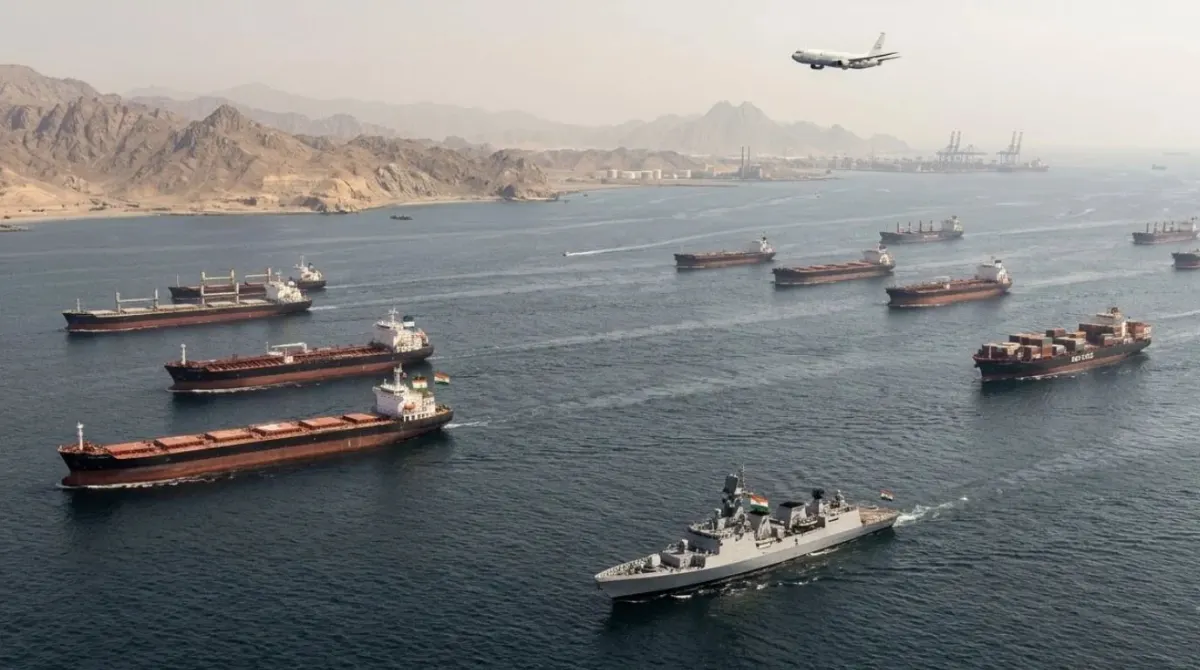
<p class="ds-markdown-paragraph" style="margin: 16px 0px; color: rgb(15, 17, 21); font-family: quote-cjk-patch, Inter, system-ui, -apple-system, BlinkMacSystemFont, "Segoe UI", Roboto, Oxygen, Ubuntu, Cantarell, "Open Sans", "Helvetica Neue", sans-serif; font-size: 16px;"><span class="">Union Minister of Ports, Shipping and Waterways Sarbananda Sonowal has directed the Directorate General of Maritime Administration to implement enhanced maritime safety and security measures as the ministry tracks nine India-flagged or Indian-interest vessels in the waters west of the Strait of Hormuz </span><span class="">. The directive follows a series of attacks on commercial vessels in the region that have heightened concerns for the safety of Indian seafarers, who constitute a significant proportion of the global maritime workforce. The ministry confirmed that 86 transits of the strait have been completed by India-flagged vessels or those carrying cargo bound for India </span><span class="">.</span><span class="_5f9bba8" data-citation-group="9" style="margin-left: 2px; margin-right: 2px;"><a href="https://indianexpress.com/article/india/sarbananda-sonowal-tightens-maritime-safety-strait-of-hormuz-indian-seafarers-10970896/" target="_blank" rel="noreferrer" aria-label="2" style="color: rgb(57, 100, 254); transition: box-shadow 0.2s cubic-bezier(0.4, 0, 0.2, 1); border-color: rgba(255, 255, 255, 0); border-width: 2px 3px; margin-left: -3px; margin-right: -3px; text-decoration: none; position: relative;"></a><a href="https://www.pib.gov.in/PressReleasePage.aspx?PRID=2338802&reg=48&lang=1" target="_blank" rel="noreferrer" aria-label="3" style="color: rgb(57, 100, 254); transition: box-shadow 0.2s cubic-bezier(0.4, 0, 0.2, 1); border-color: rgba(255, 255, 255, 0); border-width: 2px 3px; margin-left: -3px; margin-right: -3px; text-decoration: none; position: relative;"></a></span></p><p class="ds-markdown-paragraph" style="margin: 16px 0px; color: rgb(15, 17, 21); font-family: quote-cjk-patch, Inter, system-ui, -apple-system, BlinkMacSystemFont, "Segoe UI", Roboto, Oxygen, Ubuntu, Cantarell, "Open Sans", "Helvetica Neue", sans-serif; font-size: 16px;"><span class="">The specific measures ordered by the Minister include enhanced monitoring of developments in high-risk areas, timely dissemination of security advisories, regular communication with shipping companies and vessel operators, and heightened awareness among Indian seafarers regarding potential threats and precautionary measures </span><span class="">. Sonowal also instructed authorities to coordinate closely with the Ministry of External Affairs, Indian diplomatic missions, maritime stakeholders, and relevant international agencies to ensure prompt assistance in the event of any incident involving Indian vessels or seafarers </span><span class="">. The ministry's E-Navik seafarer tracking module is currently monitoring more than 800 vessels in the Persian Gulf west of the strait and over 200 vessels in the Gulf of Oman to the east </span><span class="">.</span><span class="_5f9bba8" data-citation-group="12" style="margin-left: 2px; margin-right: 2px;"><a href="https://indianexpress.com/article/india/sarbananda-sonowal-tightens-maritime-safety-strait-of-hormuz-indian-seafarers-10970896/" target="_blank" rel="noreferrer" aria-label="2" style="color: rgb(57, 100, 254); transition: box-shadow 0.2s cubic-bezier(0.4, 0, 0.2, 1); border-color: rgba(255, 255, 255, 0); border-width: 2px 3px; margin-left: -3px; margin-right: -3px; text-decoration: none; position: relative;"></a><a href="https://www.pib.gov.in/PressReleasePage.aspx?PRID=2338802&reg=48&lang=1" target="_blank" rel="noreferrer" aria-label="3" style="color: rgb(57, 100, 254); transition: box-shadow 0.2s cubic-bezier(0.4, 0, 0.2, 1); border-color: rgba(255, 255, 255, 0); border-width: 2px 3px; margin-left: -3px; margin-right: -3px; text-decoration: none; position: relative;"></a></span></p><p class="ds-markdown-paragraph" style="margin: 16px 0px; color: rgb(15, 17, 21); font-family: quote-cjk-patch, Inter, system-ui, -apple-system, BlinkMacSystemFont, "Segoe UI", Roboto, Oxygen, Ubuntu, Cantarell, "Open Sans", "Helvetica Neue", sans-serif; font-size: 16px;"><span class="">In a strongly worded statement, Sonowal condemned the repeated attacks on commercial vessels, particularly those involving Indian seafarers, describing them as posing "a serious threat to the safety and security of seafarers" that disrupts maritime trade and undermines the stability of global supply chains </span><span class="">. He emphasized that freedom of navigation and the unimpeded movement of merchant vessels through international waters are fundamental principles of international maritime law, and that ensuring safe and secure sea lanes is essential not only for global trade continuity but also for economic growth, energy security, and the prosperity of nations </span><span class="">. The Minister's remarks reflect India's growing concern over the security vacuum in one of the world's most critical maritime chokepoints.</span><span class="_5f9bba8" data-citation-group="15" style="margin-left: 2px; margin-right: 2px;"><a href="https://www.pib.gov.in/PressReleasePage.aspx?PRID=2338802&reg=48&lang=1" target="_blank" rel="noreferrer" aria-label="3" style="color: rgb(57, 100, 254); transition: box-shadow 0.2s cubic-bezier(0.4, 0, 0.2, 1); border-color: rgba(255, 255, 255, 0); border-width: 2px 3px; margin-left: -3px; margin-right: -3px; text-decoration: none; position: relative;"></a></span></p><p class="ds-markdown-paragraph" style="margin: 16px 0px; color: rgb(15, 17, 21); font-family: quote-cjk-patch, Inter, system-ui, -apple-system, BlinkMacSystemFont, "Segoe UI", Roboto, Oxygen, Ubuntu, Cantarell, "Open Sans", "Helvetica Neue", sans-serif; font-size: 16px;"><span class="">The Strait of Hormuz remains the world's most important oil transit chokepoint, with approximately one-fifth of global petroleum liquids consumption passing through its narrow waters. For India, the strait is particularly significant as the primary route for crude oil imports from Gulf producers and for a substantial volume of containerized trade with Europe and the Mediterranean. Any sustained disruption to shipping through Hormuz would have cascading effects on India's energy security and export competitiveness, making the safety of Indian-flagged vessels in the region a matter of direct national interest.</span></p><p class="ds-markdown-paragraph" style="margin: 16px 0px; color: rgb(15, 17, 21); font-family: quote-cjk-patch, Inter, system-ui, -apple-system, BlinkMacSystemFont, "Segoe UI", Roboto, Oxygen, Ubuntu, Cantarell, "Open Sans", "Helvetica Neue", sans-serif; font-size: 16px;"><span class="">The E-Navik tracking system represents a significant upgrade in India's ability to monitor and respond to threats facing its seafarers. By maintaining real-time visibility over vessel movements in high-risk zones, the ministry can issue targeted advisories and coordinate emergency responses more effectively than was possible through previous reporting mechanisms. The system's coverage of over 1,000 vessels across the Persian Gulf and Gulf of Oman demonstrates the scale of Indian maritime interests in the region and the complexity of the security challenge facing Indian authorities.</span></p><p class="ds-markdown-paragraph" style="margin: 16px 0px; color: rgb(15, 17, 21); font-family: quote-cjk-patch, Inter, system-ui, -apple-system, BlinkMacSystemFont, "Segoe UI", Roboto, Oxygen, Ubuntu, Cantarell, "Open Sans", "Helvetica Neue", sans-serif; font-size: 16px;"><span class="">Industry sources indicate that the attacks on commercial shipping in and around Hormuz have already begun to affect insurance premiums and route planning for vessels serving Indian ports. Some operators are reportedly evaluating whether to reroute vessels or implement additional security measures, both of which would add costs that would ultimately be passed through to shippers and consumers. The Indian government's public condemnation of the attacks and its visible monitoring efforts are intended in part to reassure the shipping industry that Indian-flagged vessels remain a priority for protection, but the ultimate effectiveness of these measures depends on the broader security situation in the region.</span></p><p class="ds-markdown-paragraph" style="margin: 16px 0px; color: rgb(15, 17, 21); font-family: quote-cjk-patch, Inter, system-ui, -apple-system, BlinkMacSystemFont, "Segoe UI", Roboto, Oxygen, Ubuntu, Cantarell, "Open Sans", "Helvetica Neue", sans-serif; font-size: 16px;"><span class="">The coordination between the Ministry of Ports, Shipping and Waterways and the Ministry of External Affairs reflects a whole-of-government approach to maritime security that India has been developing in recent years. Diplomatic engagement with Gulf states, the United States, and other stakeholders is essential to any comprehensive solution, as India alone cannot guarantee the safety of its vessels in waters far from its shores. The Minister's instructions to maintain close coordination with Indian diplomatic missions and international agencies signal that India intends to pursue both bilateral and multilateral channels to address the threat.</span></p><p class="ds-markdown-paragraph" style="margin: 16px 0px; color: rgb(15, 17, 21); font-family: quote-cjk-patch, Inter, system-ui, -apple-system, BlinkMacSystemFont, "Segoe UI", Roboto, Oxygen, Ubuntu, Cantarell, "Open Sans", "Helvetica Neue", sans-serif; font-size: 16px;"><span class="">For Indian seafarers, the current situation represents a continuation of the risks they have faced in recent years across multiple conflict zones, from the Red Sea to the Gulf of Guinea. The government's emphasis on seafarer welfare, including the Minister's review of compensation status for victims and his direction that the Director General of Shipping personally brief him on assistance to victims' next of kin, reflects a recognition that the human dimension of maritime security cannot be separated from the commercial and strategic dimensions </span><span class="">. As the security situation in Hormuz continues to evolve, India's ability to protect its seafarers while maintaining essential trade flows will remain a critical test of its maritime governance capabilities.</span></p>
India Tracks Nine Indian-Interest Vessels Near Hormuz as Shipping Minister Orders Enhanced Maritime Security
India's Ministry of Ports, Shipping and Waterways is monitoring nine India-flagged or Indian-interest vessels west of the Strait of Hormuz, with 86 transits completed by such vessels. Minister Sarbananda Sonowal has condemned repeated attacks on commercial shipping and directed the Directorate General of Maritime Administration to strengthen security advisories and coordination with the Ministry of External Affairs.