
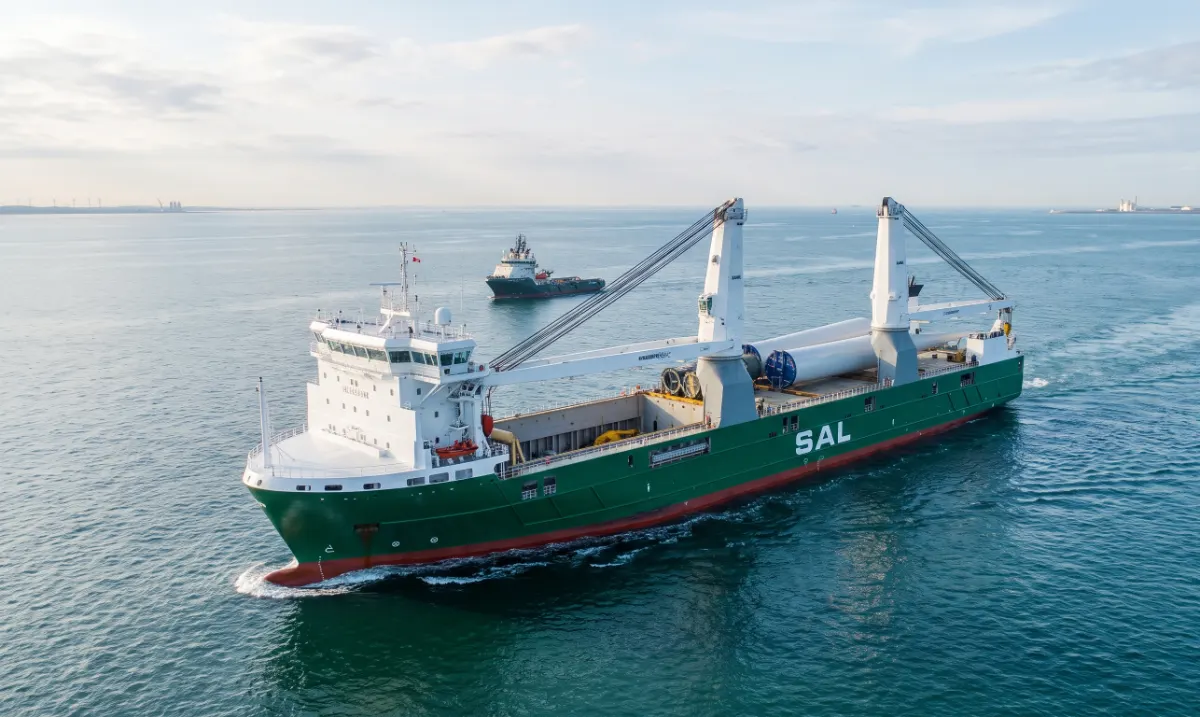
SAL Heavy Lift and DNV have maintained a collaborative relationship spanning decades, encompassing classification services, newbuilding support, operational software, and independent advisory expertise. This partnership has recently come into sharper focus through SAL’s Orca Class newbuilding programme, which DNV describes as setting a new benchmark for performance, operational flexibility, and efficiency in the heavy-lift segment .
SAL’s current fleet comprises 22 DNV-classed heavy-lift vessels, positioning the Harren Group subsidiary as a leader in the specialised project cargo market. The Orca Class programme consists of five 14,600 dwt vessels, three of which have been delivered to date. SAL is reportedly discussing additional newbuilds of the same type with Wuhu Shipyard in China, signalling confidence in the design and the partnership underpinning it.
The Orca Class vessels were developed by SAL’s in-house engineering team, drawing on decades of operational experience in transporting complex and oversized cargo. DNV’s role extended beyond classification to include global structural analyses using three-dimensional finite element models, validating SAL’s loading flexibility requirements and informing design optimisation. Jost Bergmann, DNV’s Business Director for MPV and General Cargo Ships, noted that the vessels “stand out in several respects, both in their design and in how they are intended to support SAL’s operations” .
A defining feature of the Orca Class is its cargo handling capability. The vessels feature two fully electric Liebherr LS 800 E cranes, each rated at 800 tonnes, providing a combined tandem lifting capacity of up to 1,600 tonnes. The use of electric rather than hydraulic cranes eliminates the risk of hydraulic oil discharge, aligning with broader environmental objectives. DNV’s Hatchcoverless notation allows oversized cargo to be carried in the open hold, while hatch covers designed for loads of up to 10 tonnes per square metre provide additional stowage flexibility .
Propulsion and energy management reflect the class’s forward-looking design philosophy. A hybrid energy system combines gensets with lithium-titanium-oxide batteries, and shore power capability enables zero-emission port operations where infrastructure permits. The dual-engine concept supports normal cruising with a second engine providing additional power through the gearbox for speeds up to 18.5 knots when time-critical deliveries demand it. The vessels are methanol-ready except for the tanks, allowing future conversion to green methanol operation .
Beyond newbuilding collaboration, DNV supports SAL’s day-to-day fleet management through digital class services and software. The My Services platform on Veracity provides superintendents and inspectors with a centralised overview of vessel status, upcoming activities, and survey arrangements. Integrated port state control guidance, including relevant checklists and authority focus areas, helps crews prepare for inspections and reduce port stay delays .
The partnership also extends to industry-level safety guidance. SAL Engineering participated in the Heavy Lift Exchange Forum, a working group initiated by DNV that produced the “Guidance on Stability of Lifts” in collaboration with BBC Chartering, BigLift Shipping, Heerema Marine Contractors, Jumbo Maritime, and United Heavy Lift. The guideline addresses a critical gap in heavy-lift operations by providing systematic, flow-chart-based procedures for assessing lifting stability, particularly for unique cargo shapes that previously lacked specific guidance .
For SAL, the collaboration with DNV represents more than a class relationship. It combines classification integrity with operational tools and advisory expertise that directly support the commercial and technical demands of heavy-lift shipping. As the Orca Class programme continues and additional newbuilds are contemplated, the partnership positions both organisations at the forefront of a segment where cargo complexity, safety requirements, and environmental expectations are steadily increasing .