
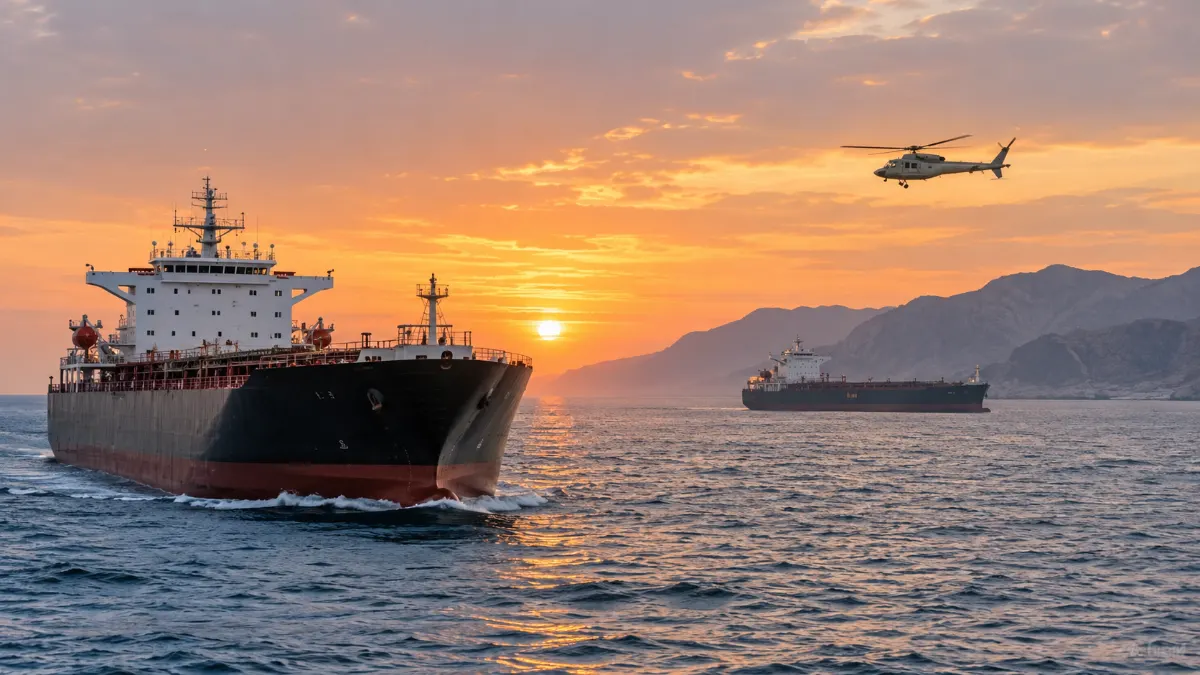
India has once again condemned the attacks on commercial shipping in the Strait of Hormuz, with the Ministry of External Affairs making clear that New Delhi views the targeting of civilian vessels and seafarers as unacceptable. Speaking at the MEA's weekly media briefing in New Delhi, spokesperson Randhir Jaiswal stated that India had consistently condemned attacks on commercial vessels, including those flying the Indian flag, and confirmed that New Delhi was in touch with several parties to address the situation .
Jaiswal specifically highlighted the human cost of the attacks, noting that Indian seafarers have lost their lives and sustained injuries in recent incidents. "We have condemned the attacks where people of Indian nationality, Indian seafarers, have lost lives and have been injured. Some of these attacks have also happened on Indian-flagged ships," he said . The statement underscored that the violence in the strategic waterway has directly affected India's maritime workforce.
The MEA's condemnation follows a series of incidents in the Persian Gulf and surrounding waters. On November 16, the Panama-flagged LPG tanker MT TARA GAS was attacked in the Strait of Hormuz, with 24 Indian nationals on board. While 21 were safely evacuated to Khasab in Oman and two injured crew members were hospitalized, one Indian national remained missing . India's Embassy in Oman coordinated with Omani authorities on search and rescue operations, and the MEA expressed appreciation for Oman's timely assistance .
Beyond condemnation, India has articulated a clear legal and diplomatic position. Jaiswal emphasized that freedom of navigation through international waterways must be restored in accordance with international law. "We continue to call for dialogue and diplomacy so that we can see an early return to peace in the region," he stated, adding that India has impressed upon all parties the necessity of upholding these principles . This dual approach—condemning attacks while advocating diplomacy—reflects India's balancing act between protecting its maritime interests and avoiding entanglement in regional conflicts.
The protection of Indian seafarers has emerged as a central concern in India's response. Jaiswal noted that India has the second largest seafaring community in the world, making the safety and well-being of these workers a governmental priority . "For us, the safety and well-being of our seafaring community is very important," he said . This emphasis on seafarer welfare connects directly to the earlier actions taken by the Ministry of Ports, Shipping and Waterways, which has been tracking nine India-flagged or Indian-interest vessels in the Persian Gulf and has directed enhanced security measures for Indian crews .
The MEA's statements also referenced recent diplomatic communications. Jaiswal noted that India had issued a formal statement in response to a recent attack a day or two earlier and was maintaining contact with several parties . This followed the MEA's November 17 statement specifically condemning the MT TARA GAS attack, which described the continuing incidents of attacks on shipping as "deeply worrisome" and posing "a serious threat to the safety of civilian seafarers" .
India's position reflects broader concerns about the stability of global supply chains and energy security. The Strait of Hormuz is a critical chokepoint for global oil trade, and disruptions to shipping there carry implications far beyond the immediate region. The MEA's call for the restoration of "free and unimpeded navigation and commerce through international waterways" aligns with India's broader economic interests in maintaining secure maritime trade routes.
As the security situation in the Persian Gulf remains fluid, India's diplomatic posture combines firm condemnation of attacks with pragmatic engagement. The MEA's repeated calls for dialogue and diplomacy, coupled with its direct engagement with multiple parties, suggest that New Delhi is pursuing a dual-track approach: protecting its maritime interests and seafarer population while avoiding measures that could escalate regional tensions. For India, the safety of its seafarers and the security of its trade routes remain inseparable priorities.