
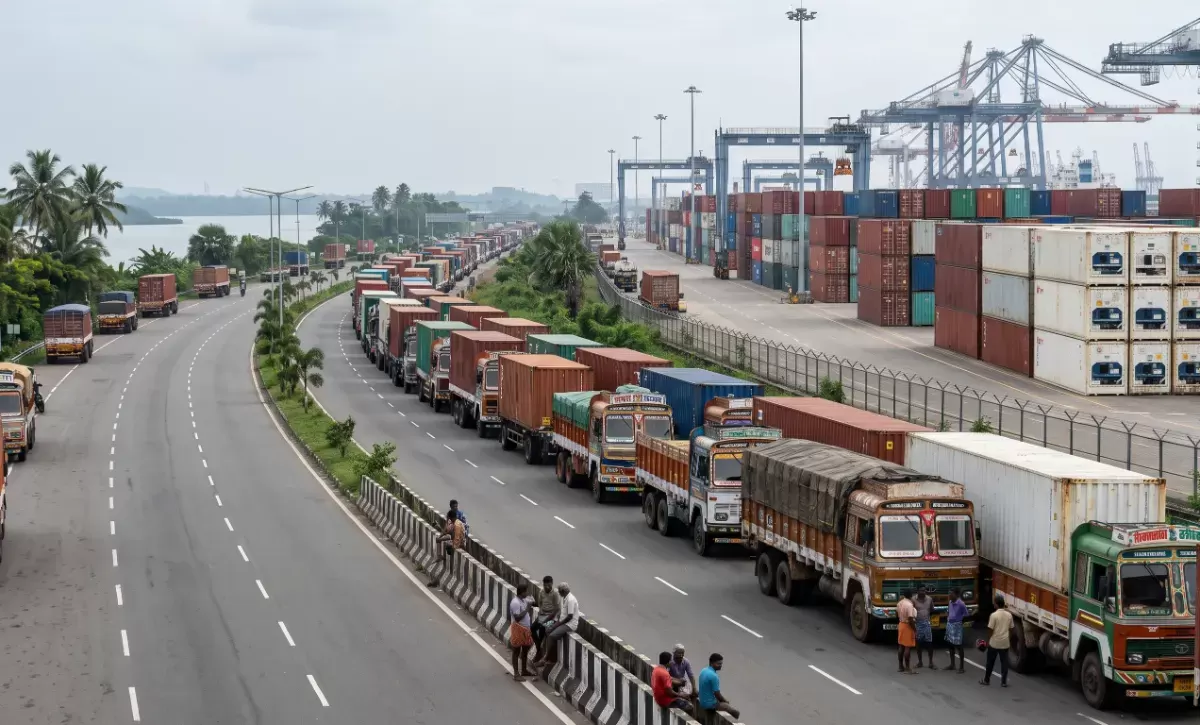
The indefinite boycott by container truck drivers at Cochin Port's Vallarpadam International Container Transshipment Terminal (ICTT) has now stretched into its 12th day, with no resolution in sight. The protest, which began on November 9, was triggered by the Customs Department's decision to mandate scanning of all import containers arriving at the port. Drivers allege that repeated daily passage through the scanning facility has caused health issues including body pain, headaches, and nausea, prompting them to refuse operations until safety concerns are addressed.
The operational paralysis has produced a staggering backlog. According to the Cochin Chamber of Commerce and Industry (CCCI), 1,810 containers have accumulated at the terminal, with a significant proportion consisting of reefer containers carrying perishable goods such as fruits. The financial hemorrhaging is severe: importers must pay between ₹2,352 and ₹3,545 per day in power connectivity charges for reefer containers, on top of demurrage fees that begin accruing from the eighth day onward. These demurrage charges stand at USD 9.03 per day for 20-foot containers and USD 18.06 for 40-foot units, doubling after seven additional days.
The crisis has escalated to the point where shipping lines and importers are actively evaluating contingency plans. Industry sources indicate that cargo diversion to Thoothukudi Port in neighboring Tamil Nadu is becoming an increasingly viable alternative if the strike persists. Such a shift would represent a significant blow to Kochi's standing as a regional transshipment hub, potentially causing long-term damage to the port's cargo volumes and the broader logistics ecosystem of Kerala.
CCCI Vice-President Prakash Iyer articulated the gravity of the situation, warning that prolonged disruption could permanently alter regional trade patterns. "Such a shift will not only adversely affect importers and exporters in Keralam but could also undermine the competitiveness of Kochi as a major maritime gateway," he stated, emphasizing the long-term implications for the region's trade and economy. The Chamber has formally appealed to both central and state governments to intervene immediately and facilitate meaningful dialogue among all stakeholders.
The financial toll extends beyond container charges. The All Kerala Face Veneer Traders Association has projected potential additional liabilities reaching USD 1 million if the disruption continues unabated. Traders across multiple sectors have urged port and customs authorities to waive detention, demurrage, and storage charges that are accumulating daily, arguing that the circumstances are beyond their control and that punitive charges would compound an already untenable situation.
From a procedural standpoint, the dispute centers on what trade representatives describe as a universal scanning requirement. The Customs Directorate of Logistics maintains that drive-through scanning systems are designed with safeguards to prevent unacceptable radiation exposure, allowing drivers to remain inside their vehicles during the process. However, union representatives counter that some drivers pass through the facility six or seven times daily, and they are seeking measures that address their health and safety concerns before resuming operations.
The timing of the disruption is particularly damaging given Vallarpadam's recent operational performance. Operator DP World reported throughput of 834,665 TEUs in FY2024-25, representing approximately 11 percent growth over the preceding year, including 169,562 TEUs of transshipment cargo across 640 vessel calls. This upward trajectory is now at risk of reversal, with reputational damage potentially deterring future transshipment traffic that might seek more reliable alternatives.
Industry proposals for breaking the deadlock include shifting to selective or risk-based scanning while adequate infrastructure is developed, and exploring whether designated Container Freight Stations and Inland Container Depots could accommodate scanning operations to relieve pressure at the terminal. These remain proposals only, with no confirmation of acceptance by Customs or settlement with the striking drivers. For now, queues along National Highway 966A—commonly known as Container Road—persist, and the port's landside operations remain effectively paralyzed.