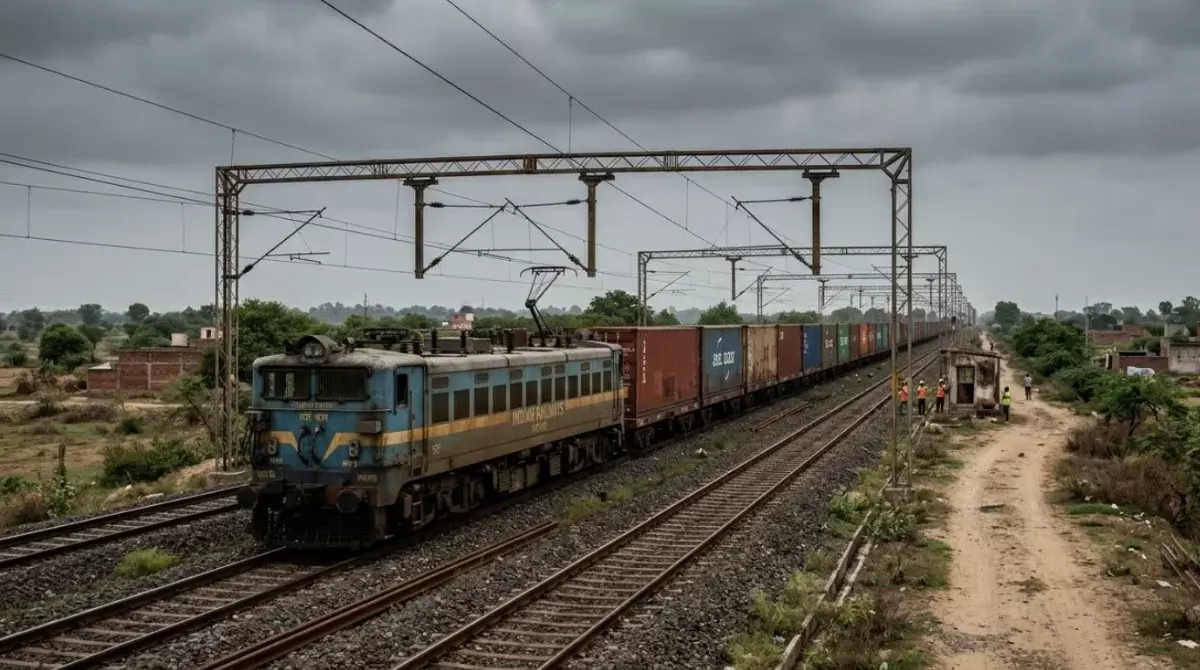
<p class="ds-markdown-paragraph" style="margin: 16px 0px; color: rgb(15, 17, 21); font-family: quote-cjk-patch, Inter, system-ui, -apple-system, BlinkMacSystemFont, "Segoe UI", Roboto, Oxygen, Ubuntu, Cantarell, "Open Sans", "Helvetica Neue", sans-serif; font-size: 16px;"><span class="">Container-laden freight trains have been stranded at multiple transit points between Mumbai and Nagpur for more than eight days, crippling export-import trade across the Vidarbha region and leaving manufacturers and traders grappling with mounting financial losses . The disruption, reported by The Hitavada on 20 November 2026, has affected the rail logistics corridor that connects Vidarbha's industrial belt to the ports of Mumbai, and it has cascaded into production halts and missed export deadlines.</span></p><p class="ds-markdown-paragraph" style="margin: 16px 0px; color: rgb(15, 17, 21); font-family: quote-cjk-patch, Inter, system-ui, -apple-system, BlinkMacSystemFont, "Segoe UI", Roboto, Oxygen, Ubuntu, Cantarell, "Open Sans", "Helvetica Neue", sans-serif; font-size: 16px;"><span class="">The operational breakdown is severe relative to normal transit times. A container train departing from Mumbai's ports ordinarily reaches Nagpur within a standard three-day window . But several rakes have been held up for more than eight days at key junctions including Bhusaval, Igatpuri, and Kaman Road in Palghar, among other locations . The reasons for the congestion and operational delays were described as unexplained, and the report did not identify a specific cause for the stranded trains.</span></p><p class="ds-markdown-paragraph" style="margin: 16px 0px; color: rgb(15, 17, 21); font-family: quote-cjk-patch, Inter, system-ui, -apple-system, BlinkMacSystemFont, "Segoe UI", Roboto, Oxygen, Ubuntu, Cantarell, "Open Sans", "Helvetica Neue", sans-serif; font-size: 16px;"><span class="">The impact on Vidarbha's industries has been immediate and severe. Importers in the region are facing an acute shortage of essential raw materials, forcing some manufacturing units to slow down operations or halt production lines altogether . Prakash Khemka, a leading carrying and forwarding agent based in Nagpur, told The Hitavada that his clients are under immense pressure: "When raw materials do not arrive on time, their entire production cycle and downstream commitments to buyers get severely disturbed" . The disruption extends beyond individual factories to the broader supply chains that depend on Vidarbha's manufacturing output.</span></p><p class="ds-markdown-paragraph" style="margin: 16px 0px; color: rgb(15, 17, 21); font-family: quote-cjk-patch, Inter, system-ui, -apple-system, BlinkMacSystemFont, "Segoe UI", Roboto, Oxygen, Ubuntu, Cantarell, "Open Sans", "Helvetica Neue", sans-serif; font-size: 16px;"><span class="">The export side of the equation has been equally affected. The delayed arrival of empty and loaded containers has thrown outbound export schedules into disarray . Exporters who rely on the Mumbai–Nagpur rail corridor to move goods to port for international shipments are facing missed vessel cut-offs and the associated penalties and reputational damage. With inventory buffers running dangerously low and financial penalties accumulating daily, trade bodies and logistics operators in the region have urged railway authorities to intervene immediately and prioritise the clearance of stranded freight trains to restore normalcy to Vidarbha's vital trade lifeline .</span></p><p class="ds-markdown-paragraph" style="margin: 16px 0px; color: rgb(15, 17, 21); font-family: quote-cjk-patch, Inter, system-ui, -apple-system, BlinkMacSystemFont, "Segoe UI", Roboto, Oxygen, Ubuntu, Cantarell, "Open Sans", "Helvetica Neue", sans-serif; font-size: 16px;"><span class="">For India's logistics sector, the Vidarbha disruption illustrates the vulnerability of inland industrial clusters to bottlenecks on the rail corridors that connect them to ports. The Mumbai–Nagpur route is a critical artery for central India's EXIM trade, and when it becomes congested, the effects are felt not just by the railways but by every business that depends on the timely movement of goods. The fact that trains have been stranded for more than eight days on a route that normally takes three days suggests a significant operational failure that requires urgent attention.</span></p><p class="ds-markdown-paragraph" style="margin: 16px 0px; color: rgb(15, 17, 21); font-family: quote-cjk-patch, Inter, system-ui, -apple-system, BlinkMacSystemFont, "Segoe UI", Roboto, Oxygen, Ubuntu, Cantarell, "Open Sans", "Helvetica Neue", sans-serif; font-size: 16px;"><span class="">The timing of the disruption is particularly challenging because it comes as India's export sector is performing strongly, with October merchandise exports reaching an all-time high. Vidarbha's exporters are part of that national export effort, and their inability to move goods to port undermines the broader export momentum. The disruption also affects import-dependent manufacturers whose production schedules cannot be maintained without timely raw material deliveries.</span></p><p class="ds-markdown-paragraph" style="margin: 16px 0px; color: rgb(15, 17, 21); font-family: quote-cjk-patch, Inter, system-ui, -apple-system, BlinkMacSystemFont, "Segoe UI", Roboto, Oxygen, Ubuntu, Cantarell, "Open Sans", "Helvetica Neue", sans-serif; font-size: 16px;"><span class="">Looking ahead, the immediate priority is the clearance of the stranded trains and the restoration of normal rail operations on the Mumbai–Nagpur corridor. The railway authorities have not publicly explained the cause of the congestion or provided a timeline for resolution, and the trade bodies' appeal for intervention indicates that the situation has exceeded what the normal operational mechanisms can address. For Vidarbha's industries, the disruption is a reminder that logistics resilience depends not only on port and terminal capacity but on the reliability of the rail links that connect inland production centres to the coast.</span></p>
Container Trains Stranded for Over Eight Days on Mumbai–Nagpur Route, Vidarbha EXIM Trade Faces Mounting Losses
Multiple container-laden freight trains have been stranded at transit points between Mumbai and Nagpur for more than eight days, disrupting export-import trade across the Vidarbha region. Under normal circumstances, a container train from Mumbai's ports reaches Nagpur within three days, but rakes have been held up at key junctions including Bhusaval, Igatpuri, and Kaman Road in Palghar. Importers face acute shortages of essential raw materials, forcing some manufacturing units to slow operations or halt production lines, while delayed arrival of empty and loaded containers has thrown export schedules into disarray. Trade bodies have urged railway authorities to prioritise the clearance of stranded freight trains.