
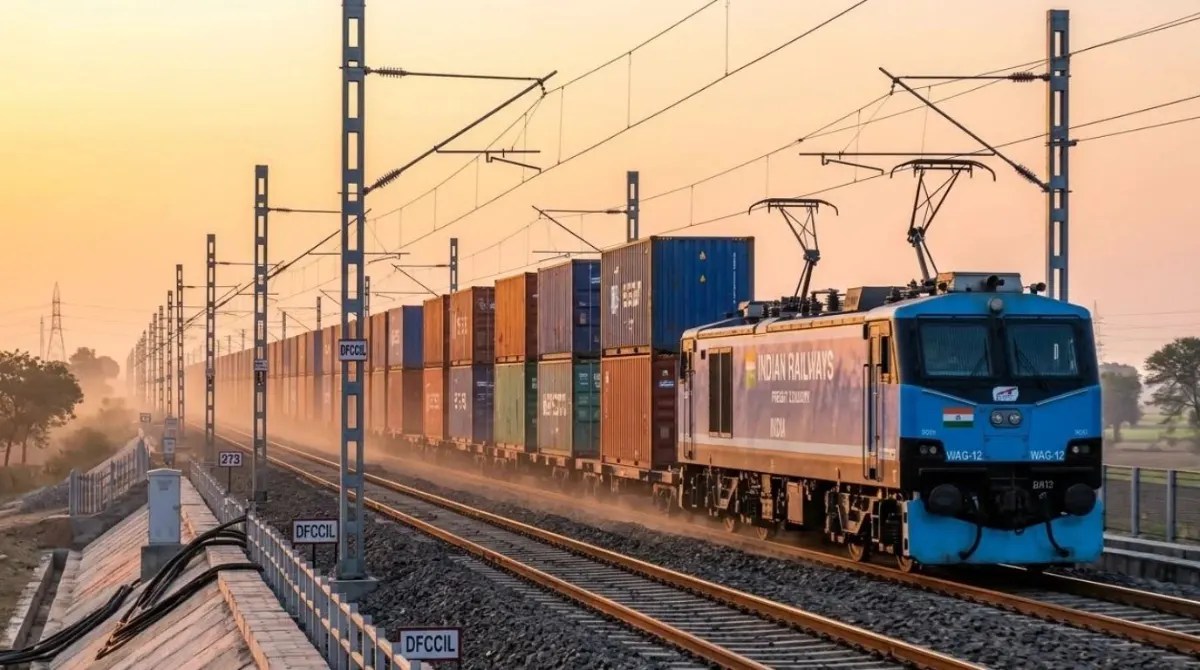
Indian Railways has achieved a new record in freight train interchanges, handling 892 trains in a single day between the Dedicated Freight Corridors and the conventional network . The milestone, reported by Business Standard on 10 November 2026, reflects the improving operational integration between the two systems and the growing volume of freight that is using the DFCs as part of longer journeys that begin or end on the conventional network.
An interchange occurs when a train moves from the dedicated freight corridor onto the conventional Indian Railways network, or vice versa. This typically happens at junctions where the DFC connects to the broader rail system, and it is a critical point in the freight journey because it determines whether the efficiency gains of the dedicated corridor can be extended to the entire route . The record 892 interchanges in a single day indicate that the interfaces between the two networks are functioning at high throughput, and that the coordination between DFC operators and Indian Railways is improving.
The interchange record complements other operational milestones on the DFC network. On 7 November 2026, DFCCIL recorded 951 freight train interchanges across the Eastern and Western Dedicated Freight Corridors, surpassing the previous benchmark of 946 set on 6 October . In October, the network handled 1,203 double-stack container trains, up 27.43% year-on-year from 944, and average daily freight train movements rose to 472 from 385 a year earlier . These figures suggest that the DFCs are carrying a larger share of India's rail freight and that the operational intensity of the network is increasing.
The integration between the DFCs and the conventional network is a key determinant of whether the dedicated corridors deliver their intended benefits. The DFCs were designed to separate freight from passenger traffic, allowing faster and more reliable freight movement on the dedicated lines while freeing capacity on the conventional network for passenger services . But most freight journeys do not begin and end entirely on the DFCs; they start at inland terminals or ports that connect to the conventional network, use the DFCs for the long-haul segment, and then return to the conventional network for final delivery. The efficiency of these interchange points therefore determines whether the DFC's speed and capacity advantages are realised across the entire supply chain.
For India's logistics sector, the record interchange figure is a positive indicator that the DFC network is maturing. The corridors have been operational for several years, and the focus is now shifting from construction to operational optimisation and integration. The record interchanges suggest that the interfaces are being managed effectively, and that the coordination between DFCCIL and Indian Railways is improving. This is important for shippers because it means that the transit time benefits of the DFCs are more likely to be realised on actual freight movements, not just on the dedicated segments.
The timing of the record aligns with the broader expansion of rail-linked container services that we have documented in recent weeks. DP World has launched dedicated rail services connecting the NCR to Mundra, CONCOR has introduced scheduled services from Kanpur, and Gateway Distriparks has secured a contract to operate JNPA's common rail yard. The common thread is that rail is becoming a more important component of India's container logistics, and the DFC network is the backbone that supports this shift.
Looking ahead, the key question is whether the interchange capacity can continue to grow as freight volumes increase. The DFCs have capacity headroom, but the interchange points and the conventional network connections may become bottlenecks if they cannot handle the additional traffic. The record 892 interchanges in a single day suggests that the system can handle high volumes, but sustained growth will require continued investment in the interface infrastructure and operational coordination. For now, the record provides a concrete benchmark: Indian Railways and DFCCIL are handling more interchange traffic than ever before, and the integration between the dedicated corridors and the conventional network is deepening.