
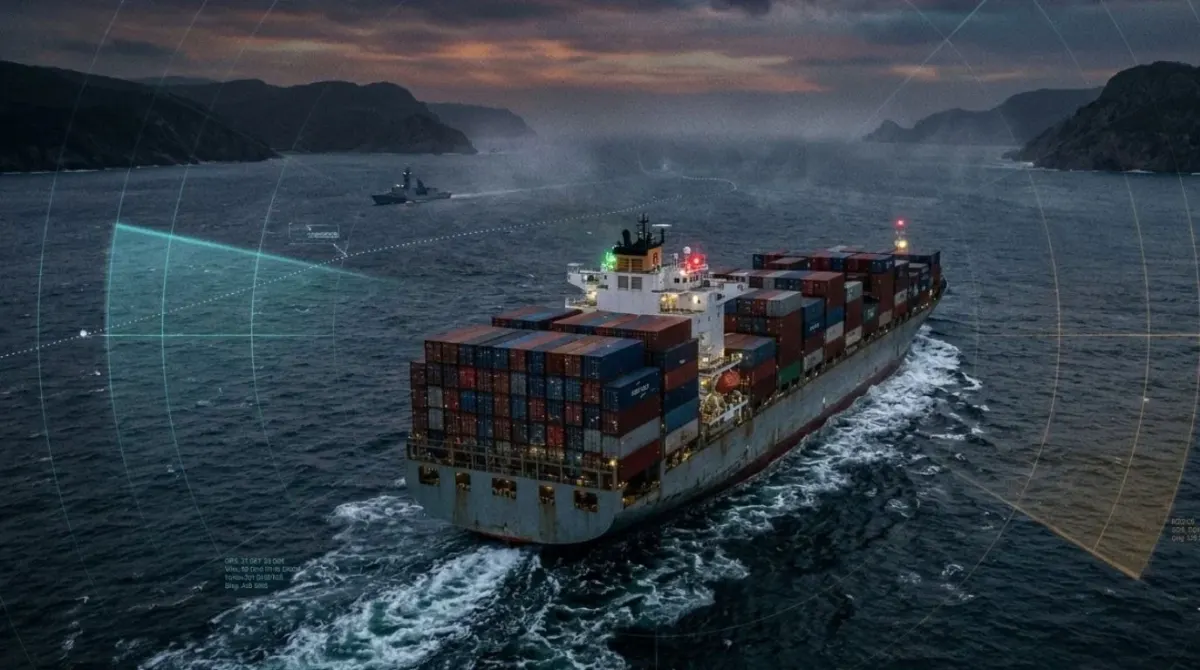
Union Minister for Ports, Shipping and Waterways Sarbananda Sonowal has condemned repeated attacks on commercial vessels involving Indian seafarers, describing them as a serious threat to the safety and security of seafarers and a disruption to maritime trade and global supply chains . The remarks were made during a review meeting in New Delhi on 20 November 2026, convened to assess and strengthen maritime safety and security measures as the Ministry tracks nine India-flagged or Indian-interest vessels west of the Strait of Hormuz .
Sonowal emphasised that freedom of navigation and the unimpeded movement of merchant vessels through international waters are fundamental principles of international maritime law, and he stressed that safe and secure sea lanes are essential not only for global trade continuity but also for economic growth, energy security, and the prosperity of nations . This framing connects the immediate seafarer safety issue to the broader strategic and economic interests that India has in maintaining open maritime corridors.
The operational scale of the Ministry's monitoring effort was disclosed during the review. The E-Navik seafarer tracking module is currently monitoring more than 800 vessels in the Persian Gulf, west of the Strait of Hormuz, and more than 200 vessels in the Gulf of Oman, east of the strait . This tracking capability allows the Ministry to maintain visibility over the locations and status of Indian seafarers serving on vessels across the region, and it provides the data needed to respond when incidents occur.
Sonowal directed the Directorate General of Maritime Administration and all concerned officers to further strengthen maritime safety and security measures . He also reviewed the compensation status for victims of attacks and directed the Director General of Shipping to personally brief him on the progress, and he enquired about measures to ensure timely assistance to the victims' next of kin . This focus on compensation and family support reflects the human dimension of the security crisis that has been less visible than the operational and commercial dimensions.
The timing of the review aligns with a period of intensified attacks on shipping in the Gulf and its approaches. The LPG tanker TARA GAS was struck by a missile in the Strait of Hormuz in November, leaving one Indian seafarer missing, and the VLCC MT Fujairah Energy was hit by a projectile in the Persian Gulf, injuring an Indian national . These incidents, alongside the broader pattern of attacks on commercial vessels, have made seafarer safety a priority for the government and have prompted the Ministry to review its response mechanisms.
For India's maritime sector, the review signals that the government is treating seafarer safety as a distinct policy priority rather than simply a subset of shipping security. The E-Navik tracking module, the compensation review, and the directive to strengthen safety measures are all elements of a framework that aims to protect Indian nationals serving on vessels of all flags in the region. The fact that the Ministry is tracking over 1,000 vessels across the Persian Gulf and Gulf of Oman indicates the scale of the Indian seafarer presence in the region and the complexity of the monitoring task.
Looking ahead, the key question is whether the strengthened measures will be sufficient to protect Indian seafarers as long as the security environment in the Gulf remains volatile. The Minister's condemnation of the attacks is a diplomatic statement, but it does not change the physical risks that crews face on vessels transiting contested waters. The compensation review and the family support measures address the consequences of attacks rather than their prevention. For now, the review demonstrates that the government is actively monitoring the situation and responding to incidents, and it provides a measure of assurance to seafarers and their families that their welfare is being treated as a priority.