
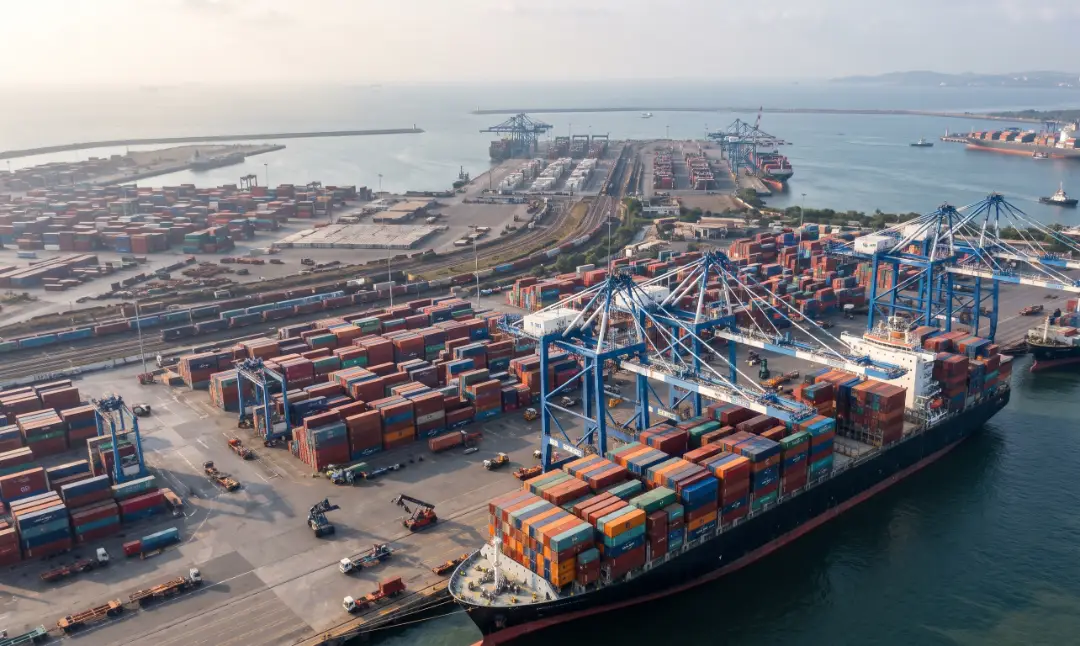
Jawaharlal Nehru Port Authority has achieved a landmark that has eluded Indian ports since the container revolution began: crossing the 2 million TEU mark within a single financial year. As of November 20, 2026, the port had handled 2.05 million TEUs, a figure that cements its position as India's undisputed container gateway and places it in a league with major global ports. The milestone is a testament to sustained volume growth, operational improvements, and the strategic investments that JNPA has made over the past several years.
The achievement is particularly significant because it comes well before the end of the financial year, indicating that the port is on track to set a substantially higher annual record. JNPA's terminals have been operating at high utilization levels, and the port has managed to absorb growing volumes without the chronic congestion that has plagued some other Indian ports. The ability to scale throughput while maintaining service quality is a key differentiator for JNPA in the competitive landscape of Indian container ports.
Infrastructure upgrades have been central to the port's success. JNPA has invested in berth deepening, terminal modernization, and yard expansion to accommodate larger vessels and higher volumes. The port's deep-water berths can handle the largest containerships deployed on India's trade routes, reducing the need for transshipment through foreign hubs. The ongoing development of the fourth container terminal is expected to add further capacity and ensure that the port can continue to grow in line with demand.
Digital initiatives have also played a critical role. JNPA has been at the forefront of India's push toward paperless, contactless cargo clearance, with systems for electronic documentation, automated gate operations, and real-time tracking. These initiatives have reduced dwell times, improved predictability for exporters and importers, and enhanced the port's overall efficiency. The digital transformation has been particularly valuable for EXIM cargo, where time sensitivity and documentation complexity are constant challenges.
The milestone reflects the broader growth of India's container trade. The country's exports and imports have been expanding, driven by manufacturing growth, consumption demand, and integration into global supply chains. JNPA, as the gateway for a large share of this trade, has benefited directly. The port handles a diverse mix of cargo, including textiles, engineering goods, chemicals, and agricultural products, and its connectivity to the hinterland through rail and road networks has been strengthened by dedicated freight corridors and inland container depots.
For the port's stakeholders, including terminal operators, shipping lines, customs brokers, and transporters, the 2 million TEU milestone is a source of pride and a validation of their collective efforts. The achievement has been made possible by close coordination among these stakeholders, who have worked to streamline processes and address bottlenecks. The port authority has recognized their contribution and has indicated that it will continue to invest in infrastructure and technology to sustain the growth trajectory.
The milestone also has implications for India's broader maritime ambitions. The government has set ambitious targets for port capacity and efficiency under its Maritime Amrit Kaal Vision 2047, and JNPA's performance demonstrates that these targets are achievable. The port's success can serve as a model for other Indian ports seeking to scale up and improve their competitiveness. It also strengthens India's position in negotiations over shipping routes and transshipment, as a port with proven high-volume capability is better placed to attract mainline services.
Looking ahead, JNPA faces the challenge of sustaining growth while managing capacity constraints and environmental impact. The port has been investing in green initiatives, including renewable energy, electrification of equipment, and shore power for vessels, to reduce its carbon footprint. It is also working on improving hinterland connectivity through rail and road projects. For India's EXIM trade, JNPA's continued success is essential, and the 2 million TEU milestone is a strong foundation on which to build.