
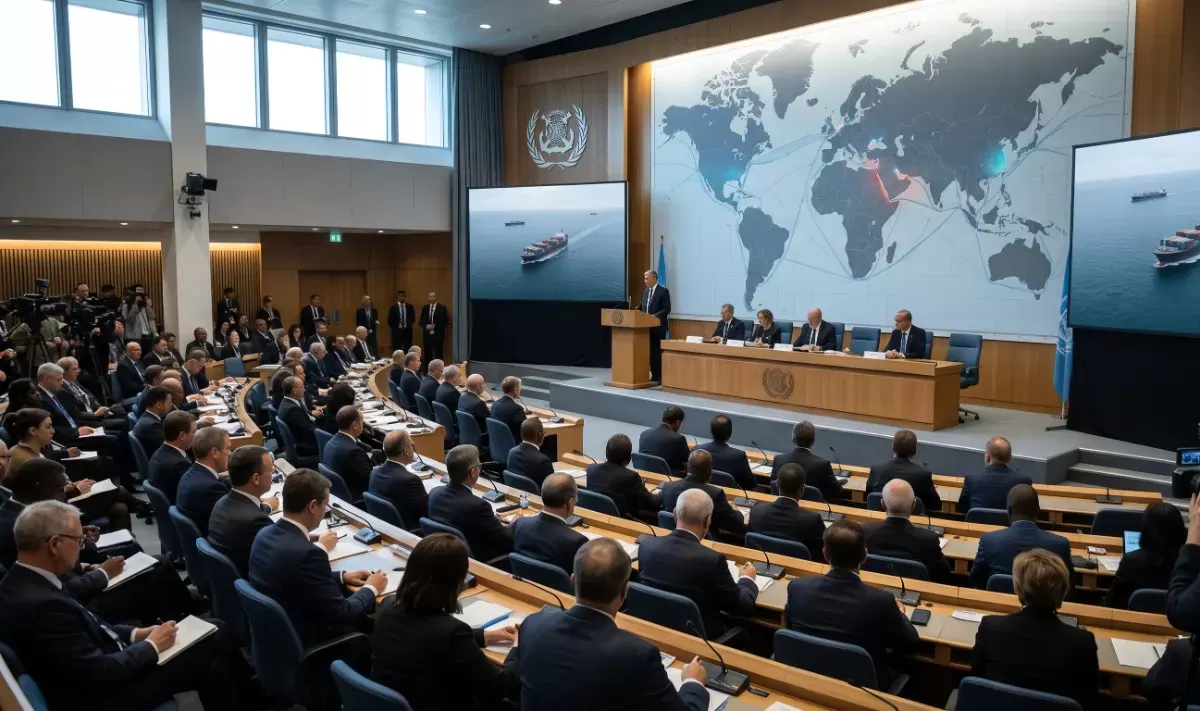
The International Maritime Organization has issued a renewed condemnation of attacks on commercial shipping in the Red Sea and Black Sea, as the death toll among seafarers reached 25. The London-based UN agency, which sets global standards for maritime safety and security, described the continued targeting of merchant vessels as unacceptable and called on all parties to respect the fundamental principle that seafarers are civilians who must not be harmed in conflict.
The death toll of 25 seafarers represents a human cost that is often overshadowed by the economic and logistical consequences of the attacks. Behind each figure is a family that has lost a breadwinner, a crew that has lost a colleague, and a community that has lost a connection to the sea. The IMO has emphasized that seafarers are essential workers who keep global trade moving, delivering food, fuel, medicine, and manufactured goods, and that their safety must be paramount in any discussion of maritime security.
The attacks in the Red Sea have been attributed to Houthi forces, who have targeted commercial vessels with missiles, drones, and small boats. The Black Sea has seen attacks linked to the Russia-Ukraine conflict, with vessels and port infrastructure coming under fire. In both regions, the attacks have disrupted trade routes, forced vessels to divert, and raised insurance and security costs. The IMO has been working with member states, navies, and industry stakeholders to develop responses, but the persistence of the threat has frustrated efforts to restore normalcy.
The IMO's condemnation comes amid a fragile recovery in Red Sea traffic, with container transits through the Suez Canal rising in recent weeks as some carriers return to the route. However, the security situation remains volatile, and the death toll serves as a stark reminder that the risk to life is real and ongoing. Shipping companies face difficult decisions about whether to route vessels through the Red Sea or take the longer Cape of Good Hope route, balancing cost and time against the safety of crew and cargo.
For the global supply chain, the attacks have had far-reaching consequences. The diversion of vessels around the Cape has added days to transit times, absorbed capacity, and increased costs. Insurance premiums for Red Sea transits have risen sharply, and some insurers have imposed restrictions on coverage. The uncertainty has also affected planning and investment, as companies struggle to forecast costs and transit times in an environment of persistent risk.
The IMO has called for enhanced coordination among naval forces operating in the region, improved information-sharing with the shipping industry, and the development of robust security protocols for vessels transiting high-risk areas. The agency has also urged flag states and port states to support seafarers affected by attacks, including through access to medical care, counseling, and repatriation. The welfare of seafarers, the IMO has stressed, must be at the center of any response.
Industry bodies have echoed the IMO's concerns, with shipowners' associations and seafarer unions calling for stronger protection and for accountability for those responsible for attacks. The International Chamber of Shipping and other groups have urged governments to take decisive action to deter attacks and to ensure that the sea lanes remain open and safe. The death toll of 25 has galvanized calls for a more robust international response, including naval escorts and the designation of protected corridors.
The IMO's statement serves as both a condemnation and a warning. The agency has made clear that it will continue to monitor the situation and to advocate for the safety of seafarers and the protection of commercial shipping. For the global maritime community, the message is that the Red Sea and Black Sea remain dangerous waters, and that the safety of those who work at sea must be a priority in any response to the security challenges of the region.