
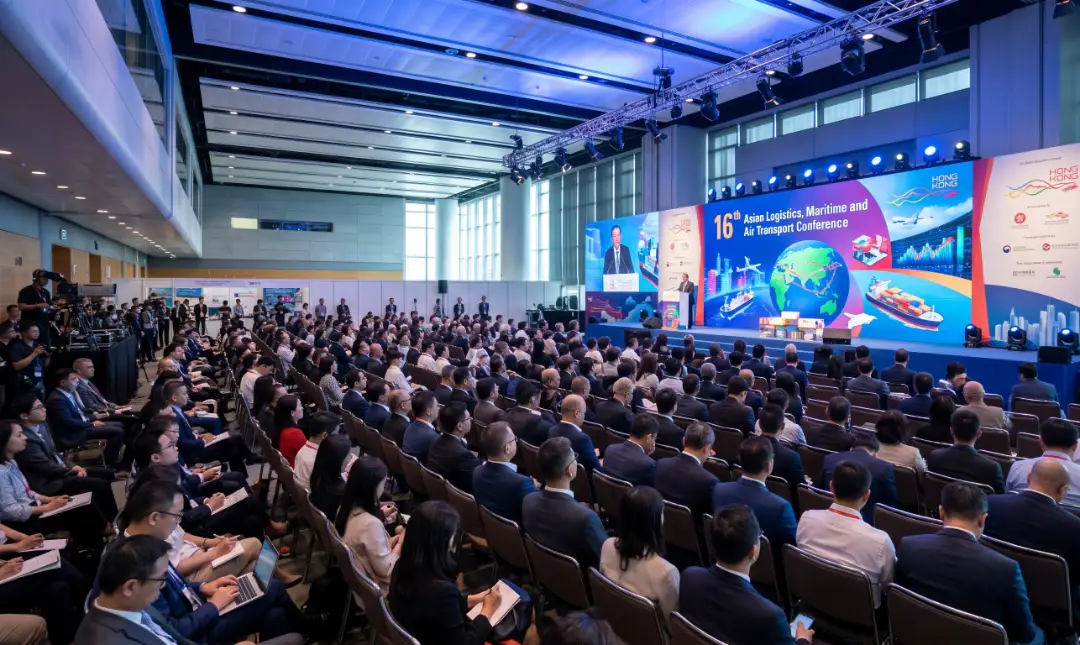
The 16th Asian Logistics, Maritime and Air Transport Conference opened in Hong Kong with a clear message: global supply chains are undergoing a structural transformation, and stakeholders must adapt or risk being left behind. The conference, a flagship event for the region's logistics and maritime industries, brought together policymakers, carriers, port operators, forwarders, and technology providers to discuss the forces reshaping trade flows and logistics networks across Asia and beyond.
In her keynote address, WTO Deputy Director-General Jennifer Nordsveen framed the current moment as a test of the multilateral trading system. She highlighted the need for fair trade policies that resist protectionist pressures, and she called for greater investment in infrastructure to support growing trade volumes. Nordsveen emphasized that simplified cross-border procedures are essential for reducing friction and costs, particularly for small and medium-sized enterprises that lack the resources to navigate complex regulatory environments.
Nordsveen's remarks on diversification resonated strongly with the audience. She urged businesses to reduce over-reliance on a few economies by diversifying suppliers and building cross-network partnerships in new markets. This advice reflects a broader shift in corporate strategy, where resilience and redundancy are increasingly valued alongside efficiency. Companies that once optimized for the lowest-cost supplier are now building portfolios of suppliers across multiple countries and regions to hedge against disruption.
The conference agenda reflected the changing geography of trade. Sessions on ASEAN opportunities highlighted the region's growing role as a manufacturing and consumption hub, with countries such as Vietnam, Indonesia, and Thailand attracting significant investment. Discussions on the Silk Road examined the evolving connectivity between Asia, Central Asia, and Europe, including rail and road corridors that offer alternatives to traditional sea routes. These sessions underscored that supply chain transformation is not just about technology but also about geography.
Digitalization was another major theme. Speakers discussed the adoption of digital platforms for booking, tracking, and documentation, and the potential for technologies such as artificial intelligence and blockchain to improve visibility and efficiency. The consensus was that digital tools are no longer optional but essential for competing in a market where customers expect real-time information and seamless transactions. However, speakers also cautioned that digitalization must be accompanied by investment in cybersecurity and data governance.
Green energy and sustainability featured prominently on the agenda. With the shipping industry facing increasing pressure to decarbonize, sessions examined alternative fuels, energy efficiency measures, and the role of ports in supporting green logistics. The conference highlighted the need for collaboration across the value chain, from fuel producers to carriers to regulators, to achieve meaningful emissions reductions. For Asian logistics hubs, the transition to green energy represents both a challenge and an opportunity to attract investment and differentiate themselves.
Hong Kong's role as the host city was itself a subject of discussion. The territory has long been a premier logistics and maritime hub, and its ability to convene stakeholders from across the region reflects its strategic location and connectivity. However, Hong Kong faces competition from other regional hubs, and speakers discussed how it can maintain its position through investment in infrastructure, technology, and talent. The conference served as a platform for Hong Kong to showcase its capabilities and to engage with the global logistics community.
The conference concluded with a call to action for businesses and governments to work together on the challenges and opportunities ahead. Nordsveen's remarks encapsulated the spirit of the event: supply chain transformation requires not just adaptation by individual firms but also cooperation across borders and sectors. For the Asian logistics industry, the conference provided a valuable opportunity to take stock of the changes underway and to chart a course for the future.