
AVG Logistics' Q2 FY27 results present a mixed but broadly encouraging picture for the integrated logistics operator. The company's consolidated profit after tax rose 39.2% year-on-year to ₹7.1 crore, a strong bottom-line performance that reflects the benefits of long-term contract wins and improved operational efficiency. The profit growth comes despite a challenging operating environment characterized by competitive pressure and rising costs, and it signals that the company's strategy of pursuing multi-year contracts is yielding results.
Revenue for the quarter rose 6% to ₹151.6 crore, a modest but steady increase that reflects the company's diversified service portfolio across road, rail, and warehousing. The revenue growth is particularly noteworthy given the broader slowdown in some segments of India's logistics market, where pricing pressure and capacity oversupply have affected margins. AVG's ability to grow revenue while expanding its contract base suggests that its integrated service offering is resonating with customers seeking end-to-end logistics solutions.
However, the company's EBITDA declined 10.3% to ₹23.6 crore, with margins contracting to 15.6% from 18.4% in the corresponding quarter of the previous year. The margin compression reflects a combination of factors, including higher operating costs, investments in new capabilities, and the ramp-up costs associated with new contracts. Management has indicated that the margin pressure is transient and that profitability is expected to improve as new contracts mature and operational efficiencies are realized.
The highlight of the quarter was the series of long-term contract wins that underpin the company's growth trajectory. Two liquor-company contracts are expected to generate approximately ₹25 crore in FY27 and scale to about ₹100 crore annually from FY28. These multi-year agreements provide revenue visibility and allow AVG to invest in dedicated capacity and technology. The contracts also demonstrate the company's ability to win business in specialized segments that require compliance, security, and reliability.
In addition, AVG secured a multinational beverage transportation contract worth approximately ₹60 crore over five years. This contract further diversifies the company's customer base and reinforces its position in the fast-moving consumer goods segment, where logistics providers must meet stringent service levels and manage complex distribution networks. The five-year tenure of the contract provides a stable revenue stream and demonstrates customer confidence in AVG's capabilities.
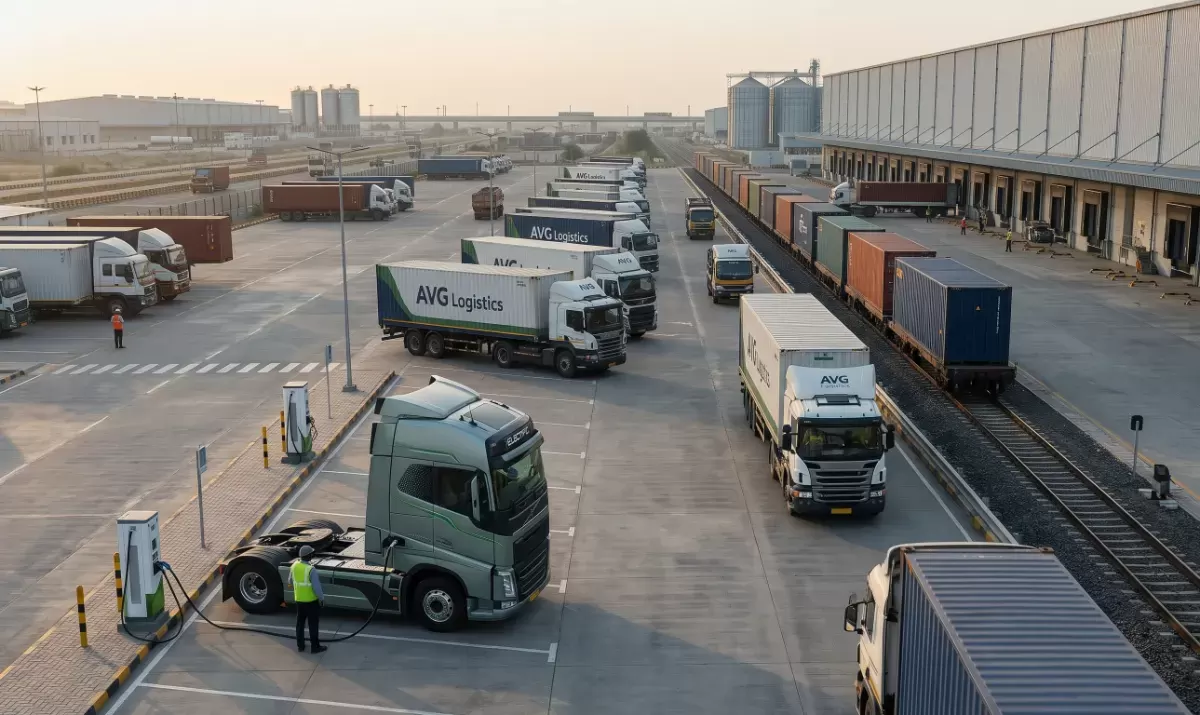
The company's investment in electric mobility is another notable development. Under a contract with Dalmia Cement, AVG is operating 30 heavy-duty electric trucks in Assam, with dedicated charging stations being established to support the fleet. This initiative positions AVG at the forefront of the transition to green logistics in India and aligns with the government's push for electric vehicle adoption in commercial transport. The Assam deployment is one of the larger electric truck fleets in the country and serves as a proof of concept for the economics of electric freight.
AVG Logistics has been pursuing a strategy of integrated service delivery, combining road, rail, and warehousing capabilities to offer customers a single point of contact for their logistics needs. This approach differentiates the company from pure-play trucking firms and positions it to capture higher-value contracts that require multi-modal coordination. The company's rail operations, in particular, provide a cost-effective option for long-haul cargo and complement its road network for last-mile delivery.
Looking ahead, AVG Logistics faces both opportunities and challenges. The long-term contracts provide a solid foundation for growth, but the company must manage margin pressure and execute effectively on its expansion plans. The electric truck initiative, while promising, requires careful management of costs and infrastructure. For investors and industry observers, the Q2 results confirm that AVG is executing on its strategy, but the coming quarters will be critical in demonstrating that the growth in profits can be sustained alongside revenue expansion.