
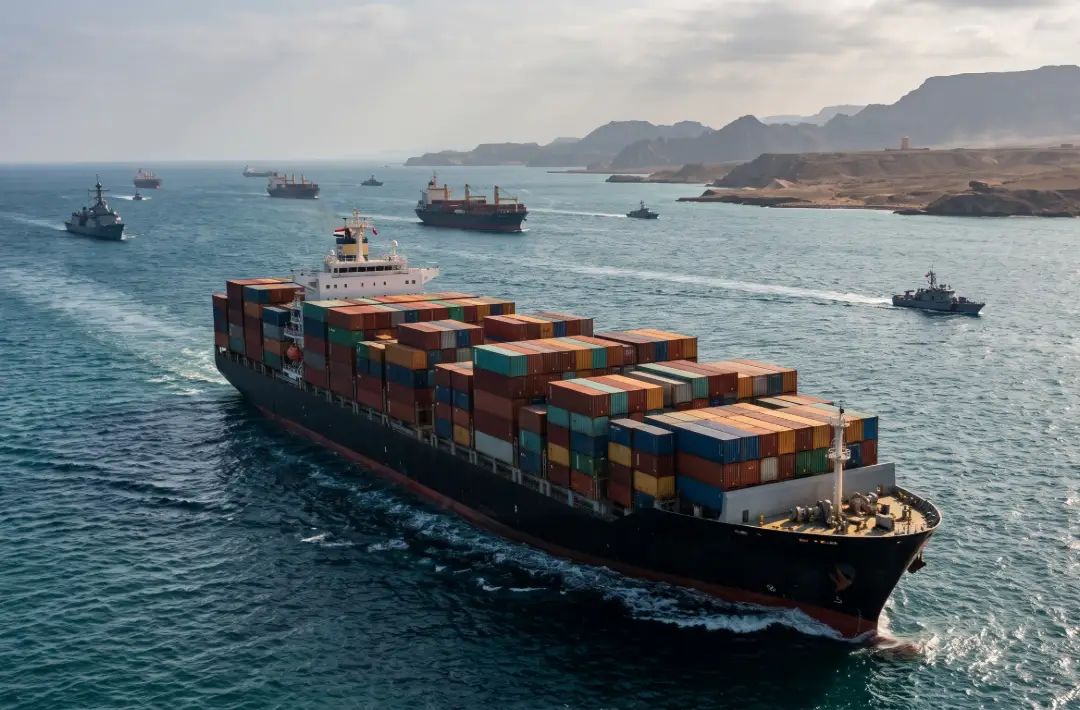
The recovery in Suez Canal container traffic has been one of the more closely watched developments in global shipping this year, and the latest figures confirm that the rebound is real. Container transits have risen 73%, with the canal recording more than 50 transits for seven consecutive weeks. The numbers mark a sharp reversal from the prolonged diversion of vessels around the Cape of Good Hope that followed the security crisis in the Red Sea, and they signal that carriers are gradually regaining confidence in the shorter route.
The shift back to Suez has been driven by a combination of factors. Carriers have been under pressure to reduce voyage times and costs as global trade volumes recover, and the Cape route adds roughly ten to fourteen days to an Asia-Europe voyage. Shippers, particularly in the retail and manufacturing sectors, have been pushing for faster transit times to replenish inventories and meet seasonal demand. The canal's return to higher traffic volumes also reflects improved coordination among naval forces and the gradual stabilization of some risk parameters.
Yet the security picture near Bab al-Mandab, the narrow strait at the southern end of the Red Sea, remains deeply concerning. Drewry's assessment highlights a material deterioration in recent weeks, with government forces withdrawing from positions overlooking the strait and Houthi forces re-establishing their presence in the area. This development effectively reduces the buffer that had helped keep the strait navigable and raises the risk of renewed attacks on commercial shipping, including missile and drone strikes and small-boat harassment.
The withdrawal of government forces from key positions is particularly significant because it alters the balance of control over the approaches to the strait. Without those positions, the ability to monitor and deter hostile activity is diminished, and vessels transiting the area may face a more permissive environment for attackers. Shipping companies are being advised to maintain heightened vigilance, coordinate with naval escorts where available, and consider route adjustments during high-risk periods.
Drewry's caution that the improving traffic figures should be viewed with context reflects a broader concern among analysts that the recovery may be fragile. Traffic volumes can reverse quickly if a major incident occurs, as demonstrated during earlier phases of the Red Sea crisis when a single attack prompted widespread diversions. The insurance market is also watching closely, with war-risk premiums for Red Sea transits remaining sensitive to any deterioration in the security environment.
For carriers and shippers, the situation presents a difficult calculus. The Suez route offers substantial cost and time advantages over the Cape route, but those advantages can be erased by a single security incident that forces a vessel to divert or delays it at a chokepoint. Many companies have adopted a flexible approach, planning Suez routings while maintaining contingency plans for rapid diversion. Some are also splitting volumes across routes to hedge against disruption.
The broader implication for global supply chains is that the Red Sea corridor remains a high-variance environment. The improvement in traffic is welcome news for the canal authority, for Egyptian revenues, and for carriers seeking efficiency, but it does not signal a return to normal. Until the security situation near Bab al-Mandab stabilizes and a durable arrangement is in place to protect commercial shipping, the recovery in Suez transits will remain vulnerable to shocks.
Industry observers are urging stakeholders to treat the current phase as one of cautious re-engagement rather than full normalization. Navies and international maritime bodies continue to monitor the strait, and insurance and advisory services are updating their risk assessments frequently. For the global shipping industry, the lesson is that the Red Sea route is back, but it is not yet safe, and planning must reflect that reality.