
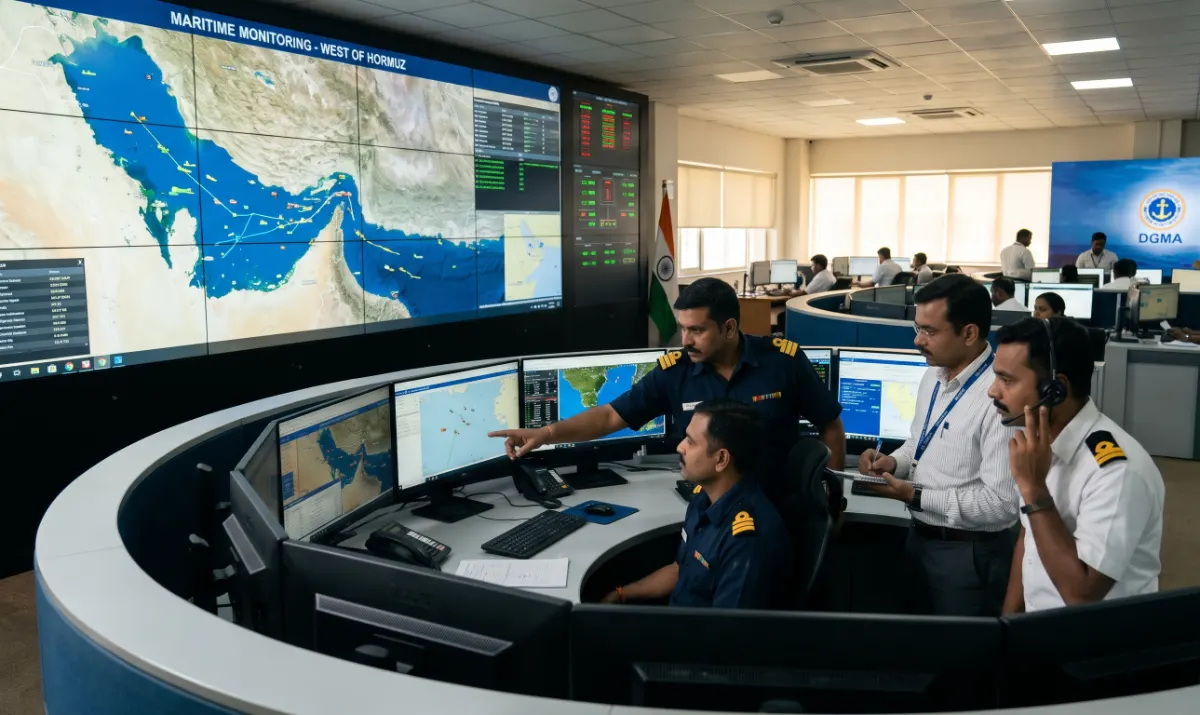
The directive comes amid escalating tensions in the Gulf region, where commercial shipping has faced repeated attacks, mine strikes, and navigational interference in recent weeks. India's shipping ministry has moved swiftly to put in place a monitoring framework for vessels carrying Indian crew and Indian-interest cargo through the affected waters, with particular focus on the corridor west of the Strait of Hormuz where several incidents have been reported.
At the center of the response is the Directorate General of Maritime Administration, which has been tasked with maintaining a live picture of vessel movements and crew welfare. The DGMA is coordinating with vessel operators to ensure that Indian seafarers receive updated threat advisories, that communication channels remain open at all times, and that any distress situation is escalated without delay to the relevant authorities, both domestic and international.
The Ministry of External Affairs is playing a parallel role, engaging with counterpart governments and international maritime bodies to secure safe passage and rapid response mechanisms for Indian-interest vessels. Officials emphasize that the coordination is not limited to crisis response but extends to preventive diplomacy, ensuring that Indian shipping interests are represented in multilateral discussions on Gulf maritime security and freedom of navigation.
Shipping companies operating on Gulf routes have been asked to review their security protocols, including hardening of vessels, rerouting where feasible, and ensuring that crew are briefed on emergency procedures. Industry sources say insurers are also monitoring the situation closely, with war-risk premiums on certain Gulf routes remaining elevated. For Indian shipowners and operators, the combination of security risk and cost escalation is a growing concern.
The welfare of Indian seafarers remains the foremost priority in the government's response. India supplies a significant share of the global maritime workforce, and any threat to their safety resonates deeply at home. The ministry has underlined that advisories will be issued promptly and that families of crew members will be kept informed through official channels, avoiding the spread of unverified information that could cause unnecessary alarm.
Maritime analysts note that India's response reflects a broader recognition that the country's trade and energy security are intimately tied to the stability of Gulf sea lanes. A large proportion of India's crude oil imports and a substantial share of its containerized trade with Europe and Africa transit these waters. Any prolonged disruption would have direct consequences for energy costs, freight rates, and supply chain reliability for the Indian economy.
The ministry has also emphasized the importance of international cooperation, noting that no single country can secure these waters alone. India has been participating in multilateral maritime security arrangements and has called for strengthened information-sharing among navies, coast guards, and shipping authorities. The current monitoring framework is expected to be reviewed continuously, with adjustments made as the threat picture evolves.
For now, the government's message to the shipping industry and to seafarers is one of vigilance and preparedness. Operators have been urged to maintain strict compliance with security advisories and to report any suspicious activity immediately. The situation remains fluid, and officials have indicated that further measures could be announced if conditions in the Gulf deteriorate.