
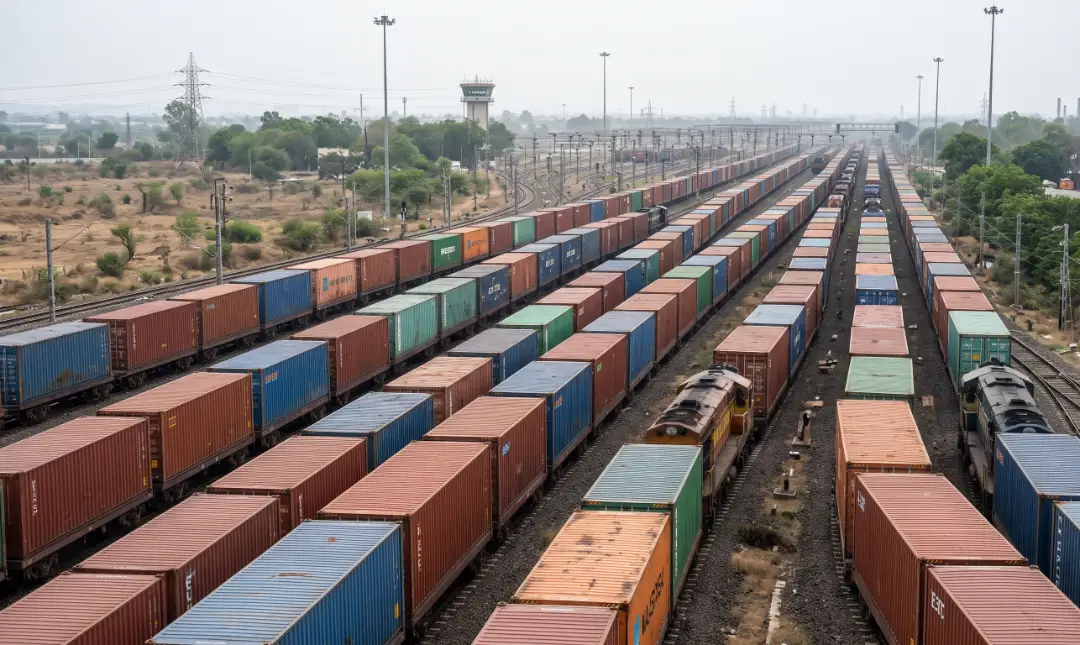
The crisis has been building steadily over the past week as container rakes dispatched from Nagpur and surrounding industrial clusters failed to reach Mumbai's JNPA and other gateway terminals within the expected timeframe. What normally takes three days has stretched beyond eight, leaving exporters unable to meet vessel cut-off dates and importers waiting on critical inputs. The backlog is now visible across the corridor, with rakes queued at multiple junction points and no clear indication of when normalcy will return.
Railway sources attribute the gridlock to a combination of factors, including cascading delays from earlier infrastructure maintenance blocks, priority movement of certain commodity trains, and congestion at the Mumbai end where terminal handling capacity has been stretched. The situation has been worsened by the sheer volume of rakes converging on the same corridor without adequate buffer capacity at intermediate yards. Officials acknowledge that clearing the accumulated backlog will take several days even after normal flow resumes.
For Vidarbha's manufacturers, the impact is immediate and painful. Several units in the steel, textile, and agro-processing sectors report that raw material inventories have run dangerously low, forcing partial production cuts. Exporters of cotton, yarn, and processed foods say they have already missed shipping deadlines, with some buyers invoking penalty clauses. The disruption comes at a particularly bad time, as exporters were counting on the pre-year-end window to clear orders for overseas customers.
Freight forwarders and customs brokers operating in the region describe a situation of mounting uncertainty. Containers already gated in at inland container depots await rake allocation, while those in transit sit idle at junctions. Demurrage and detention charges are beginning to accumulate, adding to the financial burden on exporters who are already operating on thin margins. Several forwarders report that clients are enquiring about road transport alternatives, though trucking costs to Mumbai remain significantly higher and capacity is limited.
Trade bodies, including regional chambers of commerce and export associations, have formally approached railway authorities seeking immediate intervention. Their demands include prioritized clearance of stranded rakes, transparent communication on expected timelines, and temporary relaxation of demurrage rules for affected containers. Industry representatives argue that the corridor is too critical to the region's EXIM economy to be allowed to function without contingency planning for such disruptions.
The broader concern is one of competitiveness. Vidarbha has been positioning itself as a growing export hub, leveraging its proximity to the Delhi-Mumbai Industrial Corridor and planned multimodal logistics infrastructure. But episodes like this undermine confidence among exporters and foreign buyers alike. Logistics reliability is increasingly a deciding factor in sourcing decisions, and repeated disruptions could push buyers toward suppliers with more dependable connectivity.
Railway authorities have indicated that additional rakes and locomotives are being deployed to ease the bottleneck, and that coordination with terminal operators at JNPA is underway to speed up evacuation once trains arrive. However, they have stopped short of committing to a firm deadline for full clearance. Trade sources say they will be monitoring the situation hour by hour, with many exporters preparing contingency plans involving road movement for time-sensitive cargo.
For now, the corridor remains under stress, and the region's exporters are bracing for knock-on effects that could extend well beyond the immediate backlog. The episode has renewed calls for dedicated freight infrastructure and better coordination between rail and port operations in one of India's most economically significant trade lanes.