
Petroleum Minister Hardeep Singh Puri has said that global oil supply risks persist as diplomatic talks on reopening the Strait of Hormuz continue, acknowledging that India is not yet past the disruption that began when the waterway was effectively closed on 28 February 2026 . Speaking to reporters after addressing the FICCI Annual General Meeting in New Delhi on 19 November, Puri said "we are not out of the woods yet," while expressing cautious optimism about the ongoing discussions involving the United States, Iran, and Gulf states .
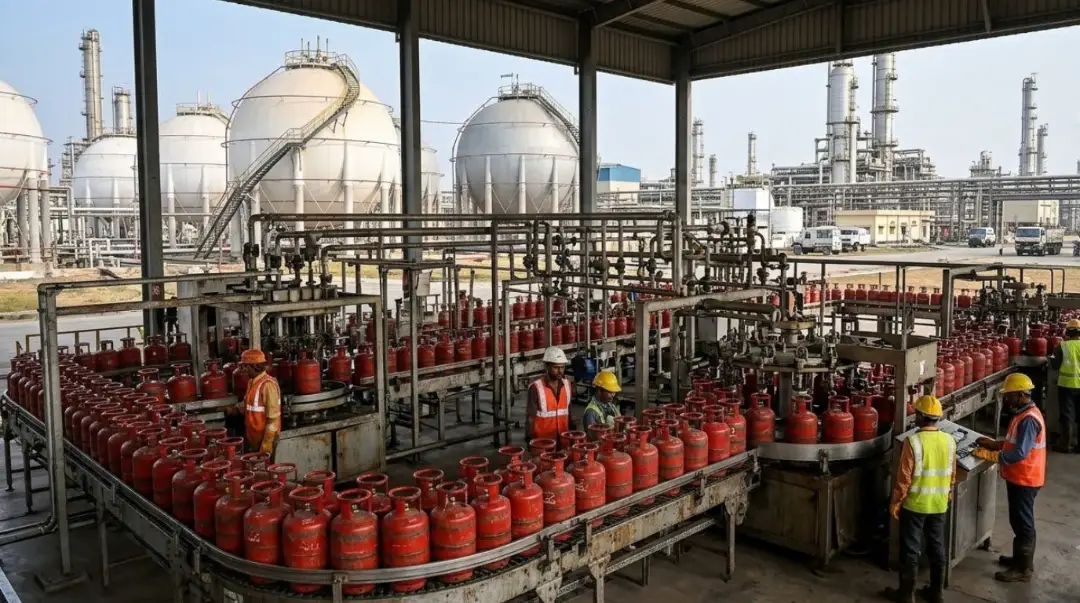
The minister provided the most detailed public accounting yet of how India managed the LPG supply shock that followed the Hormuz closure. India imports about 60% of its LPG consumption, and roughly 90% of those imports transited the strait before the disruption. Qatar, the UAE, and Saudi Arabia were major suppliers . To compensate, the government held daily meetings with state-run oil marketing companies and worked with public and private refiners to raise domestic LPG production from around 35,000 tonnes per day to 55,000 tonnes . Daily cylinder bookings, meanwhile, surged from around 52 lakh to 92 lakh as consumers feared shortages.
The operational outcome, according to Puri, was that none of India's approximately 1.07 lakh fuel retail outlets ran dry during the crisis . This is a significant logistical achievement given the scale of the disruption to India's LPG import supply chain, and it reflects the combination of domestic production increases and the government's coordination with refiners and distributors. The minister did not disclose the cost of the production increase or the compensation arrangements with the oil marketing companies, though he acknowledged that they continue to face shortfalls on fuel sales and described reimbursement as "a continuous process."
The price trajectory that Puri described illustrates the scale of the market disruption. Oil prices climbed from around $67–68 a barrel to about $120 during the worst of the crisis, and they remain around $92, well above pre-disruption levels . This elevated price environment has fed through to India's import bill and to the delivered cost of refined products, contributing to the inflation pressures that the government has been managing through measures including the windfall tax adjustments on diesel and ATF exports.
Puri also addressed seafarer safety, stating that the safety of Indian seafarers remains "a very high priority" for the government . This comes amid a series of attacks on vessels carrying Indian crew in the Gulf and the broader region, including the missile strike on the LPG tanker TARA GAS that left one Indian seafarer missing and the attack on the VLCC MT Fujairah Energy that injured an Indian national.
For India's energy logistics sector, Puri's remarks confirm that the Hormuz disruption has been managed through a combination of domestic production increases, government coordination, and the avoidance of retail supply gaps, but that the underlying vulnerability persists as long as the strait remains constrained. The minister's statement that talks are ongoing, and his expression of hope that barriers to free flow will be removed, indicates that the government expects the current arrangement to continue until a diplomatic resolution is reached.
Looking ahead, the key variable remains the trajectory of the Hormuz negotiations. If the strait reopens and LPG and crude flows normalise, the domestic production increases and emergency coordination measures can be wound down. If the disruption persists or escalates, India will need to sustain the higher domestic output and continue managing the supply chain through alternative arrangements. For now, Puri's disclosure provides a concrete record of how India responded to the crisis, and it underscores that the country's energy security remains tied to a waterway over which it has no direct control.