
India's trade deficit with China is projected to reach a record $150 billion in the 2026-27 financial year, up from $112 billion in the previous year and a more than four-fold increase from $36 billion in 2014, according to Congress general secretary Jairam Ramesh . The projection, reported by UNI India on 19 November 2026, has become a political flashpoint, with the opposition party accusing the government of undermining domestic manufacturing and deepening the country's dependence on Chinese imports.
The deficit trajectory reflects a structural feature of India's trade relationship with China that has persisted despite years of policy emphasis on domestic manufacturing. India imports substantially more from China than it exports, with the imbalance concentrated in electronics, machinery, organic chemicals, and intermediate goods that feed Indian industry . The widening gap suggests that India's manufacturing sector, while growing, remains dependent on Chinese inputs for production, and that the Make in India initiative has not yet shifted the bilateral balance in a meaningful way.
The broader trade context provides additional context for the deficit. India's total merchandise trade deficit widened to $334.26 billion in FY26 from $283.50 billion a year earlier, reflecting the combined effect of elevated crude oil prices, strong domestic demand for imports, and the persistent China imbalance . Prime Minister Modi, speaking at the FICCI annual convention on the same day, urged Indian industry to move beyond the domestic market and build globally competitive products to boost exports, acknowledging that the large local market should not make businesses complacent about international competitiveness .
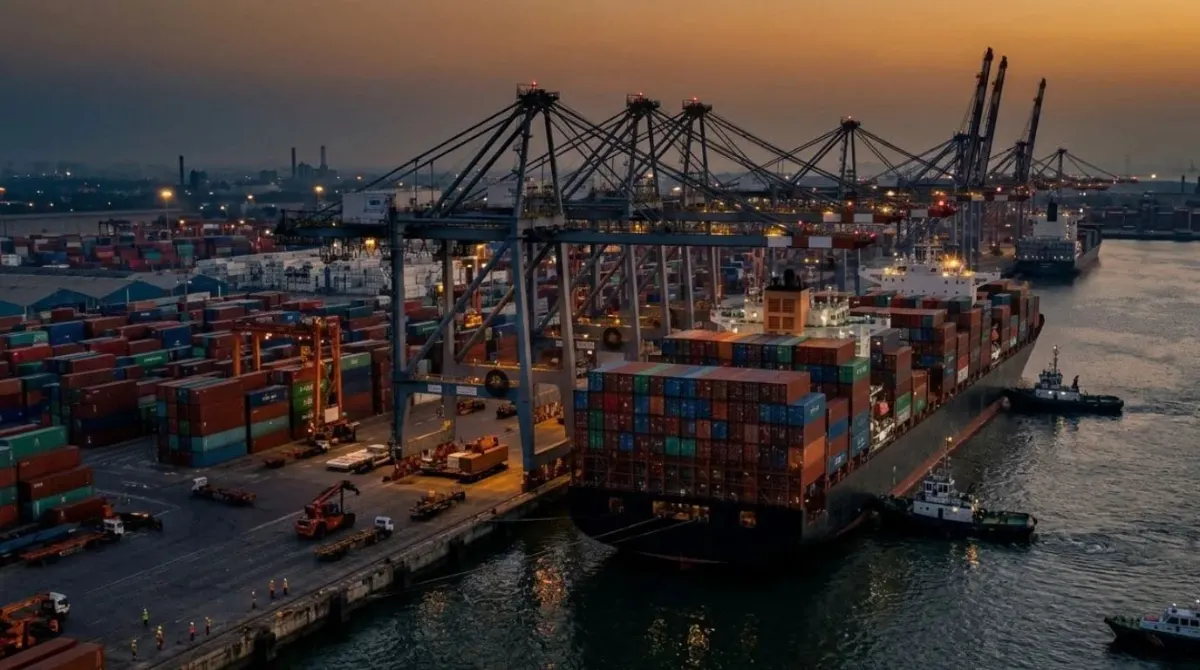
For India's logistics sector, the China deficit has direct implications for cargo flows. A significant share of India's imports from China moves through container shipping, with Chinese ports feeding Indian gateways at JNPA, Mundra, and Chennai. The deficit means that more containers arrive at Indian ports from China than depart for Chinese destinations, creating an equipment imbalance that carriers must manage through empty container repositioning. This imbalance contributes to the container availability constraints that Indian exporters have faced, and it is a structural factor behind the empty container return charges and equipment shortages that we have documented on the India–Gulf and India–Europe corridors.
The timing of the projection aligns with the government's broader trade policy push. India has been concluding free trade agreements with the UK, EU, and other partners, and the Prime Minister has been urging industry to use these agreements to expand exports. The China deficit is a reminder that trade agreements with other partners do not address the structural dependence on Chinese imports, and that reducing the deficit would require either import substitution in key sectors or a significant expansion of Indian exports to China.
Looking ahead, the trajectory of the China deficit will depend on whether India's manufacturing sector can develop domestic capacity for the intermediate goods and components that it currently imports from China, and whether bilateral trade negotiations can open the Chinese market to more Indian products. The government has not announced specific measures to address the deficit in response to the Congress criticism, and the projection is an opposition estimate rather than an official forecast. For now, the $150 billion figure highlights the scale of India's import dependence on its northern neighbour, and it underscores the challenge that the government faces in translating its manufacturing ambitions into a more balanced trade relationship.