
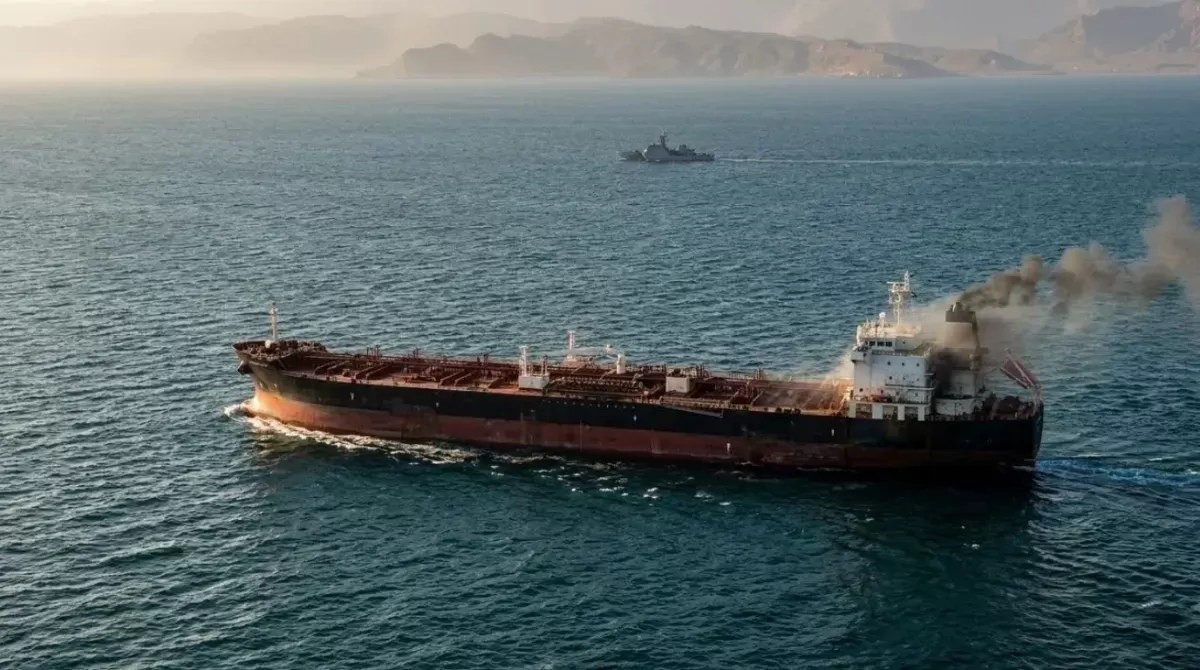
A tanker transiting outbound through the Strait of Hormuz was struck by an unidentified object in its engine room on 19 November 2026, according to a warning issued by the United Kingdom Maritime Trade Operations agency . The incident occurred approximately six nautical miles north of Khasab, Oman, placing it in the waters off the Musandam peninsula where multiple attacks have been reported in recent weeks .
The UKMTO statement said the crew was safe and accounted for following the strike . The agency did not identify the vessel, its flag, or its ownership, and it stated that the extent of damage and any environmental impact were not immediately known . Authorities were investigating the incident, and UKMTO advised vessels transiting the area to exercise caution and report any suspicious activity .
The location of the strike is significant because it falls within the same corridor where a series of attacks has occurred since the beginning of November. The Musandam coast, near Khasab, has been the site of repeated incidents targeting vessels transiting the Strait of Hormuz, and the pattern suggests that the threat to commercial shipping in this specific area remains persistent . The fact that the projectile or object struck the engine room—rather than the hull or deck—indicates a level of targeting precision or luck that could have disabling consequences for the vessel's propulsion.
Separately, Iran's army claimed on the same day that three oil tankers caught fire after hitting naval mines east of the Strait of Hormuz . The Iranian claims could not be independently verified, and the relationship between the UKMTO-reported strike and the Iranian assertion was not immediately clear. The competing narratives between the UKMTO's factual reporting and Iran's claims of mine strikes have characterised the information environment around Hormuz incidents throughout the conflict.
For the shipping industry, the attack reinforces the operational reality that the Strait of Hormuz remains a high-risk corridor despite the varied efforts to establish safe transit arrangements. Vessels transiting the strait face a spectrum of threats—projectiles, mines, drones, and small-boat attacks—and the risk is not confined to a single method or a single geographic point within the waterway. The engine room strike is particularly concerning because a disabled vessel in the strait can obstruct traffic, require salvage, and expose the crew to further risk while they await assistance.
For India, the incident has direct implications for energy import security and seafarer safety. India sources substantial volumes of crude and LNG from Gulf producers, and the routes serving those suppliers pass through the waters where this attack occurred. The continued targeting of vessels in the Hormuz approaches sustains the risk premium that has inflated India's energy import costs throughout 2026, and it reinforces the case for the procurement diversification and delivered-basis arrangements that Indian refiners have already undertaken. Indian seafarers serve on vessels of all flags in the region, and the engine room strike is a reminder that the human risks extend beyond the high-profile tanker attacks that dominate headlines.
Looking ahead, the key questions are whether the vessel was able to proceed under its own power or required assistance, and whether the attack will be attributed to a specific actor. The UKMTO statement did not provide these details, and the investigation is ongoing. For now, the incident confirms that the Strait of Hormuz remains a contested maritime space where commercial vessels face a persistent and varied threat, and that the security environment that has shaped India's energy logistics throughout 2026 shows no sign of stabilising.