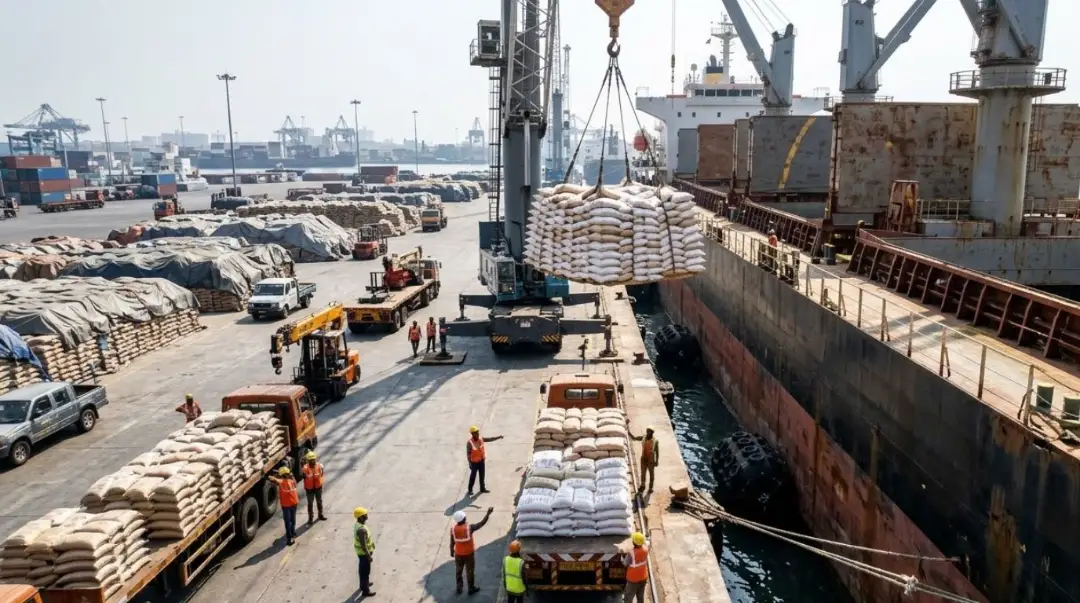
<p class="ds-markdown-paragraph" style="margin: 16px 0px; color: rgb(15, 17, 21); font-family: quote-cjk-patch, Inter, system-ui, -apple-system, BlinkMacSystemFont, "Segoe UI", Roboto, Oxygen, Ubuntu, Cantarell, "Open Sans", "Helvetica Neue", sans-serif; font-size: 16px;"><span class="">Chennai Port Authority has achieved an all-time record in rice exports to African countries, handling 2.03 lakh tonnes during the period from April 2026 to 18 November 2026 . The milestone was accomplished on Wednesday with the simultaneous and seamless handling of three vessels: M.V. HTP Lucky at South Quay, M.V. Imperial Varalakshmi at JD 1, and M.V. Akson Sandra at JD V .</span></p><p class="ds-markdown-paragraph" style="margin: 16px 0px; color: rgb(15, 17, 21); font-family: quote-cjk-patch, Inter, system-ui, -apple-system, BlinkMacSystemFont, "Segoe UI", Roboto, Oxygen, Ubuntu, Cantarell, "Open Sans", "Helvetica Neue", sans-serif; font-size: 16px;"><span class="">The operational achievement is notable because it demonstrates the port's ability to manage multiple bulk cargo vessels concurrently without compromising efficiency. Handling three rice vessels at different berths on the same day requires coordination across berth allocation, cargo handling equipment, storage capacity, and vessel scheduling. The port's ability to execute this without disruption reflects the operational discipline that has been developed at Chennai's bulk terminals.</span></p><p class="ds-markdown-paragraph" style="margin: 16px 0px; color: rgb(15, 17, 21); font-family: quote-cjk-patch, Inter, system-ui, -apple-system, BlinkMacSystemFont, "Segoe UI", Roboto, Oxygen, Ubuntu, Cantarell, "Open Sans", "Helvetica Neue", sans-serif; font-size: 16px;"><span class="">The rice export stream represents a significant new cargo flow that has been diverted to Chennai from neighbouring ports. The UNI report attributes this diversion to the port's capabilities and efficiency, though it does not identify the specific ports from which the cargo has been redirected or the factors that prompted the shift . For Chennai Port, the addition of this cargo stream contributes to its throughput and revenue at a time when the port has been investing in infrastructure and operational improvements.</span></p><p class="ds-markdown-paragraph" style="margin: 16px 0px; color: rgb(15, 17, 21); font-family: quote-cjk-patch, Inter, system-ui, -apple-system, BlinkMacSystemFont, "Segoe UI", Roboto, Oxygen, Ubuntu, Cantarell, "Open Sans", "Helvetica Neue", sans-serif; font-size: 16px;"><span class="">The African market is the destination for these rice shipments, reflecting India's role as a major supplier of rice to the continent. Indian non-basmati rice is a staple food in several African countries, and the export trade is sensitive to price competitiveness, shipping costs, and the reliability of supply. Chennai Port's ability to handle large volumes efficiently gives Indian rice exporters using the port a logistical advantage in serving these markets.</span></p><p class="ds-markdown-paragraph" style="margin: 16px 0px; color: rgb(15, 17, 21); font-family: quote-cjk-patch, Inter, system-ui, -apple-system, BlinkMacSystemFont, "Segoe UI", Roboto, Oxygen, Ubuntu, Cantarell, "Open Sans", "Helvetica Neue", sans-serif; font-size: 16px;"><span class="">For India's agricultural export logistics, the Chennai record illustrates the importance of port-level operational performance in determining trade flows. Rice is a bulk commodity where freight and handling costs represent a significant share of the landed price, and exporters will route cargo through the port that offers the most efficient and cost-effective service. Chennai's achievement suggests that it is competing effectively for this trade against other east coast and west coast gateways.</span></p><p class="ds-markdown-paragraph" style="margin: 16px 0px; color: rgb(15, 17, 21); font-family: quote-cjk-patch, Inter, system-ui, -apple-system, BlinkMacSystemFont, "Segoe UI", Roboto, Oxygen, Ubuntu, Cantarell, "Open Sans", "Helvetica Neue", sans-serif; font-size: 16px;"><span class="">The timing of the record aligns with the broader pattern of strong export performance that India has recorded in FY27. October merchandise exports reached an all-time high, and agricultural commodities have been a contributor to that growth. The rice export stream through Chennai is part of this broader export momentum, and the port's ability to handle it efficiently supports the government's objective of sustaining and expanding agricultural shipments.</span></p><p class="ds-markdown-paragraph" style="margin: 16px 0px; color: rgb(15, 17, 21); font-family: quote-cjk-patch, Inter, system-ui, -apple-system, BlinkMacSystemFont, "Segoe UI", Roboto, Oxygen, Ubuntu, Cantarell, "Open Sans", "Helvetica Neue", sans-serif; font-size: 16px;"><span class="">Looking ahead, the sustainability of Chennai's rice export record will depend on whether the cargo diversion proves durable and whether the port can maintain the operational efficiency that attracted the trade. The UNI report does not disclose the factors behind the diversion or whether the neighbouring ports have addressed the issues that prompted exporters to switch. For now, the 2.03 lakh tonne milestone provides a concrete benchmark: Chennai Port has established itself as a significant rice export gateway to Africa, and its ability to handle multiple vessels simultaneously demonstrates the operational capacity that underpins that position.</span></p>
Chennai Port Sets All-Time Rice Export Record, Handles 2.03 Lakh Tonnes to Africa in FY27
Chennai Port Authority has set an all-time record in rice exports to African countries, handling 2.03 lakh tonnes from April 2026 to 18 November 2026. On Wednesday, the port simultaneously and seamlessly handled three vessels—M.V. HTP Lucky at South Quay, M.V. Imperial Varalakshmi at JD 1, and M.V. Akson Sandra at JD V—to accomplish the export milestone. The achievement represents a significant new cargo stream diverted to Chennai from neighbouring ports, driven by the port's operational efficiency and cargo-handling capabilities