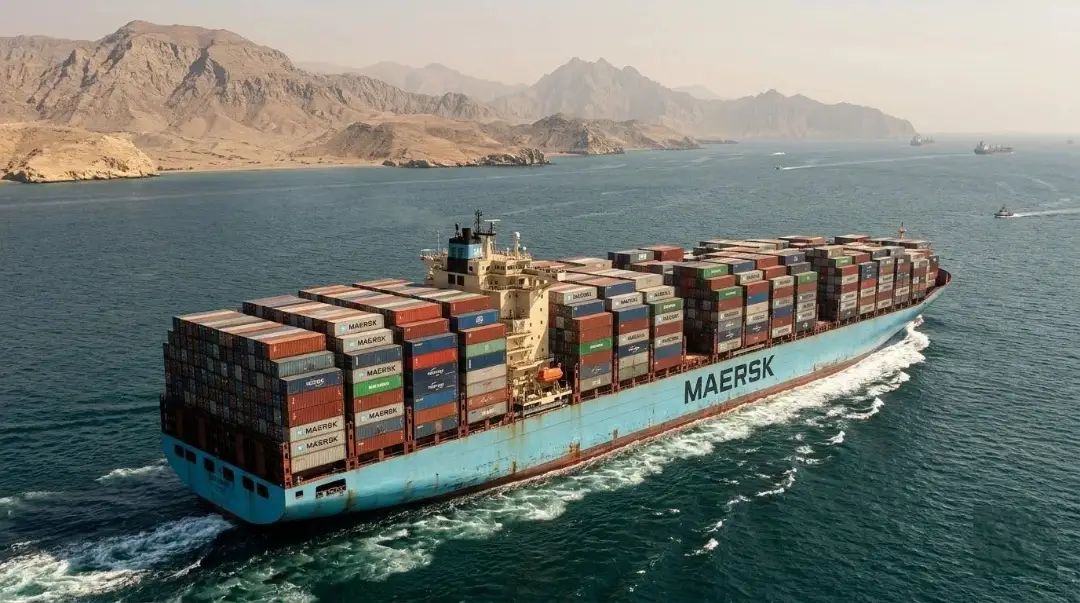
<p class="ds-markdown-paragraph" style="margin: 16px 0px; color: rgb(15, 17, 21); font-family: quote-cjk-patch, Inter, system-ui, -apple-system, BlinkMacSystemFont, "Segoe UI", Roboto, Oxygen, Ubuntu, Cantarell, "Open Sans", "Helvetica Neue", sans-serif; font-size: 16px;"><span class="">Maersk has layered a new Strait of Hormuz transit surcharge on top of its existing emergency freight rates for Persian Gulf cargo, creating a compounded cost structure that pushes the total carrier-imposed charges on some containers to $4,000 or more before ocean freight is even added . The advisory, issued on 18 November 2026 as part of the carrier's Middle East Operational Update, states that vessels actually transiting the Strait of Hormuz will be charged an additional $1,000 per container to cover higher insurance premiums and crew risk compensation .</span></p><p class="ds-markdown-paragraph" style="margin: 16px 0px; color: rgb(15, 17, 21); font-family: quote-cjk-patch, Inter, system-ui, -apple-system, BlinkMacSystemFont, "Segoe UI", Roboto, Oxygen, Ubuntu, Cantarell, "Open Sans", "Helvetica Neue", sans-serif; font-size: 16px;"><span class="">The critical detail for shippers is that the $1,000 fee does not replace the Emergency Freight Rate that Maersk introduced earlier for cargo linked to Persian Gulf ports. It is charged in addition to that rate . The Emergency Freight Rate, which applies to cargo loaded from or destined for Iraq, Kuwait, Saudi Arabia, Bahrain, Qatar, the UAE, and Oman (excluding Salalah), stands at $1,800 for a 20-foot dry container, $3,000 for a 40-foot dry container, and $3,800 for reefer, special, and dangerous goods containers .</span></p><p class="ds-markdown-paragraph" style="margin: 16px 0px; color: rgb(15, 17, 21); font-family: quote-cjk-patch, Inter, system-ui, -apple-system, BlinkMacSystemFont, "Segoe UI", Roboto, Oxygen, Ubuntu, Cantarell, "Open Sans", "Helvetica Neue", sans-serif; font-size: 16px;"><span class="">For cargo subject to both charges, the arithmetic produces a significant cost burden. A 20-foot dry container could face $2,800 in combined Maersk surcharges, a 40-foot dry container $4,000, and a reefer, special, or dangerous goods container $4,800 . These figures exclude the base ocean freight rate, terminal handling charges, and any local destination fees, meaning the total cost of moving a container to a Gulf port is substantially higher than the headline freight quote.</span></p><p class="ds-markdown-paragraph" style="margin: 16px 0px; color: rgb(15, 17, 21); font-family: quote-cjk-patch, Inter, system-ui, -apple-system, BlinkMacSystemFont, "Segoe UI", Roboto, Oxygen, Ubuntu, Cantarell, "Open Sans", "Helvetica Neue", sans-serif; font-size: 16px;"><span class="">The surcharge structure reflects the operational reality that Maersk has been managing in the Gulf. Vessels transiting Hormuz face elevated war-risk insurance costs that underwriters have priced at multiples of pre-conflict levels, and crew members serving on these routes are exposed to physical danger that the carrier is compensating for through the risk payment . The Emergency Freight Rate, by contrast, covers the broader costs of rerouting, temporary storage, and alternative logistics arrangements that Maersk has had to put in place for cargo already in transit or booked before the disruption .</span></p><p class="ds-markdown-paragraph" style="margin: 16px 0px; color: rgb(15, 17, 21); font-family: quote-cjk-patch, Inter, system-ui, -apple-system, BlinkMacSystemFont, "Segoe UI", Roboto, Oxygen, Ubuntu, Cantarell, "Open Sans", "Helvetica Neue", sans-serif; font-size: 16px;"><span class="">Maersk has also continued to restrict bookings for certain Gulf destinations. The operational update maintained suspensions on new bookings for refrigerated cargo, dangerous goods, out-of-gauge shipments, and some dry cargo to and from the UAE, Oman, Iraq, Kuwait, Qatar, Bahrain, and Saudi Arabia, with exceptions for critical food, pharmaceuticals, and highly perishable goods . For cargo already en route, the carrier offered options including completing the voyage with temporary storage, returning to origin, or changing destination, each with associated costs and conditions .</span></p><p class="ds-markdown-paragraph" style="margin: 16px 0px; color: rgb(15, 17, 21); font-family: quote-cjk-patch, Inter, system-ui, -apple-system, BlinkMacSystemFont, "Segoe UI", Roboto, Oxygen, Ubuntu, Cantarell, "Open Sans", "Helvetica Neue", sans-serif; font-size: 16px;"><span class="">For Indian exporters and importers using Gulf routes, the combined charges represent a direct increase in the cost of trade with the Middle East. A 40-foot container of Indian manufactured goods destined for Jebel Ali or Dammam now faces $4,000 in Maersk surcharges alone, before the ocean freight rate that CMA CGM is quoting at around $7,500 for JNPA to Khor Fakkan . The total cost of moving a container from India to the Gulf has therefore reached levels that are difficult for many low-margin export categories to absorb, reinforcing the pressure that FIEO has documented on sectors including ceramics, furniture, cement, and non-basmati rice .</span></p><p class="ds-markdown-paragraph" style="margin: 16px 0px; color: rgb(15, 17, 21); font-family: quote-cjk-patch, Inter, system-ui, -apple-system, BlinkMacSystemFont, "Segoe UI", Roboto, Oxygen, Ubuntu, Cantarell, "Open Sans", "Helvetica Neue", sans-serif; font-size: 16px;"><span class="">The timing of the surcharge aligns with the broader pattern of elevated costs on the India–Gulf corridor that we have covered in recent weeks. Maersk's empty container return fee at Sajaa dry port, Hapag-Lloyd's revised delivery procedures for UAE imports, and the booking restrictions that have tightened available capacity all contribute to a cost environment in which the ocean freight rate is only one component of the total logistics bill . The Hormuz transit surcharge adds another layer to that structure, and it is explicitly linked to the physical risk of moving vessels through the contested waterway.</span></p><p class="ds-markdown-paragraph" style="margin: 16px 0px; color: rgb(15, 17, 21); font-family: quote-cjk-patch, Inter, system-ui, -apple-system, BlinkMacSystemFont, "Segoe UI", Roboto, Oxygen, Ubuntu, Cantarell, "Open Sans", "Helvetica Neue", sans-serif; font-size: 16px;"><span class="">Looking ahead, the durability of the surcharge will depend on whether the security environment in the Strait of Hormuz improves and whether insurers reduce their war-risk premiums accordingly. Maersk has not indicated a timeline for reviewing the charge, and its language suggests that it will remain in place as long as vessels are transiting the strait under the current risk conditions. For Indian shippers, the practical implication is that Gulf cargo costs are now structurally higher than they were before the conflict, and that budgeting for trade with the Middle East must account for the carrier surcharges that have become a permanent feature of the corridor.</span></p>
Maersk Adds $1,000 Hormuz Transit Surcharge on Top of Emergency Rates, Gulf Cargo Costs Hit $4,000 per FEU
Maersk has introduced an additional $1,000 per container surcharge for vessels actually transiting the Strait of Hormuz, covering higher insurance premiums and crew risk compensation. The fee is separate from and stacks on top of the carrier's existing Emergency Freight Rate for Persian Gulf cargo, which stands at $1,800 for a 20-foot dry container, $3,000 for a 40-foot dry container, and $3,800 for reefer, special, and dangerous goods containers. For cargo subject to both charges, total costs reach up to $2,800 for a 20-foot dry container, $4,000 for a 40-foot dry container, and $4,800 for specialised equipment. The surcharge does not include ocean freight, terminal handling, or local charges.