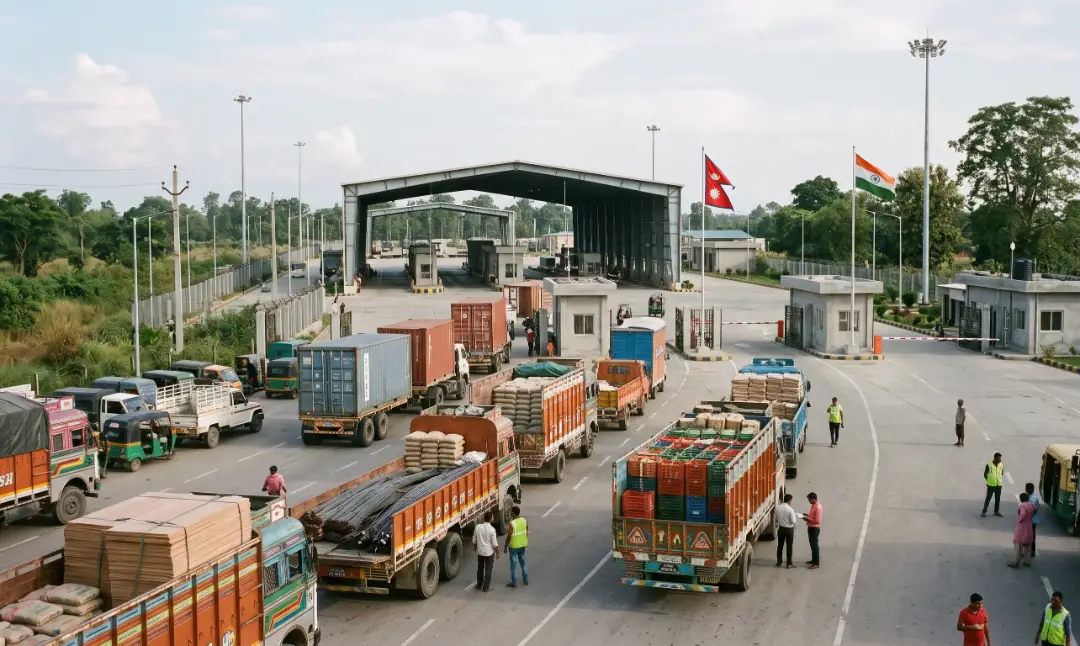
<p dir="ltr" data-path-to-node="4"><b data-path-to-node="4" data-index-in-node="0">KATHMANDU / NEW DELHI</b> — Bilateral trade facilitation and the removal of non-tariff barriers are set to take center stage as Kathmandu and New Delhi finalize the economic agenda for Nepalese Prime Minister Balendra Shah’s upcoming diplomatic visit to India. Following preliminary ministerial consultations and intergovernmental trade reviews, Nepal’s Ministry of Industry, Commerce and Supplies has formally recommended elevating recurring Bureau of Indian Standards (BIS) certification bottlenecks to the top of the bilateral diplomatic dossier. The initiative seeks to establish predictable, time-bound regulatory pathways for Nepalese manufacturers whose export pipelines into the Indian market have faced repeated disruptions due to protracted approval and renewal cycles.</p><p dir="ltr" data-path-to-node="5" style="--animation-duration: 457ms;"><span class="">India remains Nepal’s largest trading partner,</span><span class=""> accounting for more than 62% of the landlocked nation's total external merchandise trade,</span> with bilateral commerce recovering to $9.39 billion in the most recent fiscal year. Despite preferential duty-free market access frameworks, Nepalese industrialists have increasingly contended that mandatory Indian quality control orders and procedural lags in BIS factory inspections act as de facto non-tariff barriers. When existing BIS certificates approach expiration or await digital updates within Indian customs databases, cross-border consignments frequently face prolonged border holds, directly eroding the price competitiveness of Nepalese manufacturing clusters.</p><p dir="ltr" data-path-to-node="6">The regulatory friction has weighed heavily across several core export-oriented industrial verticals in Nepal, particularly construction materials and light manufacturing. Exporters of cement, plywood, steel items, footwear, and sanitary hygiene products such as sanitary pads and diapers have reported intermittent shipment stoppages and warehouse accumulation while awaiting compliance clearances. Although recent administrative streamlining enabled dozens of plywood and cement producers to secure pending approvals, industry associations have urged Kathmandu to negotiate a permanent institutional mechanism with New Delhi to prevent cyclical renewal backlogs from recurring.</p><p dir="ltr" data-path-to-node="7">Beyond industrial manufacturing standards, the upcoming diplomatic talks will also address sanitary and phytosanitary (SPS) requirements affecting Nepalese agricultural, food, and herbal exports. Both sides are examining deeper institutional cooperation between conformity assessment agencies, plant quarantine authorities, and testing laboratories to ensure mutual recognition of quality certifications. Trade officials note that harmonizing laboratory testing protocols and implementing pre-arrival electronic data exchange alongside digital verification of Certificates of Origin will significantly reduce physical inspection delays at land customs stations.</p><p dir="ltr" data-path-to-node="8">In parallel with regulatory reforms, Kathmandu is pushing to resolve long-standing tariff and anti-dumping disputes, specifically seeking relief from Indian anti-dumping duties that have pressured Nepal’s domestic jute industry. The discussions are tied to the broader, comprehensive review of the bilateral Nepal-India Treaty of Trade, where Nepalese negotiators are advocating for modernized rules of origin and expanded market access to help narrow Nepal’s substantial bilateral trade deficit.</p><p dir="ltr" data-path-to-node="9">Physical border infrastructure modernization forms the second major pillar of the trade agenda, led by proposals for the formal inauguration and full operationalization of the newly constructed Bhairahawa Integrated Check Post (ICP). Once fully commissioned, the Bhairahawa ICP will consolidate customs, immigration, quarantine, and cargo handling facilities under a unified digital roof, dramatically lowering turnaround times and logistics overhead for commercial freight moving through the Rupandehi and Lumbini industrial corridors. Additionally, both governments are preparing to advance groundwork on the Dodhara Chandani dry port in western Nepal, a strategic project envisioned as a vital multimodal trade gateway.</p><p dir="ltr" data-path-to-node="10">To further insulate its international supply chains from maritime congestion and transit bottlenecks, Nepal is also formally requesting transit access to additional Indian seaports beyond its currently utilized gateways at Kolkata and Visakhapatnam. Securing direct rail-linked transit corridors to western Indian ports such as Mundra or Nhava Sheva would offer Nepalese importers and exporters shorter sailing times to Middle Eastern and European markets, while complementing ongoing bilateral energy and cross-border rail connectivity initiatives.</p><p dir="ltr" data-path-to-node="11">Logistics analysts and regional trade chambers emphasize that pairing regulatory harmonization on BIS standards with upgraded land ports and digital customs clearance is essential for South Asian supply chain integration. If New Delhi and Kathmandu succeed in institutionalizing fast-track certification renewals and seamless border transit during Prime Minister Shah’s visit, bilateral merchandise trade is projected to gain substantial momentum, providing much-needed certainty for cross-border manufacturers, freight forwarders, and industrial investors across the Himalayan corridor.</p>
Nepal-India Trade Talks to Address BIS Certification Bottlenecks for Exports
Nepal and India are preparing to address longstanding Bureau of Indian Standards (BIS) certification delays and non-tariff barriers during Prime Minister Balendra Shah’s upcoming visit to New Delhi. The bilateral discussions aim to resolve export bottlenecks affecting Nepali cement, plywood, footwear, sanitary products, and agricultural goods, while advancing border infrastructure upgrades, trade treaty revisions, and expanded Indian maritime port access.