
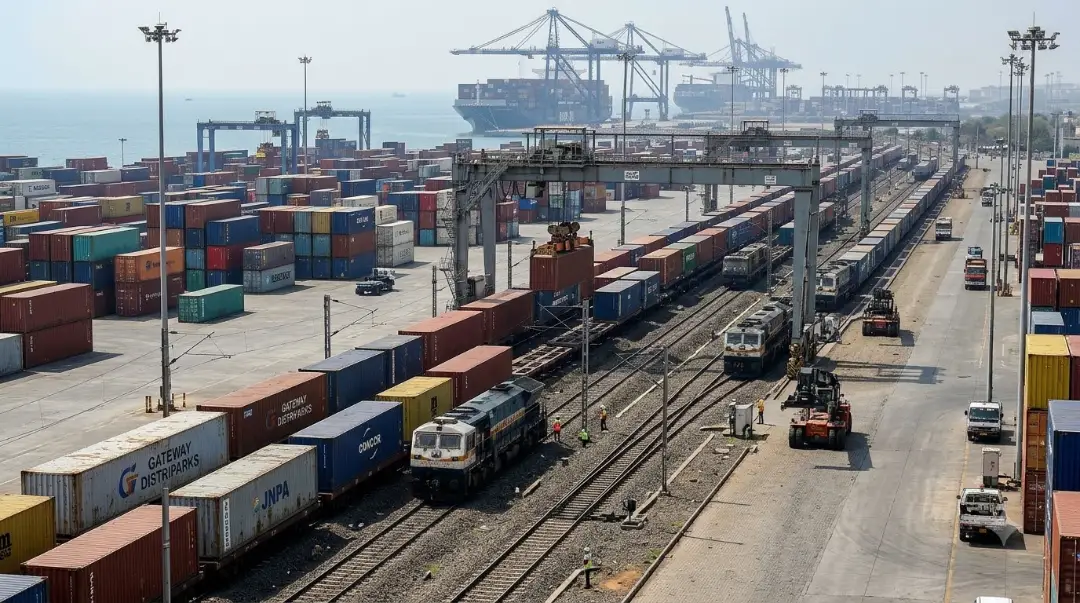
Gateway Distriparks Limited has secured an eight-year mandate to operate and manage the common rail yard terminal at Jawaharlal Nehru Port Authority in Nhava Sheva, a contract that positions the multimodal logistics operator at the centre of rail evacuation at India's largest container gateway . The company disclosed the award through a regulatory filing on 18 November 2026, and the contract covers a comprehensive set of yard functions that are critical to the efficiency of JNPA's rail interface.
The scope of the mandate is operationally significant. Gateway will be responsible for train handling and placement within the terminal, segregation of mixed container trains, container handling and stacking, inter-terminal transfers, and other associated yard activities . The common rail yard's role is to receive trains carrying containers destined for different terminals within JNPA, sort them by destination, and coordinate their movement to the appropriate terminal. This function is essential for the smooth flow of rail-bound import and export cargo, and any inefficiency at this node cascades through the port's entire rail evacuation system.
The common rail yard is one of only two facilities at JNPA equipped with 1,500-metre-long DFC-compatible railway lines . These extended lines are designed to accommodate long-haul container trains without requiring splitting or staged placement, which reduces handling time and improves throughput. JNPA has five rail terminals in total, and the common rail yard's DFC compatibility makes it a critical piece of infrastructure for the long-distance container trains that connect the port to northern and central India.
For Gateway Distriparks, the contract represents a strategic expansion beyond its established operations. The company already operates container rail transportation, inland container depots, and container freight stations, and it has a CFS presence at JNPA . The rail yard mandate adds a terminal management function to its portfolio, and the company stated that the contract establishes a platform to pursue similar management opportunities across India . Prem Kishan Dass Gupta, Chairman and Managing Director of Gateway Distriparks, framed the award in terms of coordination and service reliability: "Our focus will be on working closely with JNPA and the port terminals to ensure smooth train movements, better coordination and reliable service for everyone using the rail network" .
The timing of the award aligns with the broader expansion of rail-linked container services that we have documented in recent weeks. DP World has launched dedicated rail services connecting the NCR to Mundra, CONCOR has introduced scheduled services from Kanpur, and DFCCIL has been setting records for train interchanges and double-stack operations. The common thread is that rail is becoming a more important component of India's container logistics, and the operators that control terminal and yard functions at key gateways are positioning themselves to capture the value that flows through those nodes.
For Indian exporters and importers using JNPA, the efficiency of the common rail yard directly affects the reliability of rail-based cargo movement. Delays in train placement, container segregation, or inter-terminal transfers can cause cargo to miss vessel cut-offs or add to dwell times. Gateway's mandate gives it responsibility for the operational discipline at this node, and its performance will be measured by whether it can improve the coordination between rail arrivals and terminal operations.
Looking ahead, the key milestones are the commencement of operations under the new contract and the measurable improvements in train handling and yard efficiency that Gateway can deliver. The company has not disclosed the financial terms of the contract or the transition arrangements from the previous operator. For now, the award adds another private-sector operator to the management of critical port-rail infrastructure, and it reflects the growing role of specialised logistics companies in running the nodes that connect India's rail network to its maritime gateways.