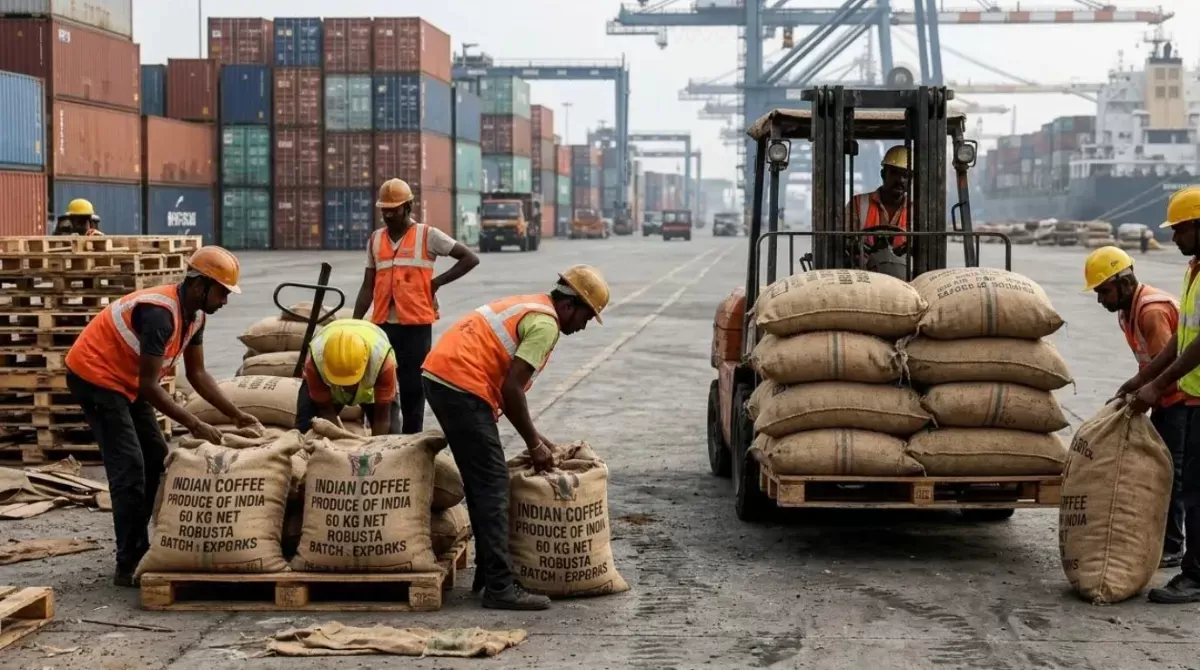
<p class="ds-markdown-paragraph" style="margin: 16px 0px; color: rgb(15, 17, 21); font-family: quote-cjk-patch, Inter, system-ui, -apple-system, BlinkMacSystemFont, "Segoe UI", Roboto, Oxygen, Ubuntu, Cantarell, "Open Sans", "Helvetica Neue", sans-serif; font-size: 16px;"><span class="">India's coffee exports have surged 27% in the early months of 2026, but the growth is geographically uneven, with Middle Eastern markets experiencing a sharp decline as the Red Sea disruption continues to reshape trade flows </span><span class="">. The divergence illustrates how the maritime security crisis is redistributing India's agricultural export trade, rewarding exporters with access to European and Russian markets while penalising those dependent on Gulf and Red Sea routes.</span><span class="_5f9bba8" data-citation-group="6" style="margin-left: 2px; margin-right: 2px;"><a href="https://stir-tea-coffee.com/tea-coffee-news/india%E2%80%99s-coffee-exports-surge/" target="_blank" rel="noreferrer" aria-label="4" style="color: rgb(57, 100, 254); transition: box-shadow 0.2s cubic-bezier(0.4, 0, 0.2, 1); border-color: rgba(255, 255, 255, 0); border-width: 2px 3px; margin-left: -3px; margin-right: -3px; text-decoration: none; position: relative;"></a></span></p><p class="ds-markdown-paragraph" style="margin: 16px 0px; color: rgb(15, 17, 21); font-family: quote-cjk-patch, Inter, system-ui, -apple-system, BlinkMacSystemFont, "Segoe UI", Roboto, Oxygen, Ubuntu, Cantarell, "Open Sans", "Helvetica Neue", sans-serif; font-size: 16px;"><span class="">The overall export performance is strong. Shipments rose 26.6% to 174,000 metric tons in January–April, up from 137,000 metric tons a year earlier, according to the Coffee Board of India. Robusta exports climbed 36% to 85,168 metric tons, and instant coffee shipments increased to 20,332 metric tons from 17,504 metric tons </span><span class="">. The European Union remains the main export destination, and exporters reported higher orders from Europe and Russia, where buyers have been sourcing Indian robusta for its competitive pricing and consistent quality </span><span class="">.</span><span class="_5f9bba8" data-citation-group="7" style="margin-left: 2px; margin-right: 2px;"><a href="https://stir-tea-coffee.com/tea-coffee-news/india%E2%80%99s-coffee-exports-surge/" target="_blank" rel="noreferrer" aria-label="4" style="color: rgb(57, 100, 254); transition: box-shadow 0.2s cubic-bezier(0.4, 0, 0.2, 1); border-color: rgba(255, 255, 255, 0); border-width: 2px 3px; margin-left: -3px; margin-right: -3px; text-decoration: none; position: relative;"></a></span></p><p class="ds-markdown-paragraph" style="margin: 16px 0px; color: rgb(15, 17, 21); font-family: quote-cjk-patch, Inter, system-ui, -apple-system, BlinkMacSystemFont, "Segoe UI", Roboto, Oxygen, Ubuntu, Cantarell, "Open Sans", "Helvetica Neue", sans-serif; font-size: 16px;"><span class="">The Middle East decline is the counterpoint to this growth. While the available data does not provide a precise figure for the fall in Middle East volumes, the broader pattern of Red Sea disruption and elevated freight costs has made the route increasingly difficult for agricultural exporters. The Hormuz crisis and Houthi attacks on shipping have raised insurance premiums and forced carriers to reroute vessels around the Cape of Good Hope, adding weeks to transit times and significantly increasing costs for cargo destined for Gulf markets </span><span class="">.</span><span class="_5f9bba8" data-citation-group="9" style="margin-left: 2px; margin-right: 2px;"><a href="https://stir-tea-coffee.com/tea-coffee-news/india%E2%80%99s-coffee-exports-surge/" target="_blank" rel="noreferrer" aria-label="4" style="color: rgb(57, 100, 254); transition: box-shadow 0.2s cubic-bezier(0.4, 0, 0.2, 1); border-color: rgba(255, 255, 255, 0); border-width: 2px 3px; margin-left: -3px; margin-right: -3px; text-decoration: none; position: relative;"></a></span></p><p class="ds-markdown-paragraph" style="margin: 16px 0px; color: rgb(15, 17, 21); font-family: quote-cjk-patch, Inter, system-ui, -apple-system, BlinkMacSystemFont, "Segoe UI", Roboto, Oxygen, Ubuntu, Cantarell, "Open Sans", "Helvetica Neue", sans-serif; font-size: 16px;"><span class="">The logistics dimension is central to this divergence. Coffee is a high-value, relatively low-volume commodity where freight costs represent a manageable share of landed cost, but the disruption to Red Sea routes has nonetheless affected the competitiveness of Indian coffee in Middle Eastern markets. Buyers in the Gulf have alternative suppliers from East Africa, Vietnam, and Brazil, and when Indian coffee faces higher freight and longer transit times, those alternatives become more attractive.</span></p><p class="ds-markdown-paragraph" style="margin: 16px 0px; color: rgb(15, 17, 21); font-family: quote-cjk-patch, Inter, system-ui, -apple-system, BlinkMacSystemFont, "Segoe UI", Roboto, Oxygen, Ubuntu, Cantarell, "Open Sans", "Helvetica Neue", sans-serif; font-size: 16px;"><span class="">For Indian coffee exporters, the European and Russian markets have provided an offset to the Middle East weakness. The India-UK CETA and the anticipated India-EU FTA have widened opportunities for value-added exports, and the Coffee Board has projected record output of 404,000 metric tons for 2025/26 </span><span class="">. The combination of strong European demand and competitive pricing for Indian robusta has allowed exporters to redirect volumes away from disrupted routes.</span><span class="_5f9bba8" data-citation-group="10" style="margin-left: 2px; margin-right: 2px;"><a href="https://stir-tea-coffee.com/tea-coffee-news/india%E2%80%99s-coffee-exports-surge/" target="_blank" rel="noreferrer" aria-label="4" style="color: rgb(57, 100, 254); transition: box-shadow 0.2s cubic-bezier(0.4, 0, 0.2, 1); border-color: rgba(255, 255, 255, 0); border-width: 2px 3px; margin-left: -3px; margin-right: -3px; text-decoration: none; position: relative;"></a></span></p><p class="ds-markdown-paragraph" style="margin: 16px 0px; color: rgb(15, 17, 21); font-family: quote-cjk-patch, Inter, system-ui, -apple-system, BlinkMacSystemFont, "Segoe UI", Roboto, Oxygen, Ubuntu, Cantarell, "Open Sans", "Helvetica Neue", sans-serif; font-size: 16px;"><span class="">The timing of this divergence aligns with the broader pattern we have documented across India's agricultural exports. The Middle East has been a growth market for Indian coffee, but the Red Sea disruption has interrupted that trajectory. The European market, by contrast, has benefited from the relative stability of the Suez route as carriers return, and from the tariff advantages that India's trade agreements provide.</span></p><p class="ds-markdown-paragraph" style="margin: 16px 0px; color: rgb(15, 17, 21); font-family: quote-cjk-patch, Inter, system-ui, -apple-system, BlinkMacSystemFont, "Segoe UI", Roboto, Oxygen, Ubuntu, Cantarell, "Open Sans", "Helvetica Neue", sans-serif; font-size: 16px;"><span class="">Looking ahead, the trajectory of India's coffee exports to the Middle East will depend on whether the Red Sea security environment stabilises and freight costs decline. If the route becomes viable again, the Gulf's demand for Indian robusta and instant coffee should resume. If disruption persists, exporters will continue to prioritise European and Russian markets, and the Middle East may remain a secondary destination until conditions improve. For now, the 27% overall growth masks a sharp geographic reallocation that reflects the logistics realities of 2026.</span></p>
India's Coffee Exports Surge 27% Overall, But Middle East Shipments Collapse as Red Sea Disruption Bites
India's coffee exports jumped 27% in the first four months of 2026, driven by strong global demand for robusta and instant coffee, but shipments to the Middle East have fallen sharply as Red Sea disruption and elevated freight costs make the route unviable for many exporters. The European Union remains the main destination, with exporters reporting higher orders from Europe and Russia. Traders cautioned that fluctuations in international prices and logistics costs could affect shipment volumes going forward.