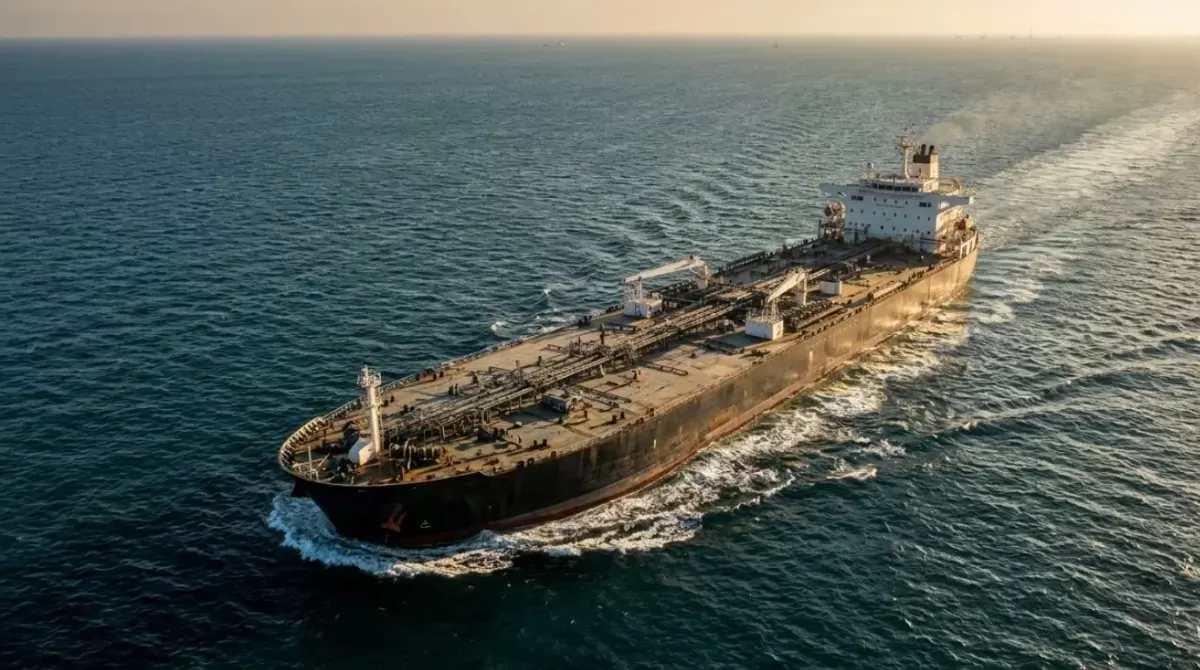
<p class="ds-markdown-paragraph" style="margin: 16px 0px; color: rgb(15, 17, 21); font-family: quote-cjk-patch, Inter, system-ui, -apple-system, BlinkMacSystemFont, "Segoe UI", Roboto, Oxygen, Ubuntu, Cantarell, "Open Sans", "Helvetica Neue", sans-serif; font-size: 16px;"><span class="">Freight rates for very large crude carriers carrying oil from the Gulf of Oman to China have fallen sharply since the beginning of November, retreating from record highs reached in October as Gulf crude exports recovered and demand for long-distance shipments weakened . According to Baltic Exchange data, rates dropped to approximately 308 on the Worldscale index on 13 November, a 64% decline from the record 841 recorded on 8 October .</span></p><p class="ds-markdown-paragraph" style="margin: 16px 0px; color: rgb(15, 17, 21); font-family: quote-cjk-patch, Inter, system-ui, -apple-system, BlinkMacSystemFont, "Segoe UI", Roboto, Oxygen, Ubuntu, Cantarell, "Open Sans", "Helvetica Neue", sans-serif; font-size: 16px;"><span class="">The primary driver of the correction is the recovery of Gulf crude exports. Oil exporters in the region have restored shipments to levels approaching those recorded before the outbreak of the US-Israeli war on Iran, reducing Asian buyers' reliance on supplies from more distant markets . This recovery has been supported by alternative shipping arrangements, including ship-to-ship transfers and dark crossings during which vessels disable their tracking systems to avoid detection, despite continuing attacks on commercial shipping.</span></p><p class="ds-markdown-paragraph" style="margin: 16px 0px; color: rgb(15, 17, 21); font-family: quote-cjk-patch, Inter, system-ui, -apple-system, BlinkMacSystemFont, "Segoe UI", Roboto, Oxygen, Ubuntu, Cantarell, "Open Sans", "Helvetica Neue", sans-serif; font-size: 16px;"><span class="">As Middle Eastern supplies increased, demand for crude from the United States, West Africa, and the North Sea weakened, reducing the need for tankers undertaking longer voyages and increasing vessel availability . Arrow Shipbroking analyst Delia He attributed the decline in freight demand to the recovery in Gulf exports, which has reduced Asian purchases of American and North Sea crude. Vortexa analyst Ioannis Papadimitriou linked the downturn to the earlier surge in shipping costs, which made longer-haul crude shipments less attractive to Asian refiners and encouraged greater reliance on Middle Eastern supplies.</span></p><p class="ds-markdown-paragraph" style="margin: 16px 0px; color: rgb(15, 17, 21); font-family: quote-cjk-patch, Inter, system-ui, -apple-system, BlinkMacSystemFont, "Segoe UI", Roboto, Oxygen, Ubuntu, Cantarell, "Open Sans", "Helvetica Neue", sans-serif; font-size: 16px;"><span class="">The number of available vessels has also increased as tankers complete deliveries and discharge cargoes in East Asia, adding further downward pressure on freight rates . The correction has been even more pronounced on certain other shipping routes, including voyages from West Africa to Asia, where the shift back to Gulf supply has reduced demand for Atlantic basin cargoes.</span></p><p class="ds-markdown-paragraph" style="margin: 16px 0px; color: rgb(15, 17, 21); font-family: quote-cjk-patch, Inter, system-ui, -apple-system, BlinkMacSystemFont, "Segoe UI", Roboto, Oxygen, Ubuntu, Cantarell, "Open Sans", "Helvetica Neue", sans-serif; font-size: 16px;"><span class="">Beyond changing trade flows, the decline reflects an easing of the geopolitical risk premium that had driven tanker rates to unprecedented levels in October, when attacks involving Iran and the United States heightened concerns about shipping safety in the Gulf . The same geopolitical developments had contributed to higher crude prices, although oil prices have since fallen by 20% this month, partly reflecting expectations of a possible de-escalation in the conflict. He said the scale of the freight rate decline could not be explained entirely by changes in vessel supply and chartering demand, suggesting that the market was also undergoing an unusually sharp reversal of the geopolitical risk premium built into shipping costs.</span></p><p class="ds-markdown-paragraph" style="margin: 16px 0px; color: rgb(15, 17, 21); font-family: quote-cjk-patch, Inter, system-ui, -apple-system, BlinkMacSystemFont, "Segoe UI", Roboto, Oxygen, Ubuntu, Cantarell, "Open Sans", "Helvetica Neue", sans-serif; font-size: 16px;"><span class="">For India, the rate collapse has direct implications for crude import economics. India sources a significant share of its crude from the Middle East, and the cost of moving those cargoes from the Gulf to Indian ports is a component of the delivered price that Indian refiners pay. The 64% decline in VLCC rates from the Gulf to China suggests that similar corrections are likely on India-bound routes, which would reduce the freight component of India's crude import bill and ease some of the pressure that has built up since February.</span></p><p class="ds-markdown-paragraph" style="margin: 16px 0px; color: rgb(15, 17, 21); font-family: quote-cjk-patch, Inter, system-ui, -apple-system, BlinkMacSystemFont, "Segoe UI", Roboto, Oxygen, Ubuntu, Cantarell, "Open Sans", "Helvetica Neue", sans-serif; font-size: 16px;"><span class="">The timing of the correction aligns with the broader pattern of market normalisation that we have documented across multiple sectors. Gulf crude exports have recovered to near pre-war levels, the East-West pipeline has been restored, and the Oman-Dubai spread has narrowed sharply. The tanker rate collapse is the latest indicator that the physical market is adapting to the disruption, even as the security environment in the Strait of Hormuz remains unresolved and attacks on shipping continue.</span></p><p class="ds-markdown-paragraph" style="margin: 16px 0px; color: rgb(15, 17, 21); font-family: quote-cjk-patch, Inter, system-ui, -apple-system, BlinkMacSystemFont, "Segoe UI", Roboto, Oxygen, Ubuntu, Cantarell, "Open Sans", "Helvetica Neue", sans-serif; font-size: 16px;"><span class="">Looking ahead, the sustainability of the rate decline will depend on whether Gulf exports remain at recovered levels and whether the geopolitical risk premium continues to ease. If the diplomatic track produces a durable agreement and attacks on shipping subside, rates could fall further. If the security situation deteriorates again, the risk premium could return. For now, the 64% decline provides a concrete benchmark: the tanker market has corrected sharply from its October peak, and the cost of moving crude from the Gulf to Asia is falling, even as the underlying conflict remains unresolved.</span></p>
VLCC Rates from Gulf to China Plunge 64% from October Peak as Gulf Crude Exports Recover
Freight rates for very large crude carriers from the Gulf of Oman to China fell to approximately 308 on the Worldscale index on 13 November 2026, a 64% decline from the record 841 recorded on 8 October, according to Baltic Exchange data. The collapse reflects the recovery of Gulf crude exports to near pre-war levels, which has reduced Asian refiners' reliance on long-haul crude from the US, West Africa, and the North Sea, and increased vessel availability as tankers complete deliveries in East Asia. The correction also reflects an easing of the geopolitical risk premium that had driven tanker rates to unprecedented levels in October.