
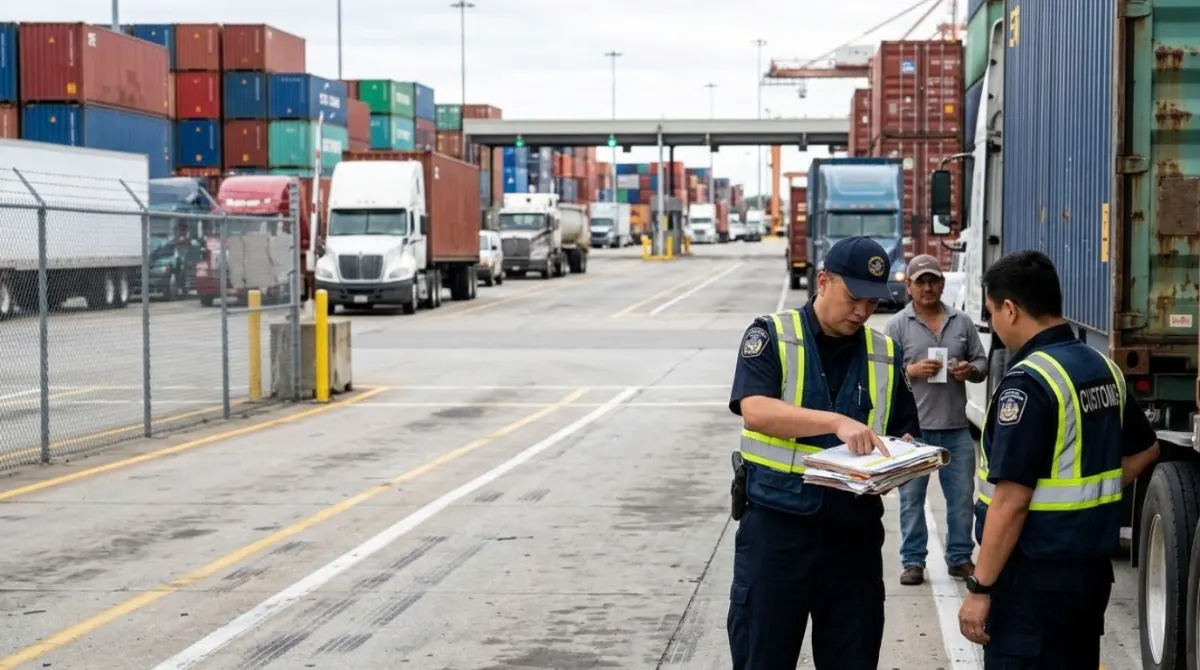
WTO Deputy Director-General Johanna Nordquist has called for simplified border procedures and supply chain diversification as responses to the uncertainty that has characterised global trade throughout 2026, speaking at the 16th Asian Logistics, Maritime and Aviation Conference in Hong Kong on 17 November . Her remarks provided a multilateral policy perspective on the same disruptions that have reshaped shipping and logistics across Asia.
Nordquist framed the policy agenda in terms of both government and business responsibilities. For policymakers, she identified four priorities: maintaining fair trade policies, investing in infrastructure, simplifying cross-border procedures, and strengthening international cooperation . For businesses, she urged supplier diversification to reduce the risk of over-dependence on a small number of markets, active adoption of digital technologies, and the establishment of cross-network partnerships in new markets .
The conference's thematic focus reflected the structural shifts that have defined the year. Discussions covered global supply chain transformation, ASEAN and Belt and Road opportunities, high-value supply chains, and green energy . The Hong Kong Trade Development Council, which co-organised the event with the Hong Kong SAR government, noted that artificial intelligence and electronic products have become important drivers of export growth, with their share of air cargo value continuing to rise, reflecting a global trade shift toward high-value and technology-intensive goods .
The timing of the conference aligns with the broader pattern of trade policy activity that has accelerated in the final quarter of 2026. India has concluded trade agreements with the UK and New Zealand, is finalising a deal with the US, and is preparing for an EU agreement, while the WTO's call for simplified border procedures connects to the trade facilitation agenda that has been advanced through the TFA review process. The emphasis on supplier diversification also echoes the strategies that Indian importers and exporters have adopted in response to the Hormuz and Red Sea disruptions.
For Indian logistics operators, Nordquist's remarks reinforce the direction that both the government and the private sector have already been pursuing. India has been diversifying its crude and LNG sourcing away from the Gulf, its exporters have been expanding into new markets, and the government has been investing in port and rail infrastructure to reduce logistics costs. The WTO's policy prescriptions are therefore consistent with the trajectory that India has already set, rather than a new direction.
The conference also provided a platform for regional engagement. The Hong Kong Maritime Week, running from 15 to 21 November, brought together more than 18,000 policymakers and industry leaders across 60 events, including the Global Maritime Merchants Forum and the Asian Logistics, Maritime and Aviation Conference . The scale of the event reflects Hong Kong's continued role as a maritime and logistics hub, even as its relative position has been affected by the broader shifts in global trade patterns.
Looking ahead, the key question is whether the WTO's call for simplified border procedures translates into concrete action at the national level. The TFA review process has been advancing, but implementation remains uneven across member states. For Indian shippers and logistics providers, the practical implication of Nordquist's message is that the policy environment is likely to continue moving toward greater facilitation and diversification, but the pace of change will depend on national governments and on the willingness of businesses to adapt their supply chain strategies.