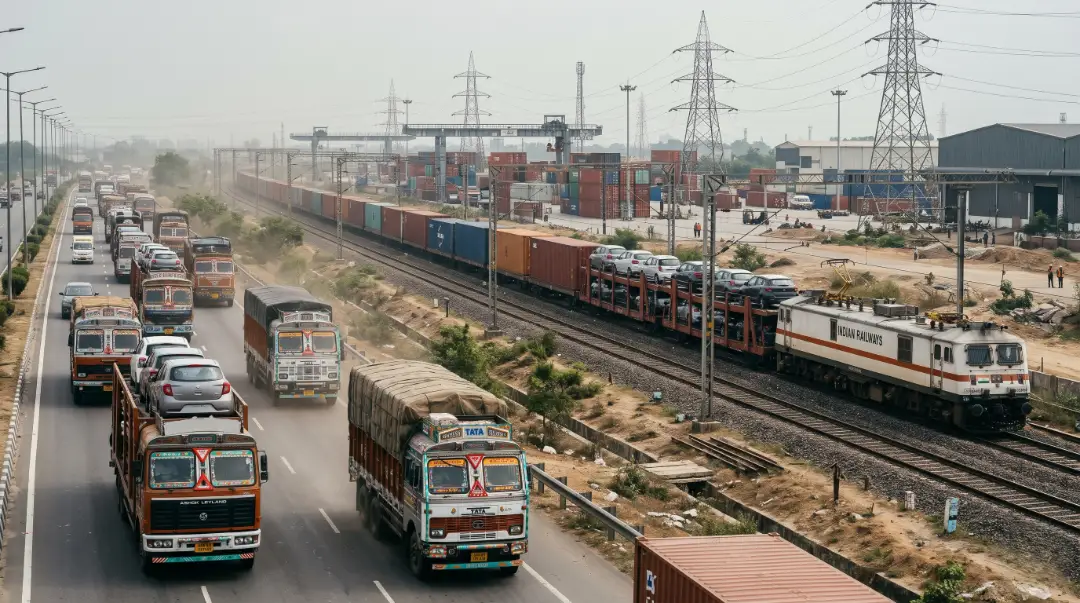
The surge in logistics costs at Ashok Leyland is not an isolated case but a microcosm of the cost pressures facing India's road logistics industry in 2026. According to ICRA's report, diesel and CNG prices rose approximately 8% in May 2026, with average freight rates from Delhi to major cities up 7% compared to February, but this was insufficient to offset cost increases. Fuel accounts for 50–60% of operating costs for fleet operators, and the industry structure is highly fragmented—small fleet owners with fewer than five trucks make up approximately 80% of the market, making it difficult for them to negotiate fuel surcharges with cargo owners.
The root cause of the cost shock traces back to the Middle East situation. Bunker fuel prices have risen nearly 59% since February 2026, and diesel prices in major markets have climbed 25%–50% since December 2025. ICRA expects operating margins for listed road logistics companies to contract by 150–200 basis points year-on-year in FY2027, with revenue growth of only 8%–10%, mainly driven by freight rate increases rather than volume growth. For a manufacturing company like Ashok Leyland that relies on road transport for finished vehicle distribution, the sharp rise in outbound logistics costs directly compresses profit margins.
For the railway sector, the cost pressures in road transport theoretically present an opportunity for modal shift. KPMG's analysis points out that rail transport costs approximately ₹1.9 per tonne-kilometer, while road transport costs up to ₹3.78, nearly double. However, rail currently carries only about 25% of India's freight, with road transport handling nearly 70%. Indian Railways transported a record 1,670 million tonnes of freight in FY2026, up 3.25% year-on-year, but this growth rate is far below the 13% annual growth required by the National Rail Plan, making the target of raising rail's modal share to 45% by 2030 difficult to achieve.
The most directly relevant reform to Ashok Leyland's situation is the opening of freight wagon design. In July 2026, Indian Railways announced that it would allow industrial enterprises to design customized freight wagons based on their specific cargo needs, with safety certification still handled by RDSO and CCRS. For automobile manufacturers, this means they can design specialized wagons with higher loading capacity based on origin-destination routes, thereby increasing the rail share of finished vehicle transport—currently only 24%. Previously, the Ministry of Railways had approved 306 Gati Shakti multimodal cargo terminals with a combined capacity of 192 million tonnes per annum, of which 118 are already operational, attracting over ₹8.6 billion in private investment.
However, rail's limitations remain evident. A parliamentary committee report pointed out that Indian Railways' freight basket is heavily dependent on coal, which accounts for over 49% of total freight volume, while high-growth categories such as automobiles, FMCG, and e-commerce have yet to be effectively developed. Dedicated freight corridor freight trains average only 37 kilometers per hour, and the committee also flagged insufficient crew availability as an issue. Freight rates have not been adjusted since November 2018, and the committee recommended an annual review to enhance competitiveness with road transport.
From a policy perspective, India's logistics cost as a share of GDP has declined from 13%–14% a decade ago to 10%–10.7%, according to a Business Standard report citing a study. However, a Railway Ministry official stated at an August 2026 industry event that India's logistics cost is actually approximately 7.9% of GDP. The divergence in data reflects inconsistencies in statistical methodologies, but the policy direction is clear: reducing logistics costs and increasing rail's share are established objectives.
For logistics practitioners, the current situation presents a dual structure. Road transport remains the dominant mode for finished vehicle distribution due to its door-to-door flexibility, but the cost gap with rail is widening. Indian Railways' reforms in wagon customization and multimodal terminals represent a medium- to long-term alternative, but achieving scale in the short term hinges on whether terminal connectivity, timeliness, and operational convenience can approach road transport standards. Ashok Leyland's cost pressures are unlikely to ease in the coming quarters unless diesel prices decline significantly or the company successfully shifts a portion of its finished vehicle transport to rail.