
Frederick Ma made these remarks in his welcome address at the 16th ALMAC on November 16. He noted that global supply chains are undergoing profound transformation, with geopolitical tensions and economic fragmentation reshaping established trade patterns, while digitalization, emerging technologies, and green transition are transforming the cross-border movement of goods and services . He specifically emphasized that AI and electronic products have become important drivers of export growth, with their share of air cargo value continuing to rise, indicating that trade is developing toward high-value and technology-intensive directions, and driving market demand for sophisticated supply chain management services .
The transformation of Hong Kong's trade structure provides concrete evidence for this trend. According to research from the Hong Kong Trade Development Council, by value, the share of Hong Kong's external merchandise trade handled by air freight rose from 20.2% in 1995 to 34.2% in 2005, 39.5% in 2015, and further to 45.4% in 2025. Meanwhile, the share of sea freight trade declined to 8.3% in 2025 . This data indicates that Hong Kong's trade model has gradually shifted from container transportation to an aviation trade model centered on high-value, time-sensitive products.
The driving force behind this structural shift is the explosive growth of electronics exports. In the first seven months of 2026, electronics exports accounted for 80.1% of Hong Kong's total exports, the highest level during the statistical period. During the same period, Hong Kong's electronics exports surged 50.6% year-on-year, with component exports recording an even stronger increase of 53.9%. Key AI-related categories, including memory devices, computer parts, processors, and controllers, saw export values grow by approximately 70% year-on-year, with AI-related intermediate inputs accounting for 62% of total AI product exports . This "stable volume, rising price" characteristic reflects Hong Kong's transition from a traditional "volume-driven" re-export model to a trade structure centered on high-value, high-tech content goods.
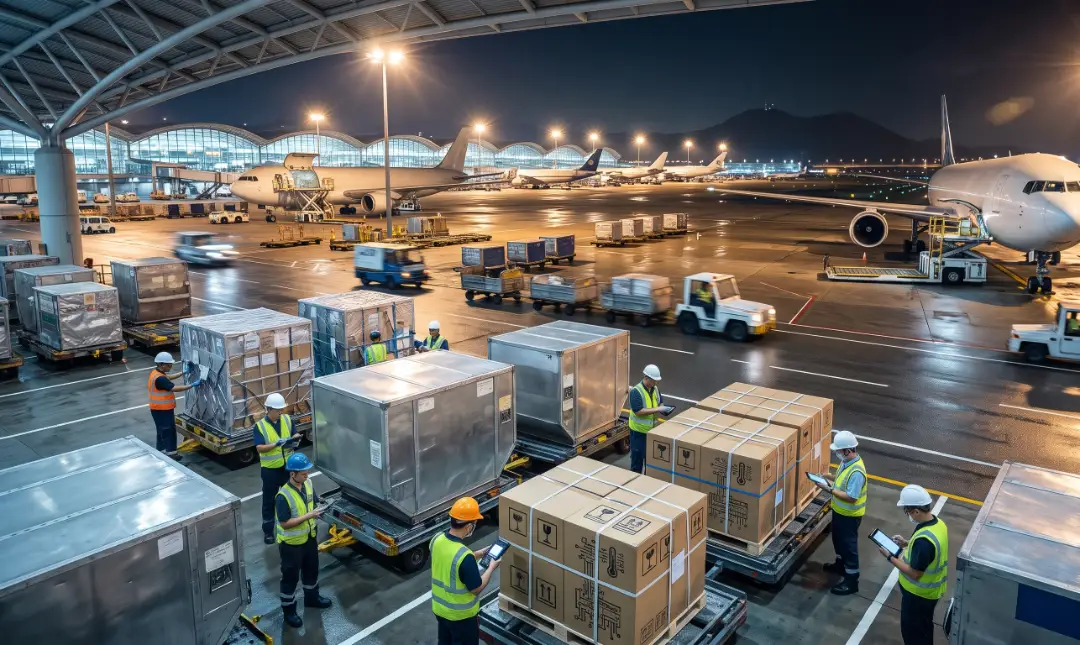
From a logistics perspective, high-tech products typically have short lifecycles and stringent supply chain timing requirements, significantly elevating the electronics industry's demands for logistics efficiency and delivery speed. This explains why air freight has become the primary mode of international circulation for high-value goods . Hong Kong International Airport has been ranked as the world's busiest cargo airport for 14 consecutive years, providing infrastructure support for this transformation .
Frederick Ma positioned Hong Kong's role within this transformation as more than just connecting markets. He stated that as a "super-connector," Hong Kong should play a value-added role, helping connect mainland China's innovation achievements and manufacturing capabilities with global markets . This positioning aligns with the direction outlined in Hong Kong's first Five-Year Plan, which explicitly proposes building a high-value-added supply chain service center to consolidate and enhance Hong Kong's status as an international trade center .
For the air cargo industry, this trend implies a sustained growth in demand for high-value, time-sensitive cargo, while also placing higher demands on cold chain capabilities, security, and digital tracking. Frederick Ma also noted that enterprises need to build smarter and more resilient supply chains, with innovation being indispensable, while integrating sustainable development more comprehensively into supply chain operations . This suggests that competition in the air cargo sector will extend beyond capacity and routes to comprehensive supply chain service capabilities.